
Movie spotlight
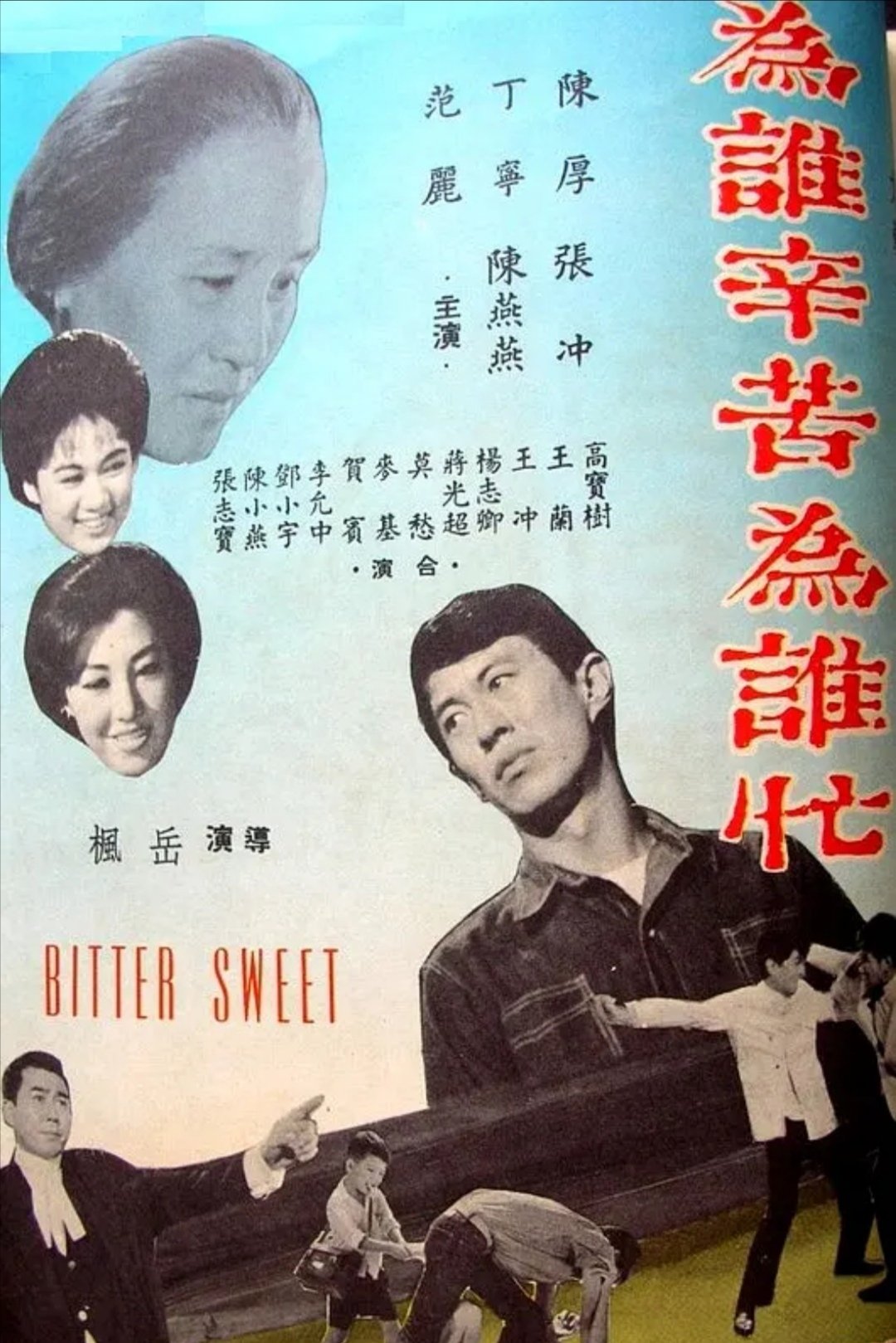
Bitter Sweet
A widow of four gave up two of her children to be raised by an uncle in Singapore. Many years later, just when the widow, now a house maid, is feeling contented by good news of her long gone son and daughter, she accidentally runs into his own son, now a lawyer, and ends up being looked down upon by him. It was a story about how traditional Chinese family and its value was impacted by the change of time. The movie depicted Macau in 1945 to Hong Kong in the mid-60s, moving from poverty after WWII to opulence. The human relationships became complicated and fragile. Many elements uniquely "Hong Kong", such as upper class Chinese, western religions, English speaking and a mixed-culture society are used to contrast the traditional, kind, enduring and forgiving love of a mother.
Insights
Plot Summary
This musical film follows the story of an opera singer and a composer who find love amidst the complexities of their careers and personal lives. Set against the backdrop of theatrical productions, the narrative explores themes of ambition, sacrifice, and enduring romance.
Critical Reception
Bitter Sweet (1963) received a mixed to positive reception from critics and audiences. While praised for its musical numbers and the performances of its lead actors, some found the plot to be somewhat conventional for its time. It is generally regarded as a pleasant, albeit not groundbreaking, musical film.
What Reviewers Say
Praised for its vibrant musical performances and romantic storyline.
Appreciated for the chemistry between the lead actors.
Some critics found the plot to be predictable.
Google audience: Audience reception data for this specific 1963 film is not readily available on Google.
Fun Fact
Bitter Sweet (1963) is a made-for-television film adaptation of the 1929 operetta of the same name by Noël Coward.
AI-generated overview · Verify ratings on official sources