
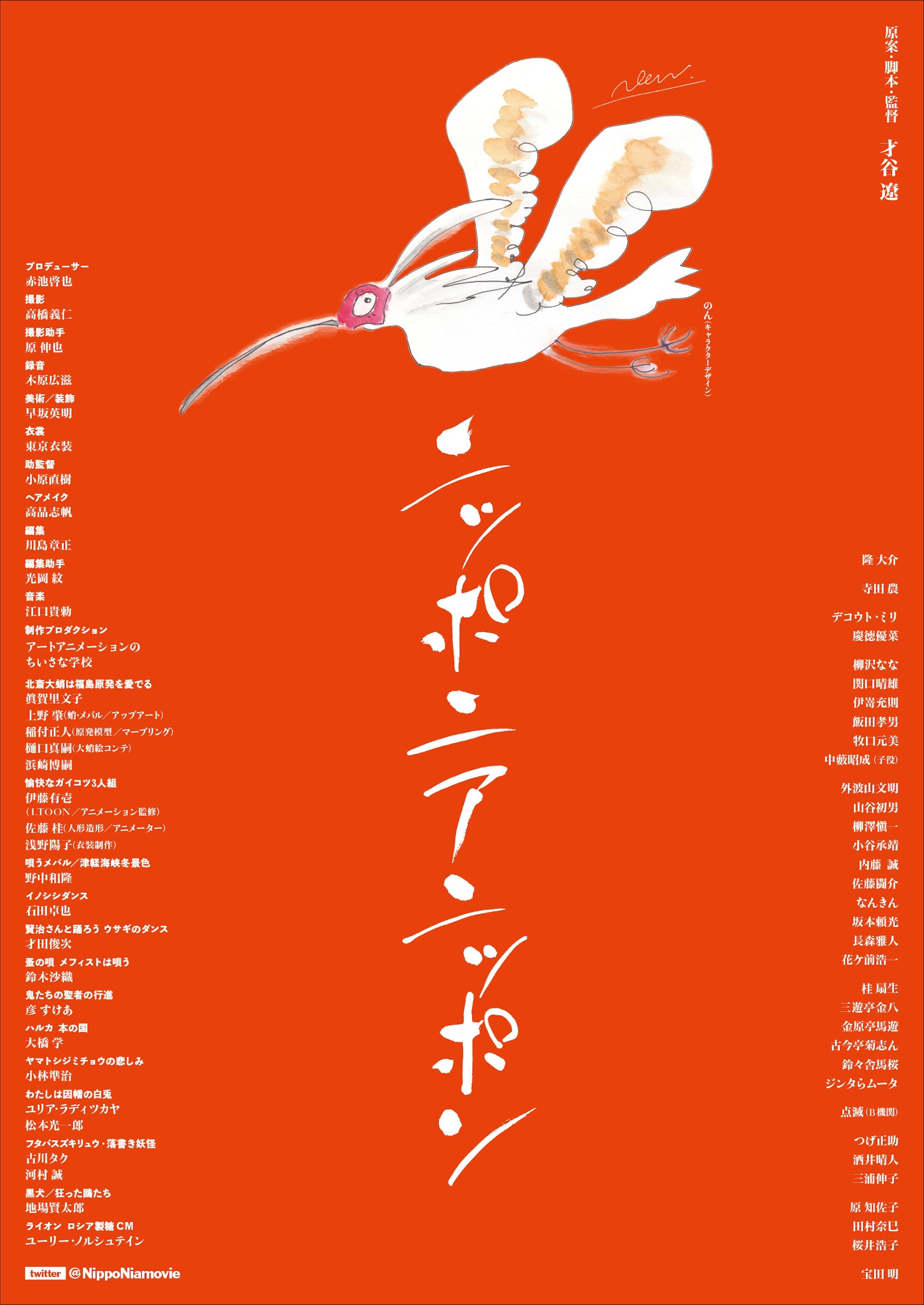
Nipponia Nippon – Fukushima Rhapsody
Naraho town in Fukushima Prefecture is on the front-line of the government-funded nuclear power plant decommissioning work. Kokuhei Kusunoki is transferred from Aizu Wakamatsu City to Naraho Town to take over the Disaster PR Division. Murai takes Kokuhei around Fukushima including areas washed away by the tsunami. They examine the still incomplete railway lines, the unfinished decontamination area and villages in the danger zone, where deadly cesium continues to pile up. One day Kokuhei is told to organize a party to celebrate the professor who has been appointed as deputy director of the Atomic Energy Research Institute.
Insights
Plot Summary
This documentary-drama hybrid explores the lives of people affected by the 2011 Fukushima Daiichi nuclear disaster. Through a blend of staged scenes and real-life accounts, it delves into the anxieties, displacements, and resilience of those who lived through the catastrophe and its aftermath. The film uses a unique aesthetic to convey the emotional and psychological impact of the disaster.
Critical Reception
Nipponia Nippon – Fukushima Rhapsody received critical acclaim for its innovative approach to documentary filmmaking and its sensitive portrayal of a devastating event. Critics praised its ability to evoke empathy and reflection on the human cost of such disasters, though some found its artistic style challenging. It resonated with audiences interested in personal stories emerging from large-scale tragedies.
What Reviewers Say
- Praised for its unique blend of documentary and narrative elements.
- Hailed as a powerful and moving exploration of human resilience.
- Commended for its artistic vision in tackling a sensitive subject matter.
Google audience: Audiences largely appreciated the film's empathetic storytelling and its unique artistic style in depicting the Fukushima disaster's human impact. Many found it a thought-provoking and emotionally resonant experience, though a segment of viewers found the experimental nature of the film to be less accessible.
Awards & Accolades
Screened at the Berlinale Forum, received positive mentions at various international film festivals.
Fun Fact
Director Katsuya Tomita spent several years living in the affected region to understand the experiences of the residents before commencing production on the film.
AI-generated overview · Verify ratings on official sources