
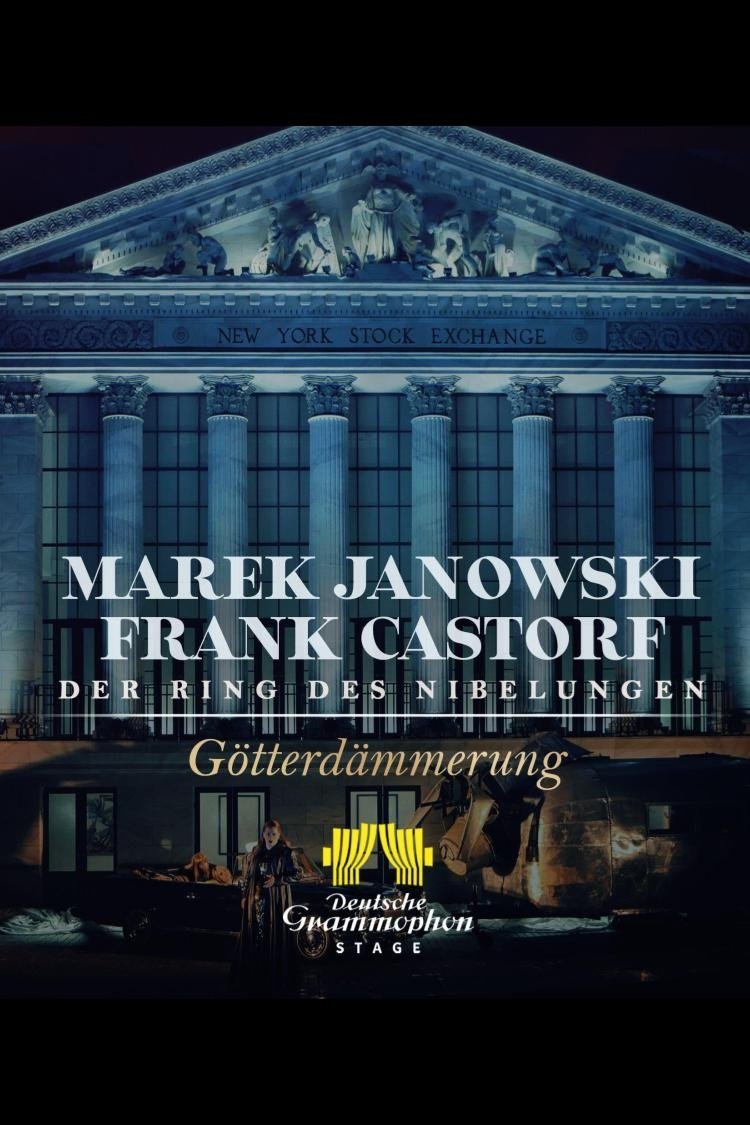
Movie spotlight
The Ring of the Nibelung: Twilight of the Gods
"Oil is the equivalent of what used to be gold. A luxury that we cannot eat," explained director Frank Castorf in an interview, outlining one of the key ideas behind his production of the Ring at Bayreuth. In the final part of the tetralogy, the wild journey ventures to the Buna chemical plants in Schkopau and to New York's Wall Street, among other places. Inspired by the aesthetic of Hollywood B movies, the production was first met with disapproval but grew to gain many supporters over the years.
Insights
Plot Summary
The final opera in Wagner's monumental Ring cycle, 'Twilight of the Gods' depicts the tragic downfall of Siegfried and the gods themselves. As the curse of the Ring of Power unfolds, betrayal, greed, and a thirst for control lead to a cataclysmic end for Valhalla and its inhabitants. The opera culminates in a devastating fire that purges the world, paving the way for a new era. It's a grand and somber conclusion to an epic saga of love, power, and destiny.
Critical Reception
Götz Friedrich's 1991 production of 'Twilight of the Gods,' often revived and presented in 2016, is widely acclaimed for its profound psychological depth and stark, symbolic staging. The performances are consistently praised for their emotional intensity and vocal prowess, capturing the operatic grandeur and tragic weight of Wagner's score. The production is considered a benchmark in operatic interpretations of the Ring cycle, lauded for its intelligent direction and powerful storytelling.
What Reviewers Say
Praised for its visually striking and symbolic production design.
Noted for powerful and emotionally resonant vocal performances.
Commended for its intelligent and often bleak interpretation of Wagner's themes.
Google audience: Audience reviews often highlight the sheer scale and artistic vision of the production, with many appreciating the depth of the performances and the impactful staging. Some viewers find the operatic length and complexity challenging, but the overall sentiment points to a deeply moving and artistically significant operatic experience.
Awards & Accolades
While specific awards for this particular 2016 revival are not widely documented, Götz Friedrich's original production and subsequent revivals have been critically lauded and are considered essential viewing within the operatic community.
Fun Fact
The distinctive, almost abstract set design by Hans-Dieter Jonietz for this production was conceived to represent the elemental forces and the decaying grandeur of the gods' world, often using stark lighting and minimal but impactful structures.
AI-generated overview · Verify ratings on official sources