
YearOneFun
Kalki 2898 AD is copy & paste scenes from Mad Max + Star Wars + Dune + Blade Runner 2049. The budget of this movie is 600 crores & still it has worst VFX. **And let's not forget that the lead actor of this movie Prabhas still can't ac...
Movie spotlight
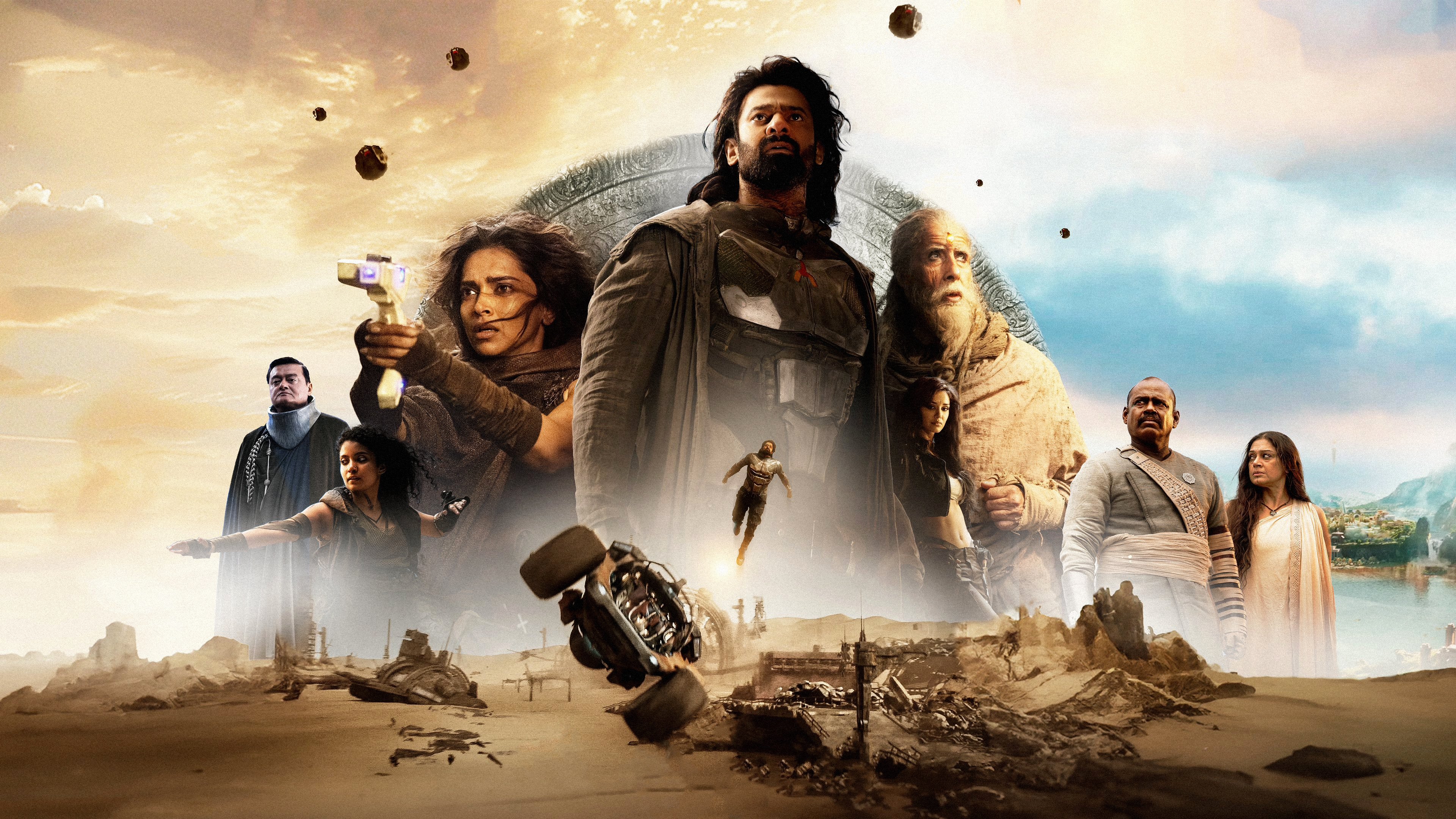
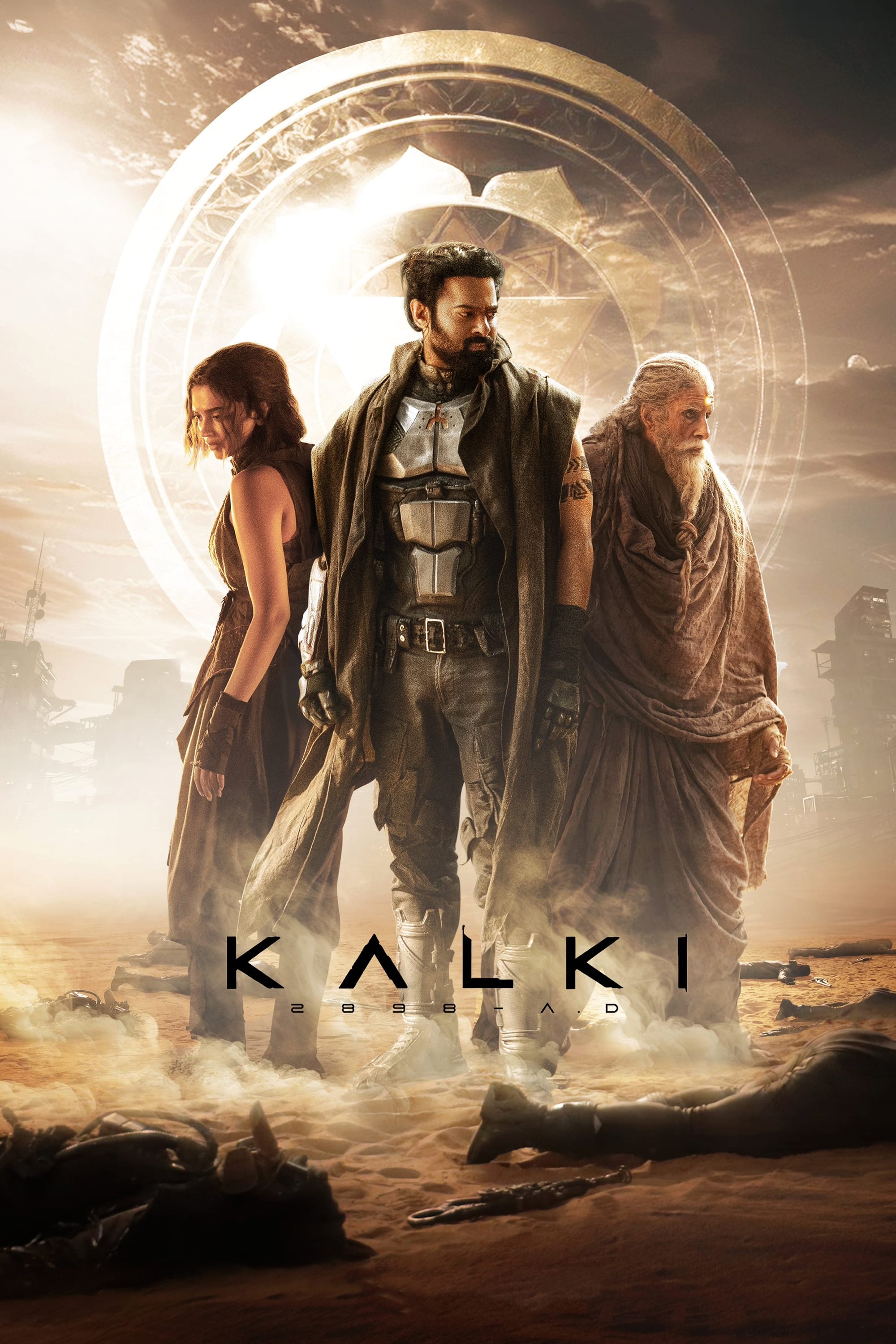
In the year 2898 AD, around 6000 years after Kurukshetra war, Ashwatthama gears up for his final battle of redemption at the sign of hope in a dystopian world and Bhairava, a wisecracking and self-interested bounty hunter, tired of the perilous life becomes the hurdle in the process.
Set in a dystopian future, Kalki 2898 AD imagines a world where divine intervention is prophesied to bring balance. The story unfolds across three parts, each exploring different facets of this future and its connection to ancient Indian mythology. A reluctant hero emerges as the world awaits the arrival of Kalki, the tenth avatar of Vishnu, who is destined to end the current age and usher in a new era.
Kalki 2898 AD has garnered significant attention for its ambitious scale, visual spectacle, and unique blend of Indian mythology with futuristic science fiction. Critics and audiences have praised its innovative world-building, strong performances, and the sheer grandeur of its production. While some have noted pacing issues in certain segments, the film is largely celebrated as a groundbreaking cinematic achievement in Indian cinema.
Visually stunning with groundbreaking special effects and production design.
An epic narrative that successfully merges ancient Indian mythology with a compelling science fiction vision.
Strong performances from the ensemble cast anchor the ambitious storytelling.
Google audience: Audiences have widely praised the film's spectacular visuals, imaginative world-building, and the impressive scale of its production. Many viewers found the blend of mythology and science fiction to be fresh and engaging, with the performances of the lead actors being a significant highlight. Some minor criticisms pointed towards occasional pacing dips, but overall, the reception has been overwhelmingly positive.
None notable yet, as it is a recent release, but has received widespread critical acclaim for its technical achievements and storytelling.
The film's intricate set designs and futuristic cityscapes were heavily inspired by various Indian mythologies and ancient scriptures, aiming to create a visually distinct universe that felt both alien and deeply rooted in Indian culture.
AI-generated overview · Verify ratings on official sources
Kalki 2898 AD is copy & paste scenes from Mad Max + Star Wars + Dune + Blade Runner 2049. The budget of this movie is 600 crores & still it has worst VFX. **And let's not forget that the lead actor of this movie Prabhas still can't ac...
The mythology that underpins this is a fascinating combination of humanity and adventure that director Nag Ashwin presents entertainingly - if maybe a little haphazardly - here. We start with a battle from history where the defeated "Ashwat...

# Kalki 2898 AD: A Visionary Blend of Mythology and Sci-Fi In the ever-evolving landscape of Indian cinema, "Kalki 2898 AD" emerges as a groundbreaking spectacle that pushes the boundaries of storytelling and visual artistry. Directed by...