
Movie spotlight
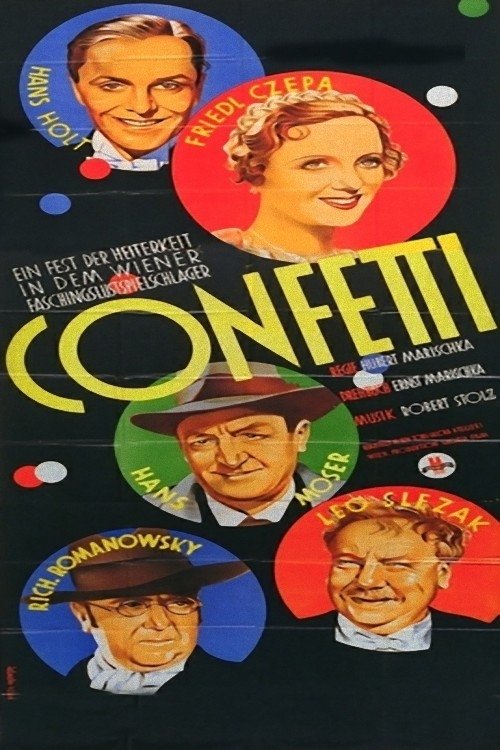
Konfetti
Confusion comedy with musical interludes around a carnival ball, to dare the pretty shop assistant for a fashion store with one of the best gowns of her salon and posing in her embarrassment as the wife of a guest. - Harmlessly entertaining comedy, a little bit too poorly to bring to bear the first-time meeting of three most popular Austrian comic specialists Moser-Slezak-Romanowsky at that time appropriately.
Insights
Plot Summary
In this musical comedy, a famous opera singer, Leo Slezak, finds himself in a series of comical situations when he tries to discreetly visit his secret lover, a young singer named Lucienne Boyer. Their attempts to meet are thwarted by misunderstandings and the interference of well-meaning but bumbling associates.
Critical Reception
Konfetti was generally well-received as a lighthearted musical comedy, appreciated for its charming performances and entertaining songs. It was a popular film in its time, particularly for audiences seeking escapist entertainment during the 1930s.
What Reviewers Say
Praised for its musical numbers and the charismatic presence of Leo Slezak.
Seen as a pleasant and amusing diversion with a simple, entertaining plot.
The film provided lighthearted entertainment suitable for a broad audience.
Google audience: Audience reception for 'Konfetti' is difficult to quantify with modern metrics, but contemporary reviews likely focused on its charm and musicality as a delightful, crowd-pleasing comedy.
Fun Fact
The film prominently features the operatic talents of the renowned bass-baritone Leo Slezak, who was one of the most celebrated singers of his era.
AI-generated overview · Verify ratings on official sources