Movie spotlight
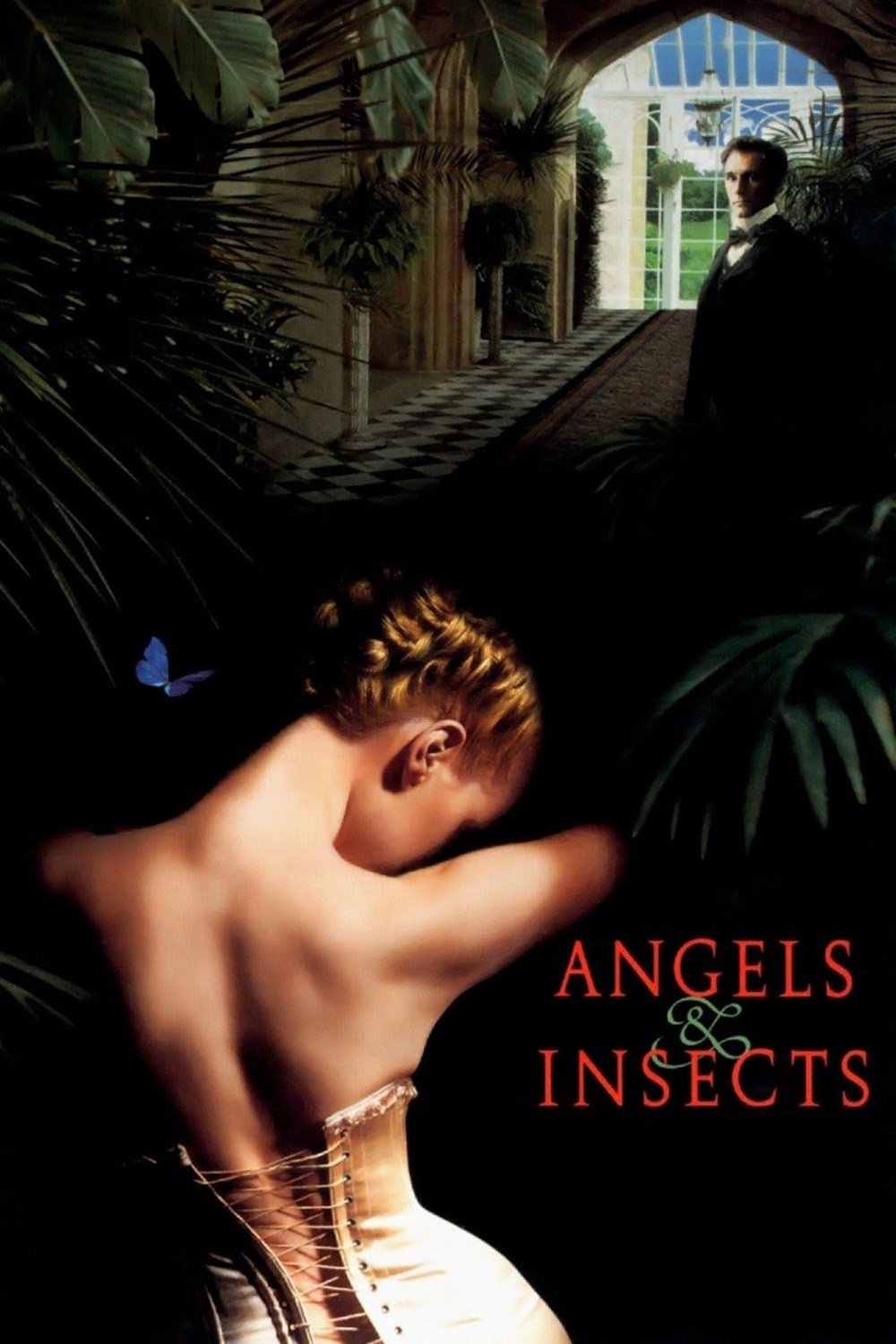
Angels and Insects
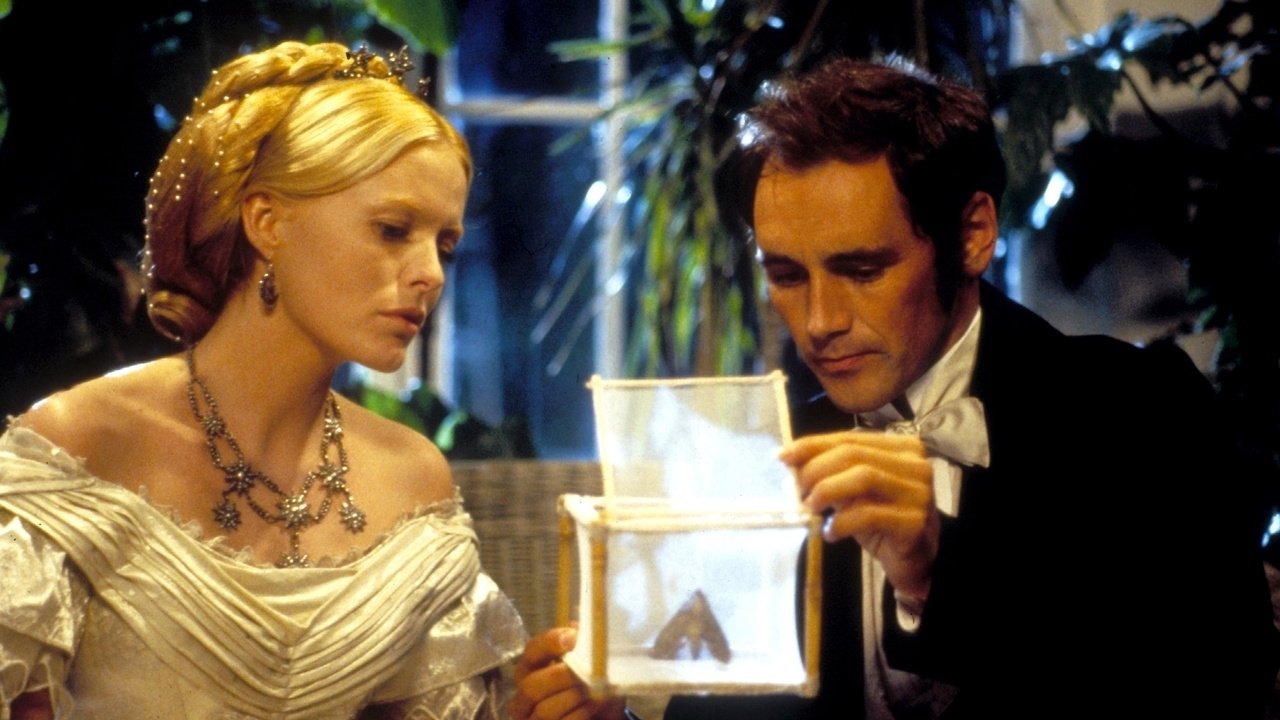
In Victorian England, wealthy patriarch Sir Harald Alabaster invites an impoverished biologist, William Adamson, into his home. There, William tries to continue his work, but is distracted by Alabaster's seductive daughter, Eugenia. William and Eugenia begin a torrid romance, but as the couple become closer, the young scientist begins to realize that dark, disturbing things are happening behind the closed doors of the Alabaster manor.
Insights
Plot Summary
In 19th-century England, a young woman of humble origins, Eugenia, marries a wealthy and eccentric naturalist, Alexander Lyle, hoping for a better life. She soon discovers that his home harbors dark secrets and that his scientific pursuits are intertwined with a disturbing fascination for the natural world's more primitive aspects. As Eugenia delves deeper into her husband's peculiar life and the unusual household staff, she finds herself drawn into a dangerous and morally ambiguous world.
Critical Reception
Angels and Insects garnered a mixed to positive reception from critics, who praised its atmospheric visuals, compelling performances, particularly from Patsy Kensit, and its intriguing exploration of class, sexuality, and the Victorian psyche. However, some reviewers found the plot convoluted and the pacing uneven, making it a visually rich but narratively challenging film.
What Reviewers Say
Praised for its lush cinematography and evocative period detail.
Kensit's performance as the increasingly disturbed protagonist was frequently highlighted.
Some critics found the narrative's descent into the bizarre a bit too abrupt or underdeveloped.
Google audience: Audiences generally appreciated the film's unique and unsettling atmosphere, with many commending the period setting and the unsettling portrayal of Victorian society. However, some found the story's darker themes and psychological twists to be overly strange or difficult to follow.
Awards & Accolades
Nominated for the Golden Bear at the 45th Berlin International Film Festival.
Fun Fact
The film is based on the novel of the same name by A.S. Byatt, who also co-wrote the screenplay with director Philip Haas.
AI-generated overview · Verify ratings on official sources