
Movie spotlight
Revisiting Solaris
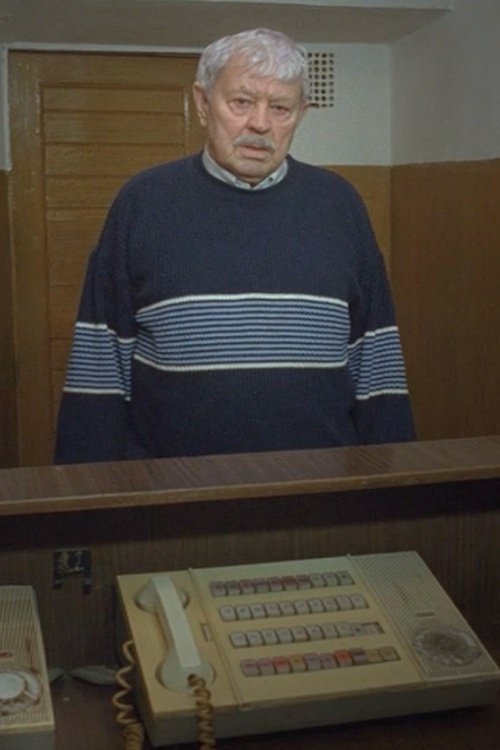
The astronaut Chris Kelvin receives a visit from a woman who is a double of his dead wife. This story, told in Stanislaw Lem’s eponymous novel, was once adapted into the film Solaris by the legendary Russian film director Andrei Tarkovsky. According to Deimantas Narkevičius, Tarkovsky was not as critical of the increasing impact of electronic media on relationships and on the complex nature of human memory as Lem, the original author of the story. In this video, the actor Donatas Banionis reappears in his role as Kelvin, forty years after Tarkovsky’s film was shot. Revisiting Solaris is based on the last chapter of Lem's book, which had been left out of Tarkovsky’s adaptation. In order to visualize the landscape of Solaris and expose complex specters of the past, Narkevičius combines the new footage and a series of photos from 1905 taken by the Lithuanian painter and composer Mykolojus Konstantinas Čiurlionis.
Insights
Plot Summary
Psychologist Chris Kelvin is sent to a space station orbiting the mysterious planet Solaris to investigate the unsettling behavior of its crew. Upon arrival, he finds the station in disarray and its surviving crew members deeply disturbed, haunted by the materialized apparitions of lost loved ones conjured by Solaris itself. As Kelvin grapples with his own spectral visitor, his deceased wife, Rheya, he must confront his past and the true nature of the sentient ocean planet.
Critical Reception
Steven Soderbergh's 'Solaris' received a mixed-to-positive reception from critics, who often compared it unfavorably to Andrei Tarkovsky's 1972 masterpiece. While praised for its contemplative mood, atmospheric visuals, and George Clooney's performance, many found it to be too slow-paced and emotionally distant, lacking the philosophical depth of its predecessor. Audience reactions were similarly divided, with some appreciating its introspective take on grief and memory, while others found it ponderous and unsatisfying.
What Reviewers Say
Praised for its moody atmosphere and strong performances, particularly from George Clooney.
Criticized by some for its deliberate pacing and perceived lack of emotional resonance compared to the original.
Appreciated by others for its thoughtful exploration of grief, memory, and loss within a sci-fi context.
Google audience: Google users generally found 'Solaris' to be a visually impressive and thought-provoking film, with many appreciating its slow-burn narrative and emotional depth. However, a significant portion of viewers felt it was too slow and lacked the impact or philosophical weight they expected from a science fiction film.
Fun Fact
The film's minimalist score was composed by Cliff Martinez, who also worked with Steven Soderbergh on 'Traffic' and 'Contagion'.
AI-generated overview · Verify ratings on official sources