
Movie spotlight
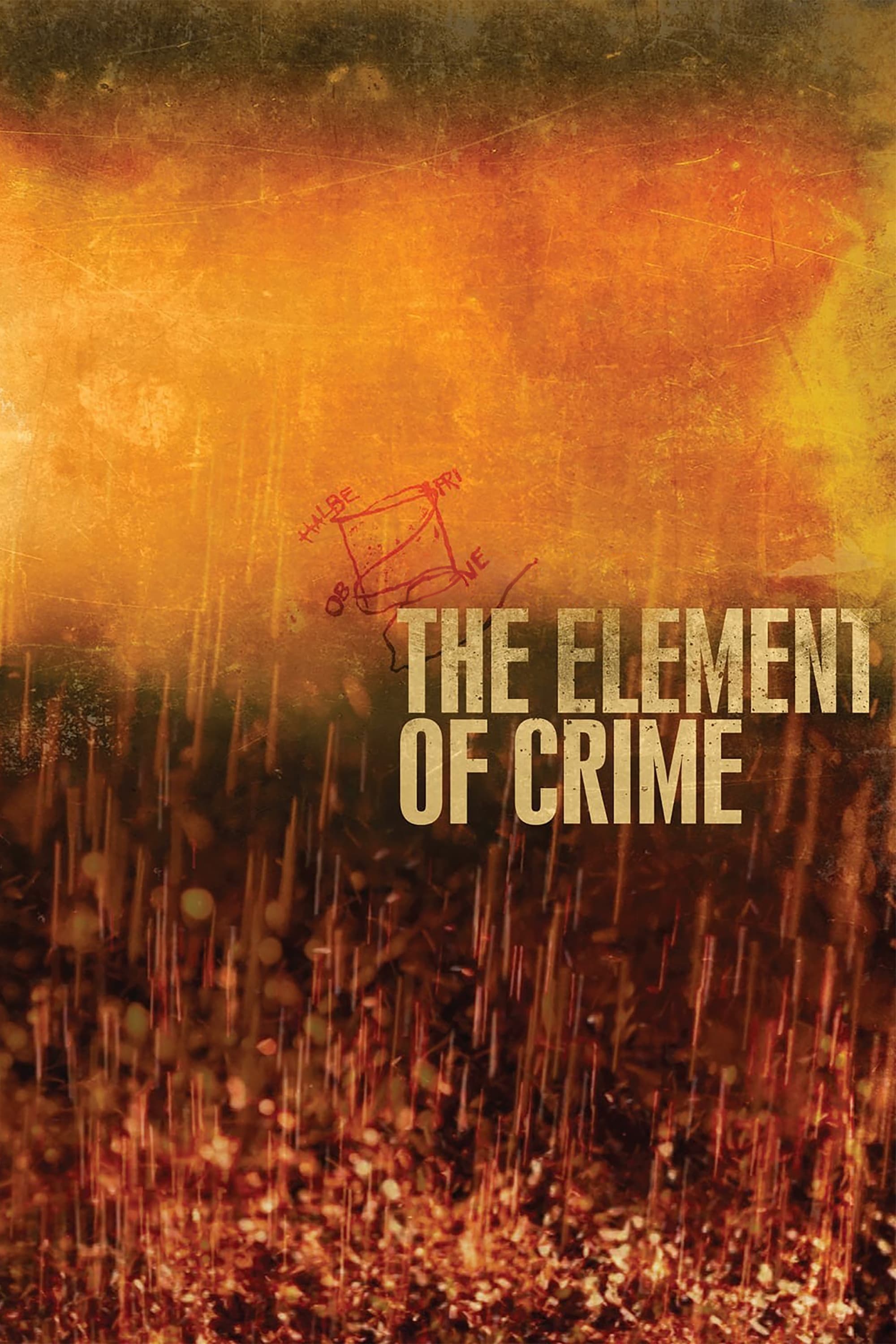
The Element of Crime
Fisher, an ex-detective, decides to take one final case when a mysterious serial killer claims the lives of several young girls. Fisher, unable to find the culprit, turns to Osbourne, a writer who was once respected for his contributions to the field of criminology. Fisher begins to use Osbourne's technique, which involves empathizing with serial killers; however, as the detective becomes increasingly engrossed in this method, things take a disturbing turn.
Insights
Plot Summary
In a bleak, dystopian future, Detective Inspector Anders, a disillusioned investigator, returns to a crime-ridden city to solve a perplexing murder case. As he delves deeper into the investigation, he finds himself entangled in a labyrinth of psychological manipulation and surreal imagery, blurring the lines between reality and his own fractured psyche. The case forces him to confront his own past traumas and the disturbing nature of human obsession.
Critical Reception
Lars von Trier's debut feature, 'The Element of Crime,' was a visually striking and thematically ambitious film that garnered critical attention for its unique aesthetic and challenging narrative. While praised for its bold artistic vision and atmospheric tension, its complex and often bleak subject matter divided audiences and critics, leading to a polarizing reception.
What Reviewers Say
Praised for its striking, noir-inspired visual style and oppressive atmosphere.
Criticized for its overly complex and often incomprehensible narrative.
Considered a challenging but artistically significant early work by von Trier.
Google audience: Audience reception data for 'The Element of Crime' on Google is not readily available, making it difficult to summarize specific likes or dislikes.
Awards & Accolades
Won the Technical Grand Prix at the 1984 Cannes Film Festival.
Fun Fact
The film was shot entirely on 35mm film and later colorized using a process called 'bleach bypass,' contributing to its distinctive, desaturated, and high-contrast look.
AI-generated overview · Verify ratings on official sources