
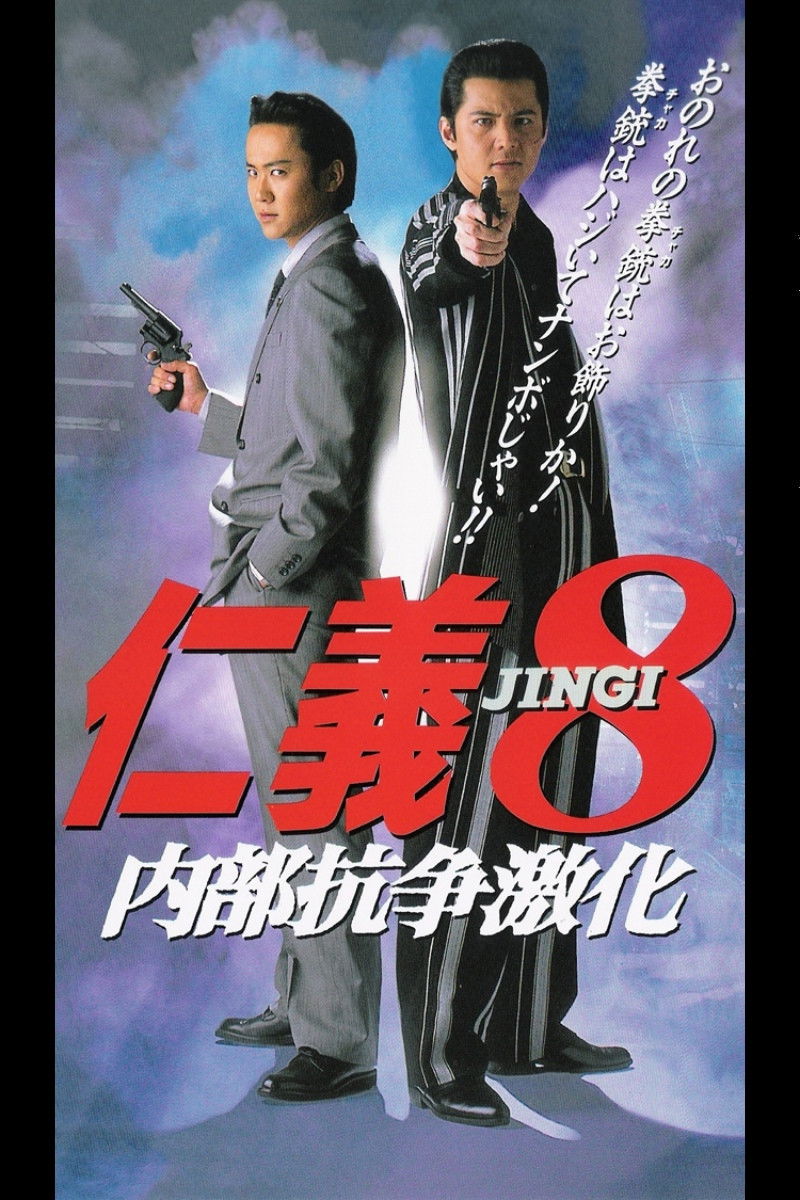
Jingi 8: Intensified Internal Conflict
Hitoshi Kamibayashi (Takeuchi), acting head of the Kanto sand group, and Yoshiro Yazaki (Sakakibara), the chairman of the Kanto sand group, have made a name for themselves as big-name executives in the Kanto region after a number of proxy wars. At that time, Jin encounters an incident in which his old friend, who he met after a long time, is aiming for his life. There was a plot of the Kyushu Hiryukai, which was disbanded a while ago. Former Hiryukai young head, Panito, has been trying to advance into the Kanto region, and has teamed up with the Kanto Ichienkai subordinate organization, the Shinwakai, to hit the sima in the Kanto region. It was Hitoshi and Yoshiro who were in charge of the situation, but there was an unexpected fire of internal conflict waiting for them.
Insights
Plot Summary
A yakuza lieutenant, seeking to avenge the death of his mentor, finds himself caught in a brutal and complex power struggle within his own syndicate. As betrayal and violence escalate, he must navigate treacherous alliances and confront his own inner demons to survive and achieve his goals. The film plunges into the dark underbelly of organized crime, exploring themes of loyalty, revenge, and the destructive nature of ambition.
Critical Reception
Jingi 8: Intensified Internal Conflict is a notorious entry in Takashi Miike's filmography, often cited for its extreme violence and unflinching portrayal of yakuza life. While it has garnered a cult following among fans of extreme cinema, it received mixed to negative reviews from mainstream critics upon its release, primarily due to its graphic content and nihilistic tone. It is largely considered a niche film appreciated for its visceral impact rather than its narrative depth.
What Reviewers Say
- Praised for its raw, unadulterated violence and gritty aesthetic.
- Criticized for its gratuitous gore and bleak, nihilistic outlook.
- Seen as a prime example of Takashi Miike's early provocative style.
Google audience: Information on Google user reviews for this specific film is not readily available, but it is generally considered a niche film within the extreme cinema genre.
Fun Fact
Takashi Miike directed this film and several others in rapid succession during the mid-to-late 1990s, establishing his reputation for prolific output and a unique, often shocking, cinematic style.
AI-generated overview · Verify ratings on official sources