
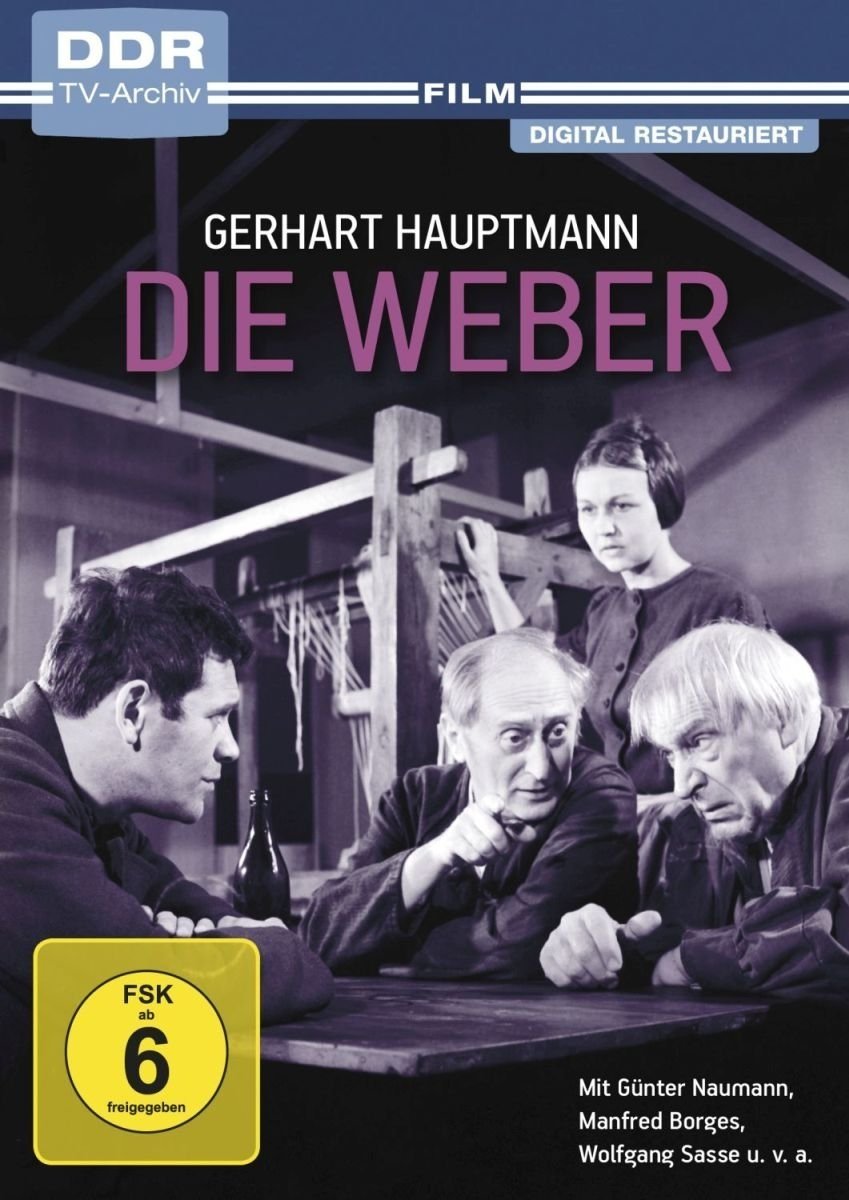
Movie spotlight
Die Weber
The emaciated weavers deliver their homework to the factory owner Dreißiger and receive their wages, on which they cannot live and cannot die. Driven by hunger, they ask for more money, but to no avail. Only the young baker and the reservist Jäger put up a fight, and both manage to encourage a large group of weavers to revolt against the factory owner. They break into his house and destroy it, whereupon he flees. The revolt continues, the weavers move through the surrounding villages, where more people join them. A little later, the military arrives to intervene against the angry crowd and restore the old order...
Insights
Plot Summary
Based on Gerhart Hauptmann's play, this German film adaptation depicts the Silesian weavers' uprising of 1844. It focuses on the desperate plight of impoverished weavers driven to revolt against their oppressive factory owners. The story explores themes of social injustice, class struggle, and the human cost of industrialization.
Critical Reception
While a significant adaptation of a classic German play, 'Die Weber' (1962) received moderate critical attention. Its strength lies in its faithful portrayal of the historical events and the powerful performances, particularly from Klaus Kinski. However, some critics noted its theatrical origins, which could make the pacing feel deliberate.
What Reviewers Say
Praised for its historical accuracy and the raw intensity of its lead performance.
Noted for effectively conveying the desperation and anger of the striking weavers.
Some found the film's adherence to its stage origins to be a bit stagey in its presentation.
Google audience: Audience reception is not widely documented on Google reviews for this specific film.
Fun Fact
Fritz Kortner, the director, was a prominent actor himself and had previously starred in a 1927 silent film adaptation of 'Die Weber' directed by Carl Froelich.
AI-generated overview · Verify ratings on official sources