
Biography
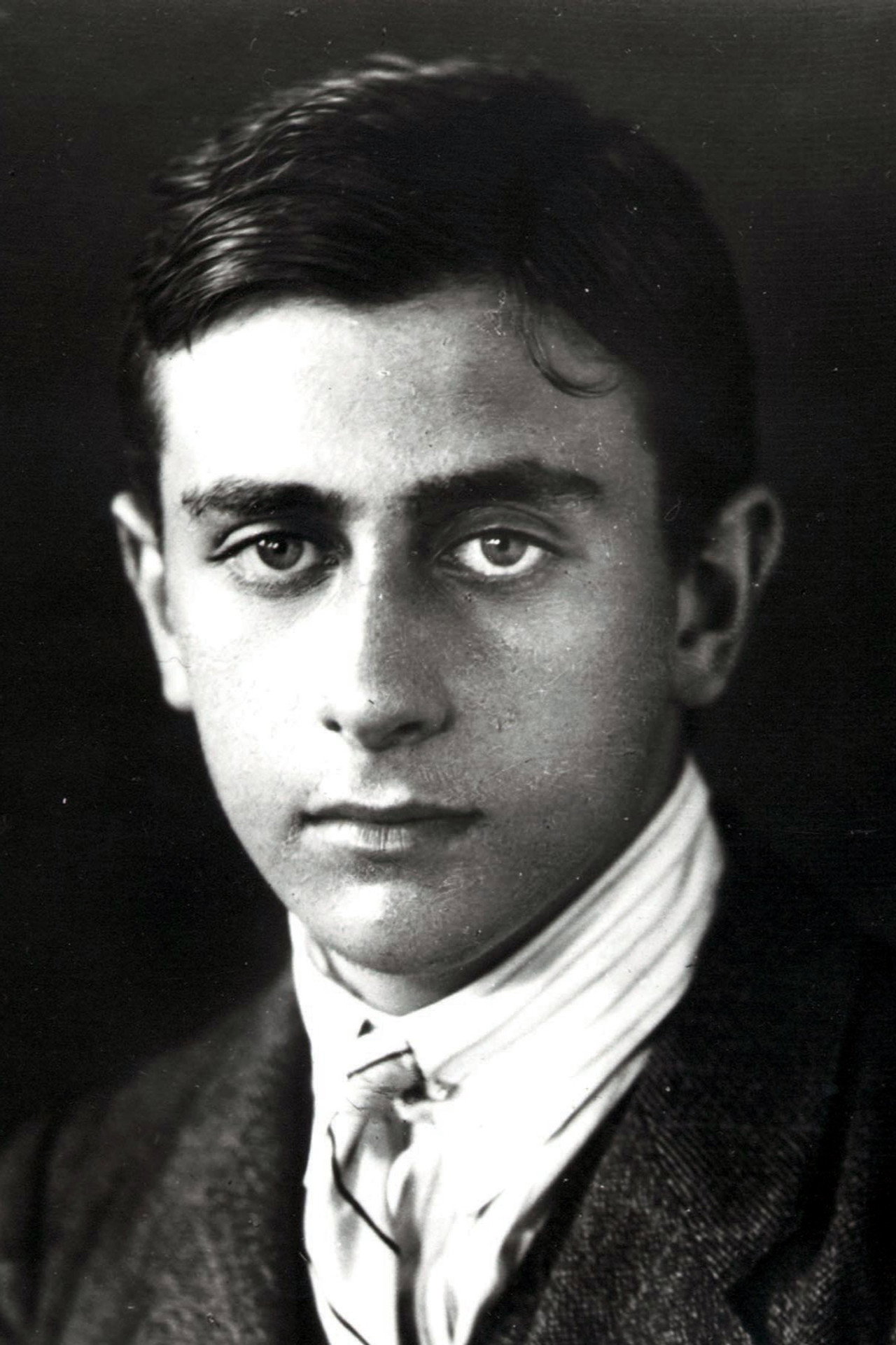
Edward Teller (Hungarian: Teller Ede; January 15, 1908 – September 9, 2003) was a Hungarian-American theoretical physicist who is known colloquially as "the father of the hydrogen bomb" (see the Teller–Ulam design), although he did not care for the title, considering it to be in poor taste. Throughout his life, Teller was known both for his scientific ability and for his difficult interpersonal relations and volatile personality. Born in Hungary in 1908, Teller emigrated to the United States in the 1930s, one of the many so-called "Martians", a group of prominent Hungarian scientist émigrés. He made numerous contributions to nuclear and molecular physics, spectroscopy (in particular the Jahn–Teller and Renner–Teller effects), and surface physics. His extension of Enrico Fermi's theory of beta decay, in the form of Gamow–Teller transitions, provided an important stepping stone in its application, while the Jahn–Teller effect and the Brunauer–Emmett–Teller (BET) theory have retained their original formulation and are still mainstays in physics and chemistry. Teller also made contributions to Thomas–Fermi theory, the precursor of density functional theory, a standard modern tool in the quantum mechanical treatment of complex molecules. In 1953, along with Nicholas Metropolis, Arianna Rosenbluth, Marshall Rosenbluth, and his wife Augusta Teller, Teller co-authored a paper that is a standard starting point for the applications of the Monte Carlo method to statistical mechanics and the Markov chain Monte Carlo literature in Bayesian statistics. Teller was an early member of the Manhattan Project, charged with developing the first atomic bomb. He made a serious push to develop the first fusion-based weapons as well, but these were deferred until after World War II. He co-founded the Lawrence Livermore National Laboratory, and was both its director and associate director for many years. After his controversial negative testimony in the Oppenheimer security hearing convened against his former Los Alamos Laboratory superior, J. Robert Oppenheimer, Teller was ostracized by much of the scientific community. Teller continued to find support from the U.S. government and military research establishment, particularly for his advocacy for nuclear energy development, a strong nuclear arsenal, and a vigorous nuclear testing program. In his later years, he became especially known for his advocacy of controversial technological solutions to both military and civilian problems, including a plan to excavate an artificial harbor in Alaska using thermonuclear explosive in what was called Project Chariot, and Ronald Reagan's Strategic Defense Initiative. Teller was a recipient of numerous awards, including the Enrico Fermi Award and Albert Einstein Award. He died on September 9, 2003, in Stanford, California, at 95.