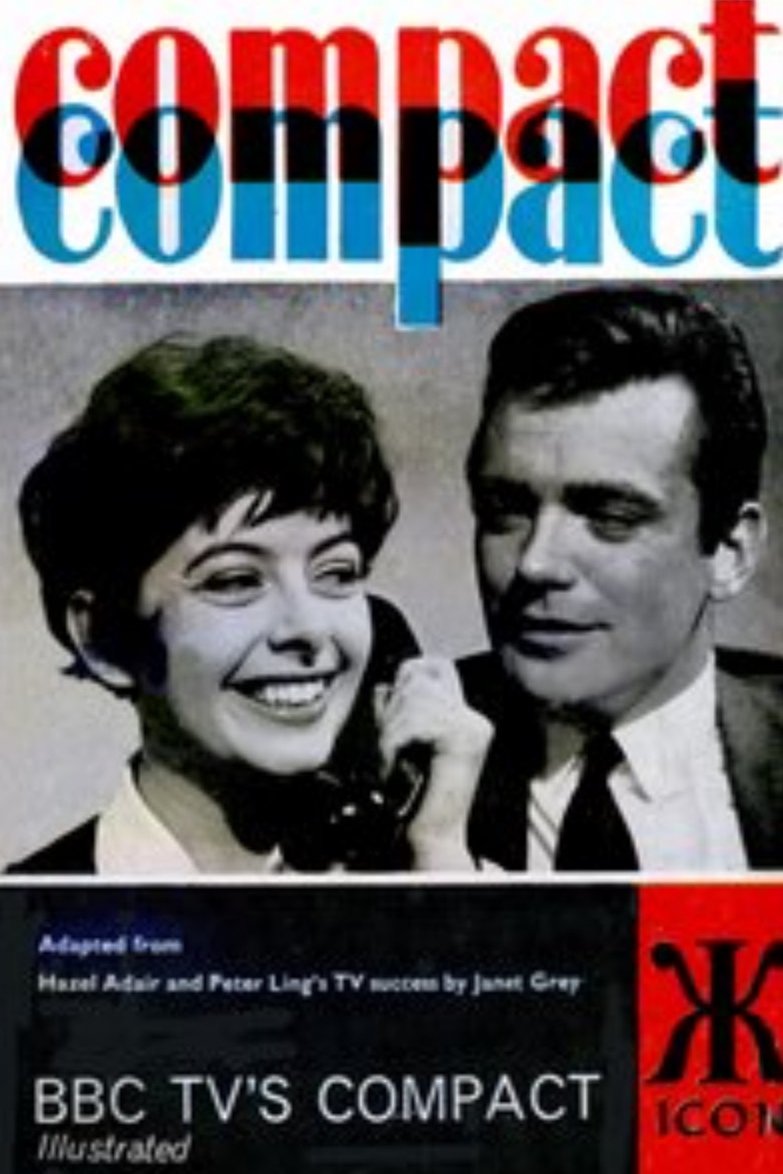
Compact
Compact

Compact

1965TV ShowEnded4 SeasonsEnglish

Compact was a British television soap opera shown by the BBC between 1962 and 1965. The series was created by Hazel Adair and Peter Ling, who together went on to devise Crossroads. In contrast to the kitchen sink realism of Coronation Street, Compact was a distinctly middle-class serial, set in the more "sophisticated" arena of magazine publishing. An early "avarice" soap, it took the viewer into the business workplace, and aligned the professional lives of the characters with more personal storylines. The show was scheduled for broadcast on Tuesdays and Thursdays, thus avoiding a clash with ITV's Coronation Street on Mondays and Wednesdays. When Compact began, the editor was a woman, Joanne Minster, yet it was not long before she was replaced by Ian Harmon, the son of the magazine's owner. Despite being largely criticised by reviewers, Compact was popular with the general public, and in 1964 a regular omnibus edition was introduced, broadcast on Sundays. Morris Barry, a some-time actor and BBC director – he directed several Doctor Who stories in the 1960s – took over as producer and was given a brief to spice the series up in view of the criticism it had received from the national press. But the BBC, never comfortable with the concept of soap opera, quietly dropped the series in 1965.

Read Reviews

Insights

Director: VariousGenres: Documentary, Short

Plot Summary

"Compact" is a 1965 short documentary film that offers a glimpse into the functionality and appeal of the compact car. The film likely showcases various models and highlights their advantages, such as fuel efficiency, ease of parking, and affordability, which were significant selling points during that era. It would have been produced to inform the public about the growing trend and practicality of smaller automobiles in the automotive market. The documentary aims to demonstrate how these vehicles met the evolving needs of consumers.

Critical Reception

As a short, industrial-style documentary from 1965, "Compact" did not receive traditional critical reviews in the way feature films do. Its purpose was primarily promotional and informational for the automotive industry and the public. However, short documentaries of this nature were often functional, serving their intended purpose of educating and persuading audiences about new products or trends.

What Reviewers Say

  • An informative look at the rise of compact cars.
  • Showcases the practical benefits of smaller vehicles.
  • Reflects the automotive trends of the mid-1960s.

Google audience: Information on specific Google user reviews for this short documentary is not available. However, similar films from the era were generally viewed as useful informational pieces.

Fun Fact

The mid-1960s saw a significant surge in the popularity of compact cars, partly driven by increasing concerns over fuel costs and urban congestion, making films like 'Compact' timely and relevant.

AI-generated overview · Verify ratings on official sources

My Review