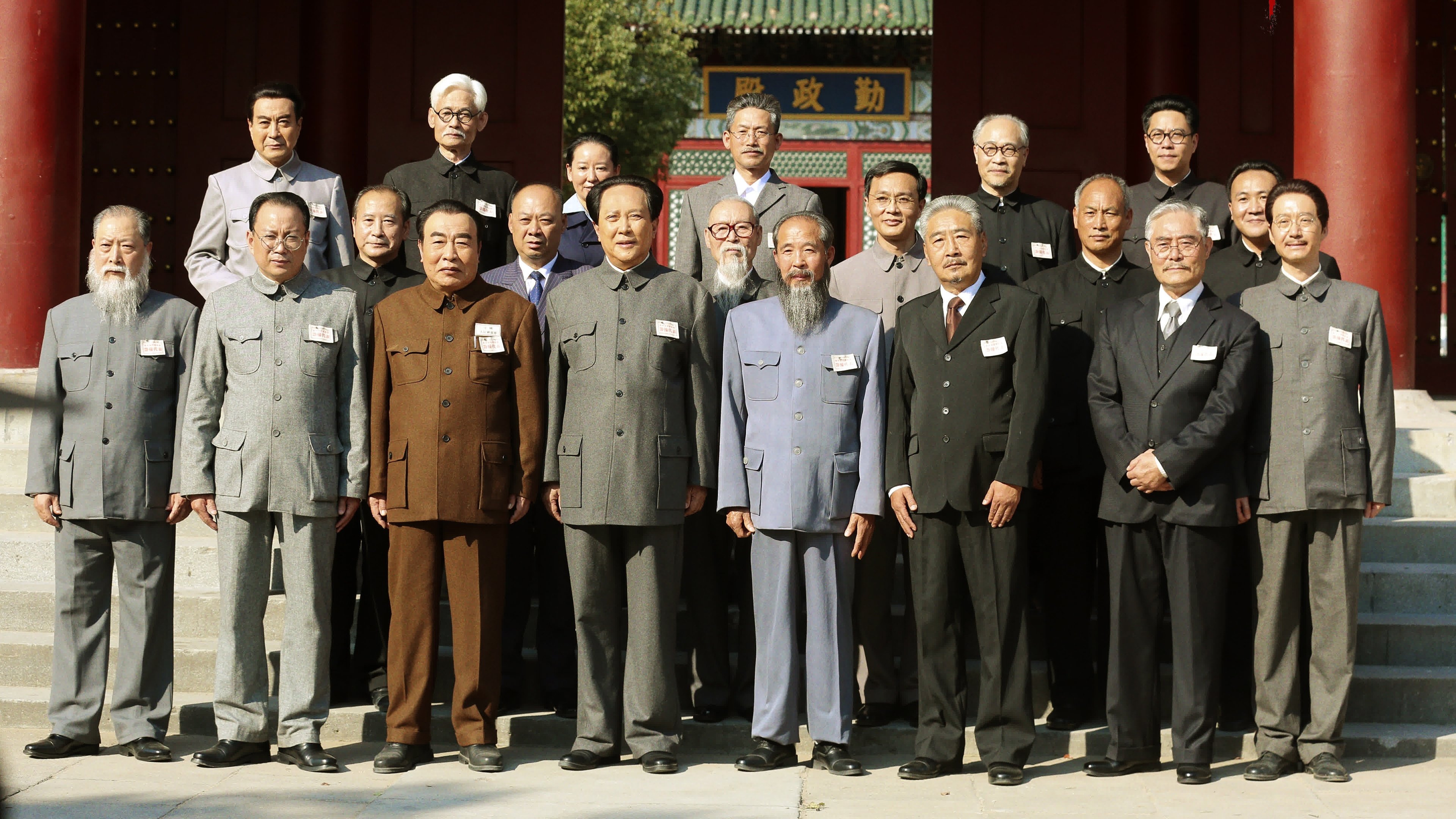


香山叶正红
The film mainly focuses on events such as entering Beijing, peace talks, crossing the river, economic construction, preparing for the CPPCC, and convening the CPPCC. After the peaceful liberation of Peiping in 1949, Chairman Mao led the Central Committee of the Communist Party of China to settle in Xiangshan from Xibaipo to "go to Beijing to take the test".
Insights
Plot Summary
This historical drama chronicles the pivotal events leading to the establishment of the People's Republic of China. It focuses on the strategic decisions, political maneuvering, and sacrifices made by key figures during a tumultuous period in Chinese history. The narrative emphasizes the formation of a unified front and the arduous journey towards national independence.
Critical Reception
The film was generally well-received by domestic audiences and critics in China for its historical accuracy and grand depiction of a significant era. It was praised for its patriotic themes and the performances of its veteran cast, although some international critics found it to be state-sponsored propaganda with a somewhat biased perspective.
What Reviewers Say
- Praised for its historical scope and patriotic messaging.
- Applauded for strong performances from a distinguished cast.
- Criticized by some for a potentially one-sided historical narrative.
Google audience: Audience reviews often highlight the film's educational value in understanding a crucial period of Chinese history and its success in evoking national pride.
Fun Fact
The film was part of a larger wave of productions in China commemorating significant anniversaries of the Communist Party, aiming to reinforce historical narratives and national identity.
AI-generated overview · Verify ratings on official sources