
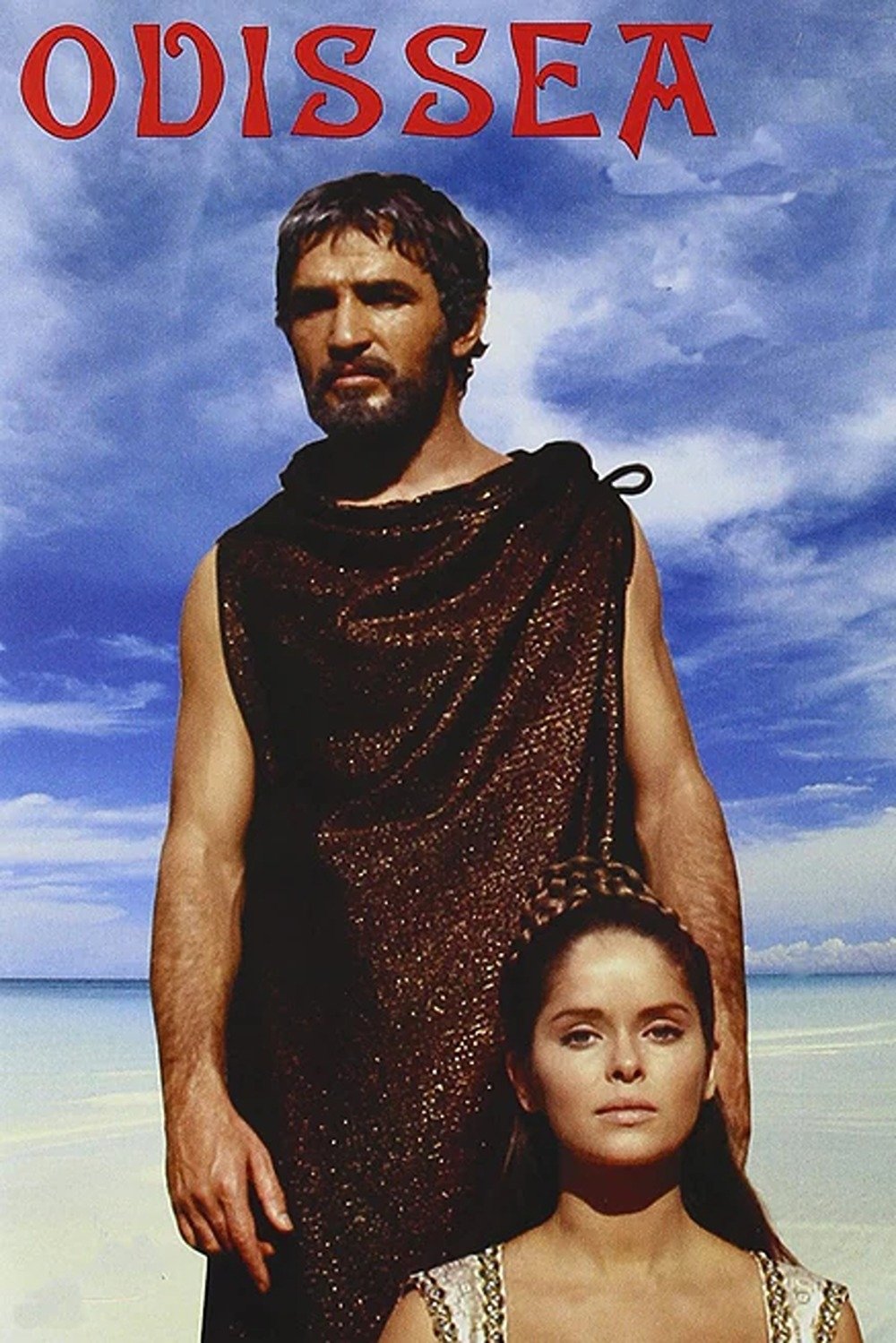

The Odyssey
Odysseus' journey, told in Homer's Iliad and Odyssey. After fighting in the Trojan War, Odysseus spends years trying to return home to Itaka.
Insights
Plot Summary
A cinematic adaptation inspired by Homer's epic poem, "The Odyssey." This film is not a direct retelling but rather a philosophical exploration loosely based on Odysseus's journey. It delves into themes of identity, fate, and the human condition, using the framework of the ancient myth to comment on contemporary issues. The narrative is often fragmented and symbolic, challenging viewers with its introspective nature.
Critical Reception
As an experimental and highly symbolic film, "The Odyssey" (1968) received a niche reception, lauded by some for its artistic ambition and criticized by others for its abstract narrative. It's considered a more personal and interpretative work by director Jules Dassin, rather than a straightforward epic adaptation.
What Reviewers Say
- Praised for its unique artistic vision and philosophical depth.
- Criticized for its unconventional and sometimes obscure storytelling.
- Considered a bold, albeit challenging, interpretation of classic themes.
Google audience: Audience reception is difficult to gauge due to the film's limited release and abstract nature. It appears to be appreciated by those who seek arthouse cinema and philosophical explorations, while others may find it inaccessible.
Fun Fact
While inspired by Homer's epic, this film is a very loose adaptation and is more of a philosophical meditation on themes present in the original work, rather than a direct retelling.
AI-generated overview · Verify ratings on official sources