
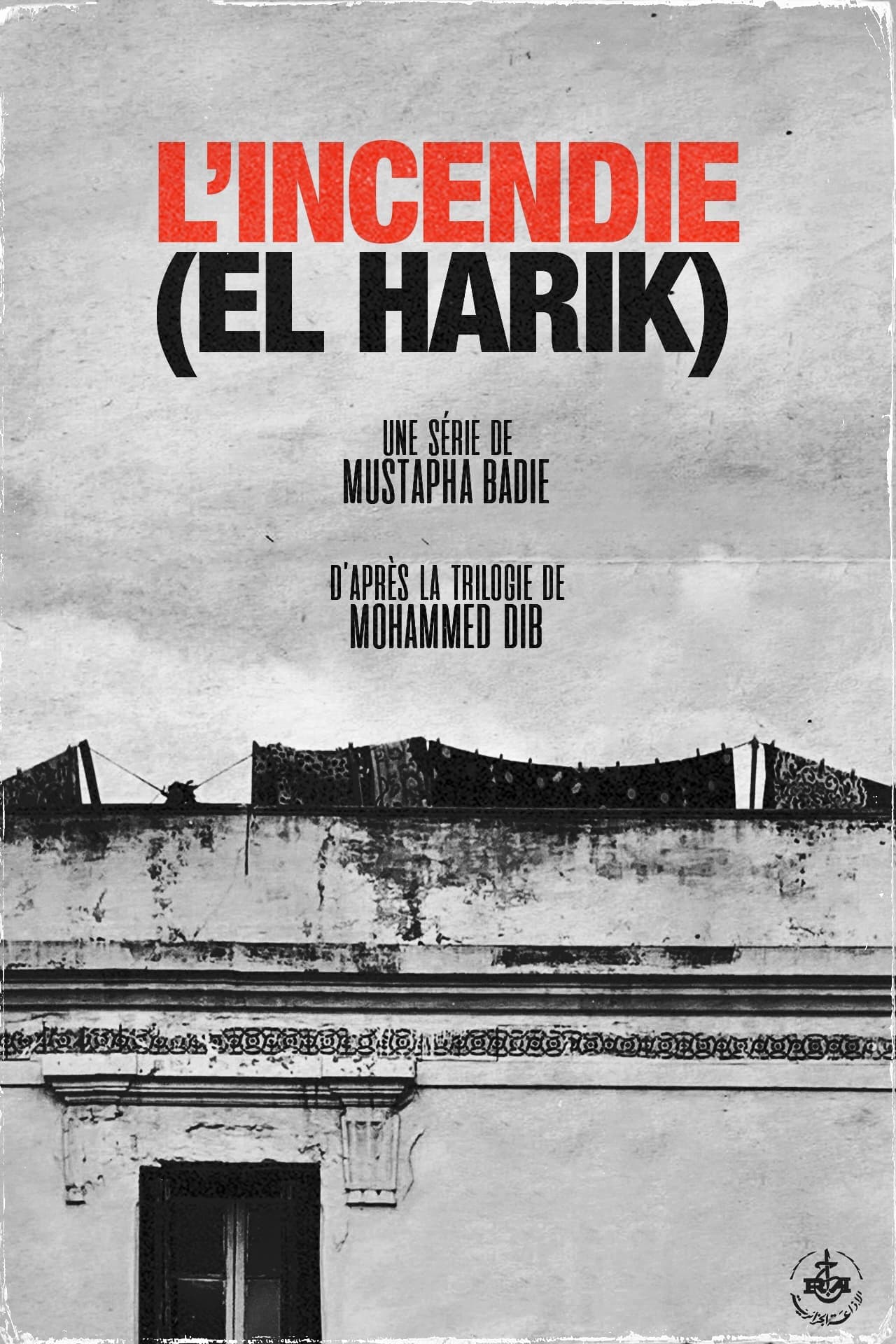

L’Incendie (El Harik)
In 1939 in eastern Algeria, Omar, a young boy of ten, lives with his family in a room in Dar Sbitar, a house shared by several families who overcome the trials they go through every day to ensure their subsistence. Her deceased father is Aïni, the mother, who bleeds herself from all four veins to keep her children and their grandmother alive. The families of Dar Sbitar share their intimacy and their daily life, this life animates the big house, which itself becomes a character in its own right. "El Harik" (The Fire), is an Algerian drama series in 10 episodes adapted from Mohamed Dib's trilogy "The Big House", "The Fire" and "The Loom".
Insights
Plot Summary
Set in a small Algerian village, the film depicts the struggles of a family facing poverty and the harsh realities of their environment. The narrative centers around a young woman whose dreams and aspirations are constrained by tradition and circumstance. As tensions rise within the community, her resilience is tested, revealing the deep-seated conflicts between old ways and the yearning for a different future.
Critical Reception
L'Incendie (El Harik) received a modest reception, noted for its authentic portrayal of rural Algerian life and its exploration of social and familial dynamics. While not a widespread commercial success, it was appreciated by those who focused on its thematic depth and its depiction of post-colonial societal challenges.
What Reviewers Say
- Praised for its realistic depiction of Algerian village life.
- Acknowledged for its sensitive handling of familial relationships and societal pressures.
- Often cited for its poignant portrayal of female resilience in challenging circumstances.
Google audience: Information on Google user reviews for L'Incendie (El Harik) is not readily available.
Fun Fact
Tewfik Fares, the director, was also a cinematographer, and the film is noted for its naturalistic visual style that captures the authentic feel of its Algerian setting.
AI-generated overview · Verify ratings on official sources