Insights
Plot Summary
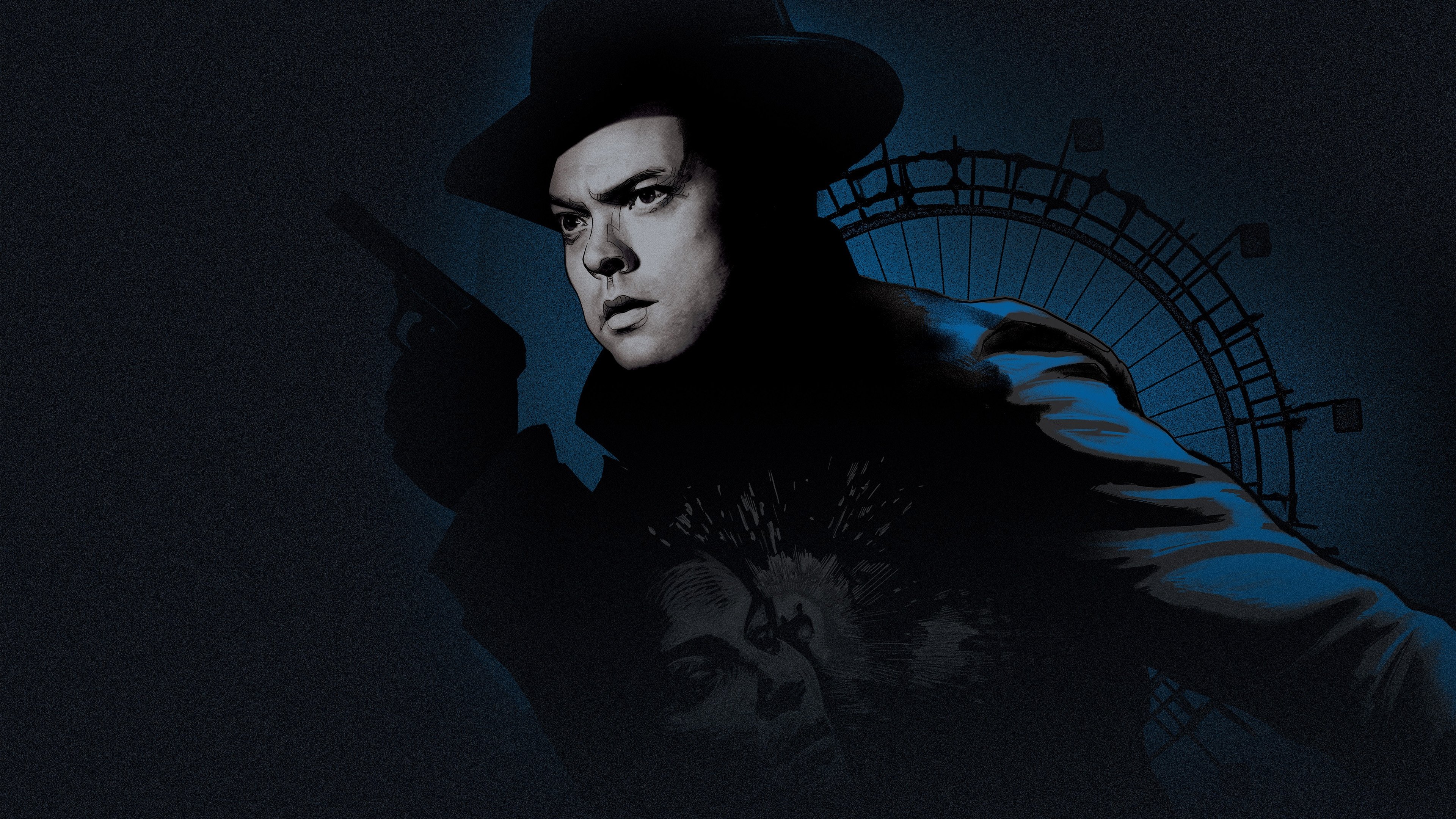
Holly Martins, an American pulp novelist, travels to post-war Vienna to meet his friend Harry Lime, only to discover that Lime has recently died under mysterious circumstances. As Holly investigates Lime's death, he uncovers a dark underworld of crime and deceit, leading him to question everything he thought he knew about his friend. The investigation takes him through the war-torn streets and famous Prater Ferris wheel of Vienna, revealing a complex conspiracy.
Critical Reception
The Third Man is widely regarded as a masterpiece of British cinema and a classic of the film-noir genre. It received widespread critical acclaim upon its release for its atmospheric cinematography, compelling performances, and gripping narrative. It remains a highly influential film, celebrated for its distinctive visual style and memorable characters.
What Reviewers Say
Praised for its stunning black-and-white cinematography and atmospheric setting.
Orson Welles's portrayal of Harry Lime is iconic and unforgettable.
A masterclass in suspense, mystery, and directorial craft.
Google audience: Audience reviews consistently highlight the film's captivating atmosphere, brilliant camerawork, and engaging mystery. Many praise the unexpected plot twists and the memorable performance by Orson Welles, considering it a timeless classic that holds up remarkably well.
Awards & Accolades
Winner of the Grand Prix du Festival International du Film at the Cannes Film Festival (1949); Academy Award for Best Cinematography (Black-and-White) (1949). Nominated for British Academy Film Awards (BAFTA) for Best British Film and Best British Actor (Orson Welles).
Fun Fact
The iconic zither music for the film was composed and performed by Anton Karas, who was discovered playing in a small Viennese Heuriger (wine tavern).
AI-generated overview · Verify ratings on official sources