
TV Show spotlight
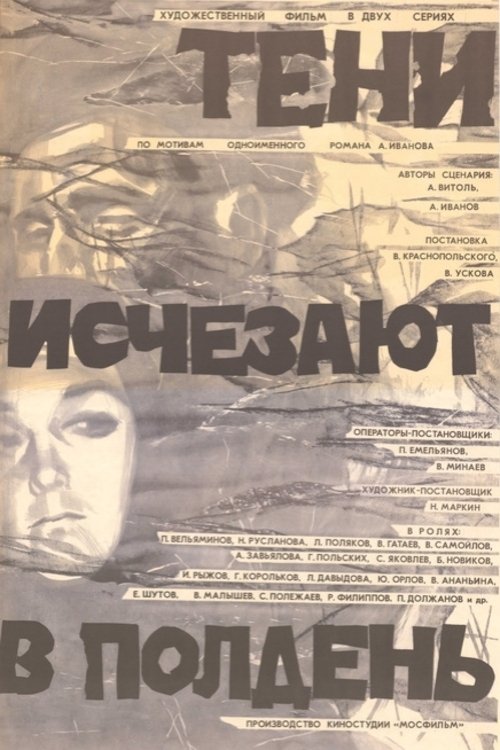
Shadows Disappear at Noon
The story of a small village Zeleny Dol, lost in the taiga wilderness, became a reflection of the fate of a huge country. A wide panorama of people's life unfolds before the viewer: from the defeat of Kolchak's White gangs to the first tractor furrow on the collective farm meadow, from the first elections to the Supreme Soviet to the send-off of Zelenodol residents to the fronts of the WW2, from the labor feat of women's hands in the rear to Victory Day, to the first post-war bread.
Insights
Plot Summary
Set against the backdrop of the Russian Civil War, the film chronicles the tumultuous life of Yegor Protassov. As he navigates the chaos and violence of the era, he grapples with ideological conflicts, personal betrayals, and the search for meaning amidst widespread destruction. The narrative follows his journey through shifting loyalties and the profound impact of war on the human spirit.
Critical Reception
Critically acclaimed upon its release, 'Shadows Disappear at Noon' was lauded for its powerful depiction of historical events and its complex character development. Reviewers praised its cinematic artistry and its unflinching portrayal of the civil war's harsh realities, though some noted its challenging narrative structure. It is considered a significant work in Soviet cinema.
What Reviewers Say
Praised for its epic scope and powerful performances.
Commended for its realistic and often brutal depiction of the Russian Civil War.
Noted for its complex narrative and exploration of moral ambiguity during conflict.
Google audience: Information on Google user reviews for this film is not readily available.
Awards & Accolades
None notable internationally.
Fun Fact
The film is based on the popular novel of the same name by Anatoly Ivanov, which was published in three volumes between 1971 and 1973.
AI-generated overview · Verify ratings on official sources