IMDb7.7/10
Rotten Tomatoes96%
Metacritic96/100
Google Users95%
Director: Jacques Tati•Genres: Comedy, Satire
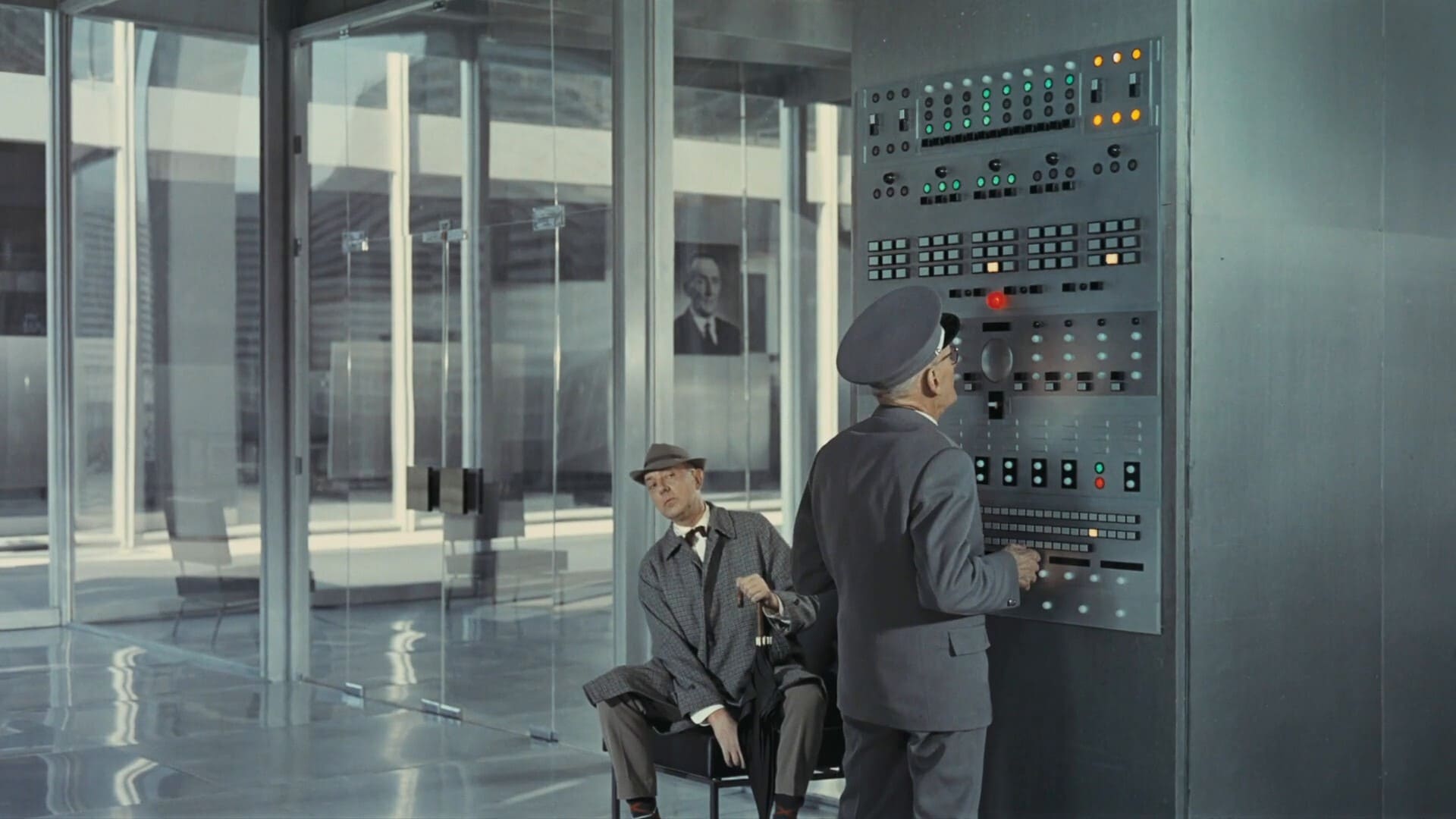
Monsieur Hulot visits Paris, a city of the future, where he encounters a series of absurd and disconnected events in a world dominated by modern technology and sterile architecture. The film follows his gentle, often accidental, disruptions as he navigates a glass and steel metropolis where humans seem to struggle to connect with each other. Through a series of interconnected vignettes, Tati satirizes the dehumanizing effects of modern urban life and the artificiality of the post-war boom.
Playtime is widely regarded as a masterpiece of cinematic modernism and a profound satire of contemporary society. Initially met with mixed critical responses and a disappointing box office, its reputation has grown immensely over the decades, with critics and cinephiles praising its visual inventiveness, observational humor, and ambitious scope. It is celebrated for its unique blend of silent comedy techniques with complex, multi-layered sound design and cinematography.
A visually stunning and technically brilliant satire on modern life.
Praised for its intricate set design and observational humor.
Considered one of Tati's most ambitious and profound works.
Google audience: Audiences largely appreciate the film's unique visual style and Tati's signature gentle, observational humor, finding it a thought-provoking commentary on modern society despite its slow pace. Some find the narrative structure disjointed, but the overall sentiment is one of admiration for its artistic achievement.
Nominated for the Palme d'Or at the Cannes Film Festival in 1969.
The film was shot on a custom-built, life-size replica of a modern Parisian neighborhood called "Tativille," which was one of the most expensive film sets ever constructed at the time.
AI-generated overview · Verify ratings on official sources