
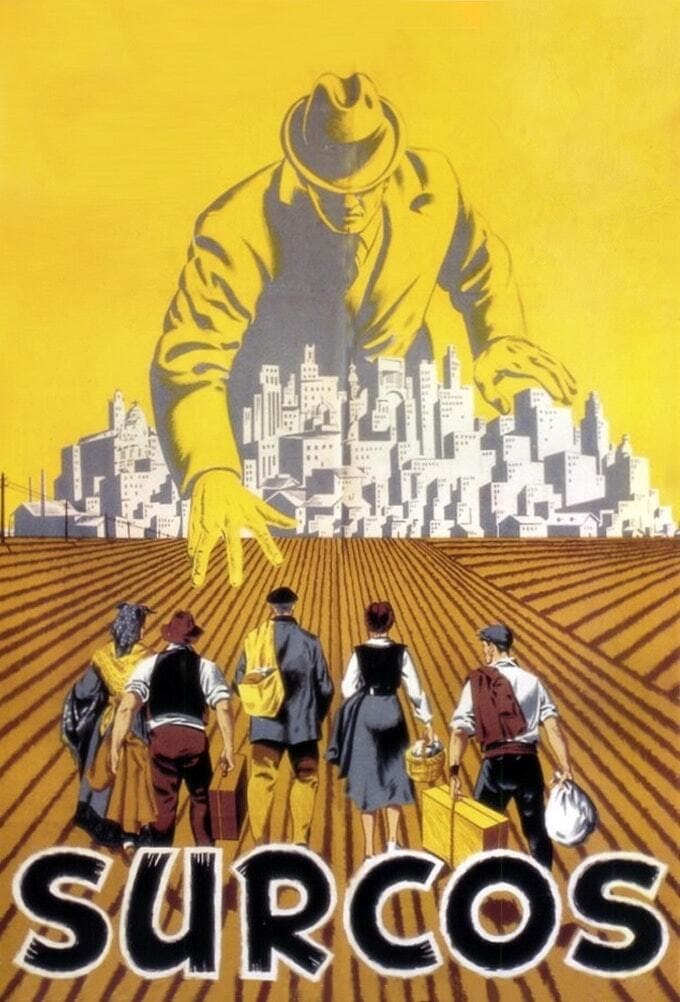

Surcos
A farm family moves into a city maybe at the end of the Spanish Civil War. They move in with the sister of the farmers wife. In the city everything is illegal or immoral or both.
Insights
Plot Summary
In the harsh landscape of rural Spain, a young orphaned woman named Anita finds herself entangled in a web of poverty and exploitation after being taken in by a wealthy landowner. As she grows, Anita becomes aware of the social injustices and the difficult lives of the farm laborers, leading her to question her own place and future. The film explores themes of class struggle, rural hardship, and the yearning for a better life against a backdrop of Spanish societal norms.
Critical Reception
Surcos was a significant film in post-war Spanish cinema, praised for its stark realism and social commentary. Critics noted its unflinching portrayal of rural poverty and the exploitation of agricultural workers, often comparing it to Italian Neorealism. While its bleak outlook and controversial themes led to some censorship issues, it is generally regarded as a powerful and important work that captured the struggles of its time.
What Reviewers Say
- Praised for its realistic depiction of Spanish rural life and social inequality.
- Considered a significant example of post-war Spanish cinema with neorealist influences.
- Noted for its powerful, albeit bleak, social commentary on the lives of agricultural laborers.
Google audience: Information on Google user reviews for 'Surcos' is not readily available.
Fun Fact
The film faced censorship issues in Spain due to its critical portrayal of social conditions and was initially banned for a period.
AI-generated overview · Verify ratings on official sources