
Movie spotlight
Pagliacci
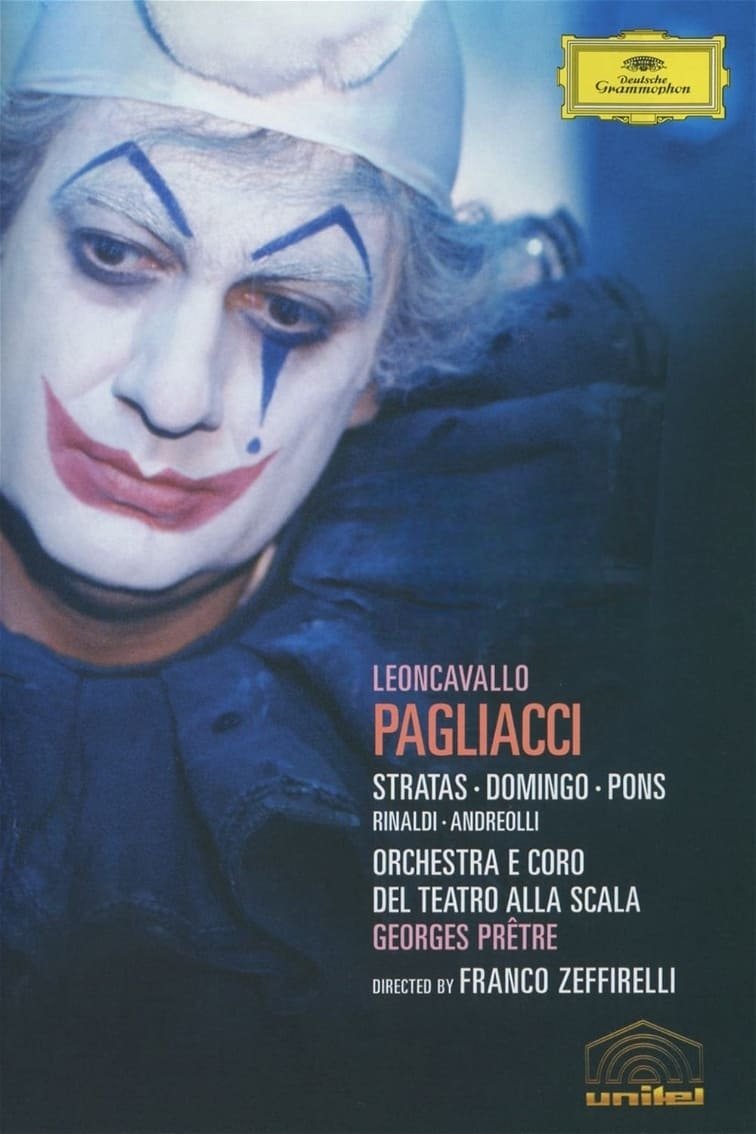
The story is set in southern Italy and recounts the tragedy of Canio, the lead clown (or pagliaccio in Italian) in a commedia dell'arte troupe, his wife Nedda, and her lover, Silvio. When Nedda spurns the advances of Tonio, another player in the troupe, he tells Canio about Nedda's betrayal. In a jealous rage Canio murders both Nedda and Silvio. Although Leoncavallo's opera was originally set in the late 1860's, Zeffirelli's production is updated to the period between World War I and World War II.
Insights
Plot Summary
This opera tells the tragic story of Canio, a clown in a commedia dell'arte troupe, who is driven to murder by jealousy. As his wife, Nedda, engages in a secret affair, Canio's performance on stage mirrors his real-life anguish. The opera culminates in a shocking act of violence that blurs the lines between performance and reality, leaving the audience in stunned silence.
Critical Reception
Franco Zeffirelli's 1987 film adaptation of 'Pagliacci' starring Plácido Domingo and Mirella Freni was generally well-received for its visually lavish production and strong vocal performances. Critics often praised the opulent sets and costumes, as well as Domingo's intense portrayal of Canio. However, some found Zeffirelli's directorial style to be overly dramatic or operatic in a way that detracted from the raw emotional power of the opera.
What Reviewers Say
Praised for its magnificent visuals and opulent production design.
Commended for the powerful vocal performances, particularly from Plácido Domingo.
Some critics felt the direction was overly theatrical, potentially overshadowing the intimate drama.
Google audience: Information regarding specific Google user reviews for this 1987 film adaptation is not readily available.
Fun Fact
The iconic aria 'Vesti la giubba' (Put on the costume), sung by Canio as he prepares to perform after discovering his wife's infidelity, is one of the most famous and recognizable pieces in all of opera, often used to convey profound sadness and the pain of hiding one's true feelings behind a smile.
AI-generated overview · Verify ratings on official sources