
Movie spotlight
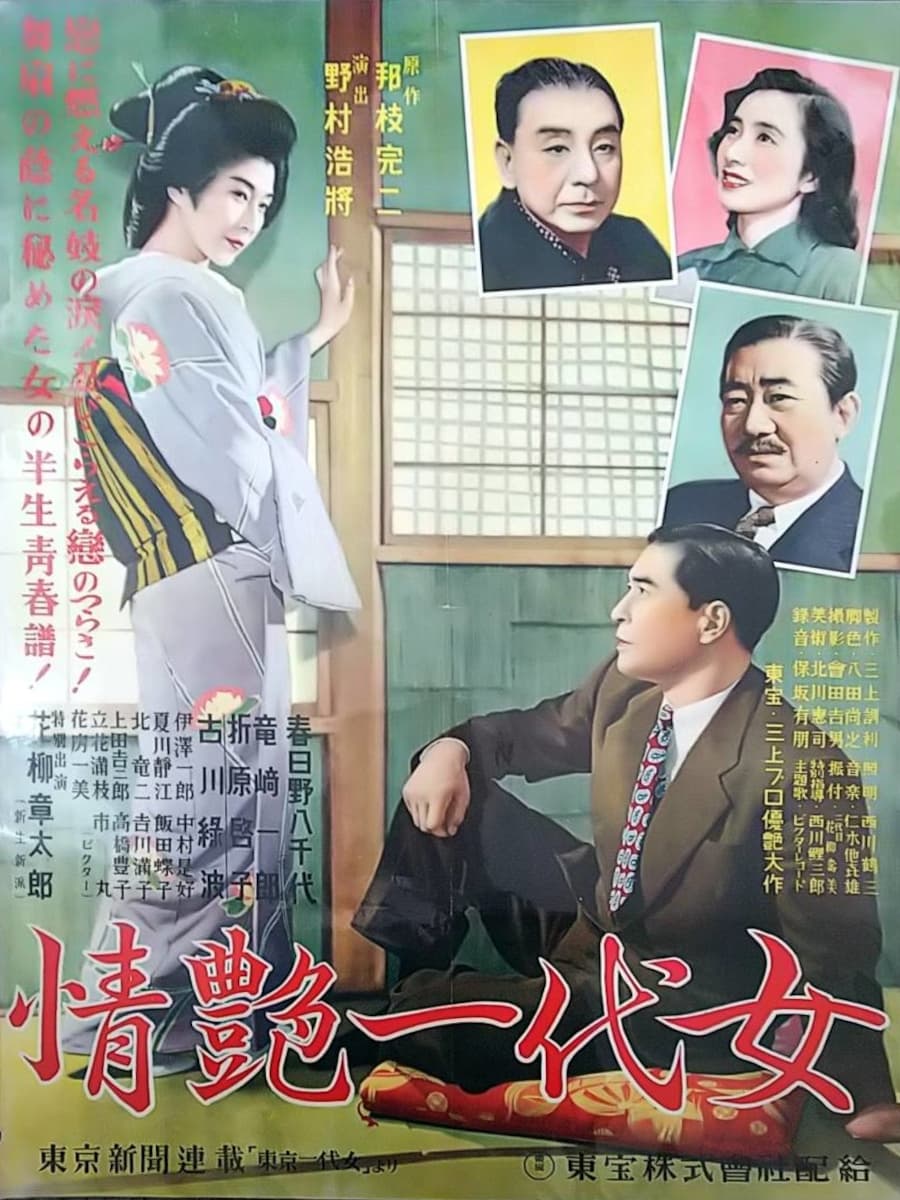
情艶一代女
Based on the serialized story "東京一代女" which appeared in Tokyo Shinbun. A geisha known for her dancing begins training with the Onnagata Kikugoro VI as a dancer. She leaves her geisha life to pursue this new path, but falls in love with a naval officer who is the younger brother of Kikugoro and who saves her from a stalker monk. Kikugoro hears of this and becomes enraged. The naval officer dies in the Second Sino-Japanese War, causing the lead to go back home to her mother where she meets, and falls in love with, a poet who resembles her now-deceased fiancé. This poet leaves her in order to force her to dedicate her entire life to dancing, which he sees as her true pursuit.
Insights
Plot Summary
Set during the Edo period, the film follows the tumultuous life of a woman of noble birth who is forced into a life of prostitution after her lover is framed and exiled. Despite immense hardship and societal condemnation, she rises through the ranks of the geisha world, eventually becoming a respected figure known for her intelligence, resilience, and artistic talents.
Critical Reception
The Life of Oharu is widely regarded as a masterpiece of Japanese cinema, celebrated for its powerful social commentary, exquisite visual style, and Kinuyo Tanaka's commanding performance. It received significant international acclaim, solidifying Kenji Mizoguchi's reputation as a world-class filmmaker.
What Reviewers Say
Praised for its poignant exploration of female suffering and resilience in a patriarchal society.
Lauded for Mizoguchi's masterful direction and the film's stunning cinematography.
Kinuyo Tanaka's performance is highlighted as a tour de force, embodying Oharu's complex journey.
Google audience: Audience reviews consistently praise the film's deeply emotional narrative and its powerful depiction of a woman's struggle against societal constraints. Many find the story heartbreaking yet inspiring, with particular appreciation for the performances and the historical setting.
Awards & Accolades
Nominated for the Golden Lion at the Venice Film Festival (1952). Recognized as one of the greatest films of all time by numerous critics' polls.
Fun Fact
The film's original title, "Saikaku Ichidai Onna," is derived from Ihara Saikaku's 17th-century novel "The Life of an Amorous Woman," though Mizoguchi took significant creative liberties with the source material.
AI-generated overview · Verify ratings on official sources