
Movie spotlight
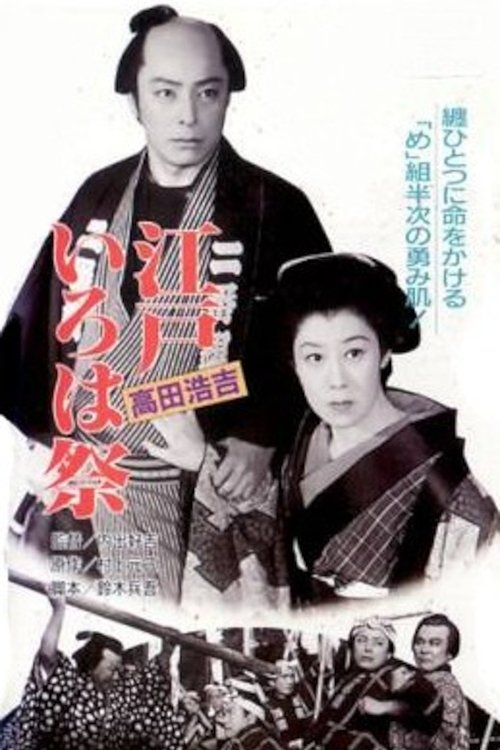
江戸いろは祭
Hatamoto Akabane Tanaka once ruined his life with alcohol in his youth, leaving behind his wife and son, Hanji, to embark on a journey. He killed a man on the Shikoku route, but later returned to Edo, reforming his ways. Concerned about Hanji, he tracked down the wet nurse, O-Kane, to whom he had entrusted the boy. To his surprise, Hanji had become a respectable young man, now a subordinate of the gang leader, Tatsugorou. During a New Year visit to the Shiba Shinmei shrine, a minor altercation led Hanji to meet the geisha Koina, the wicked servant Miya-toku, and the sumo wrestler Naruto. Hanji and Naruto hit it off and formed a bond like brothers. However, Naruto's father was the very man Tanaka had killed. Naruto had been seeking vengeance against his father's killer. During a chance encounter at a restaurant, Naruto witnessed the reunion of Hanji and Tanaka, realizing Tanaka was his father's killer.
Insights
Plot Summary
In Edo period Japan, during the bustling Iroha Festival, a charismatic swindler named Katsu orchestrates elaborate cons with his gang, often targeting corrupt officials and wealthy merchants. His schemes, while audacious, usually aim to redistribute wealth to the less fortunate, blurring the lines between trickster and philanthropist. Amidst the colorful festivities and the ever-present threat of the authorities, Katsu navigates a series of humorous and perilous situations, all while trying to maintain his freedom and his quirky sense of justice.
Critical Reception
This historical comedy-drama was a modest release in 1953, generally appreciated for its lighthearted portrayal of Edo-period life and its engaging lead performance. While not a major critical sensation, it found favor with audiences for its blend of humor and gentle social commentary, characteristic of Kajiro Yamamoto's more accessible works.
What Reviewers Say
Praised for its vibrant depiction of Edo-period festivals and culture.
Appreciated for its lighthearted and humorous storytelling.
The performances, particularly of the lead, are noted as engaging and entertaining.
Google audience: Audience reviews are scarce for this older film, but general sentiment suggests appreciation for its historical setting and comedic elements, offering a pleasant viewing experience.
Awards & Accolades
None notable.
Fun Fact
The film's title, 'Edo Iroha Matsuri,' directly translates to 'Edo Alphabet Festival,' referencing the traditional Japanese syllabary order used as a mnemonic device, which subtly hints at the film's structured yet playful narrative.
AI-generated overview · Verify ratings on official sources