
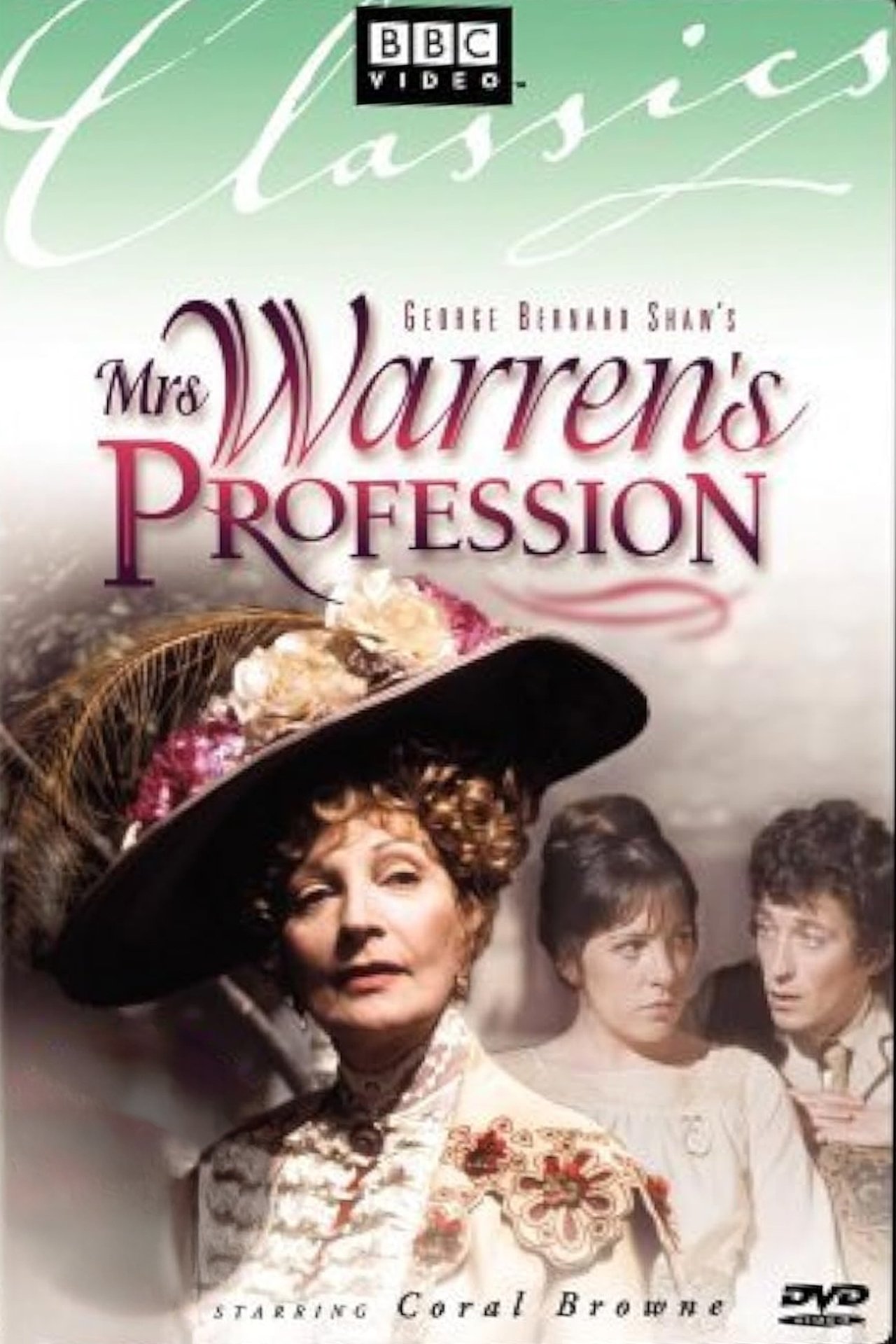
Mrs. Warren's Profession
Performed in 1902, after being banned by the censor for eight years, Shaw's indictment of the hypocrisy surrounding prostitution still shocked its audiences. Mrs. Warren has graduated from prostitution to opening and operating a chain of brothels throughout Europe. When her educated daughter Vivie discovers the truth about her mother's profession her reactions affect everyone around her.
Insights
Plot Summary
This television adaptation of George Bernard Shaw's play follows Vivie Warren, a young woman who discovers her mother's considerable wealth was built on running a chain of successful brothels. Vivie confronts her mother about her life choices and the moral implications of her success. The play explores themes of social hypocrisy, capitalism, and the limited options available to women in Victorian society.
Critical Reception
As a television adaptation of a classic play, 'Mrs. Warren's Profession' (1972) was generally well-received for its faithful portrayal of Shaw's witty dialogue and critical social commentary. The performances, particularly from Coral Browne as Mrs. Warren and Robert Stephens as Sir George Crofts, were often highlighted for bringing complex characters to life within the constraints of the medium.
What Reviewers Say
- Praised for its intelligent script and sharp social critique.
- Performances were noted as strong, capturing the essence of Shaw's characters.
- A faithful and well-executed adaptation of a significant play.
Google audience: Information on specific Google user reviews for this 1972 television film is not readily available.
Fun Fact
George Bernard Shaw's play 'Mrs. Warren's Profession' was initially controversial and banned by the Lord Chamberlain for its frank discussion of prostitution, only being publicly staged in Britain in 1902 after significant lobbying.
AI-generated overview · Verify ratings on official sources