
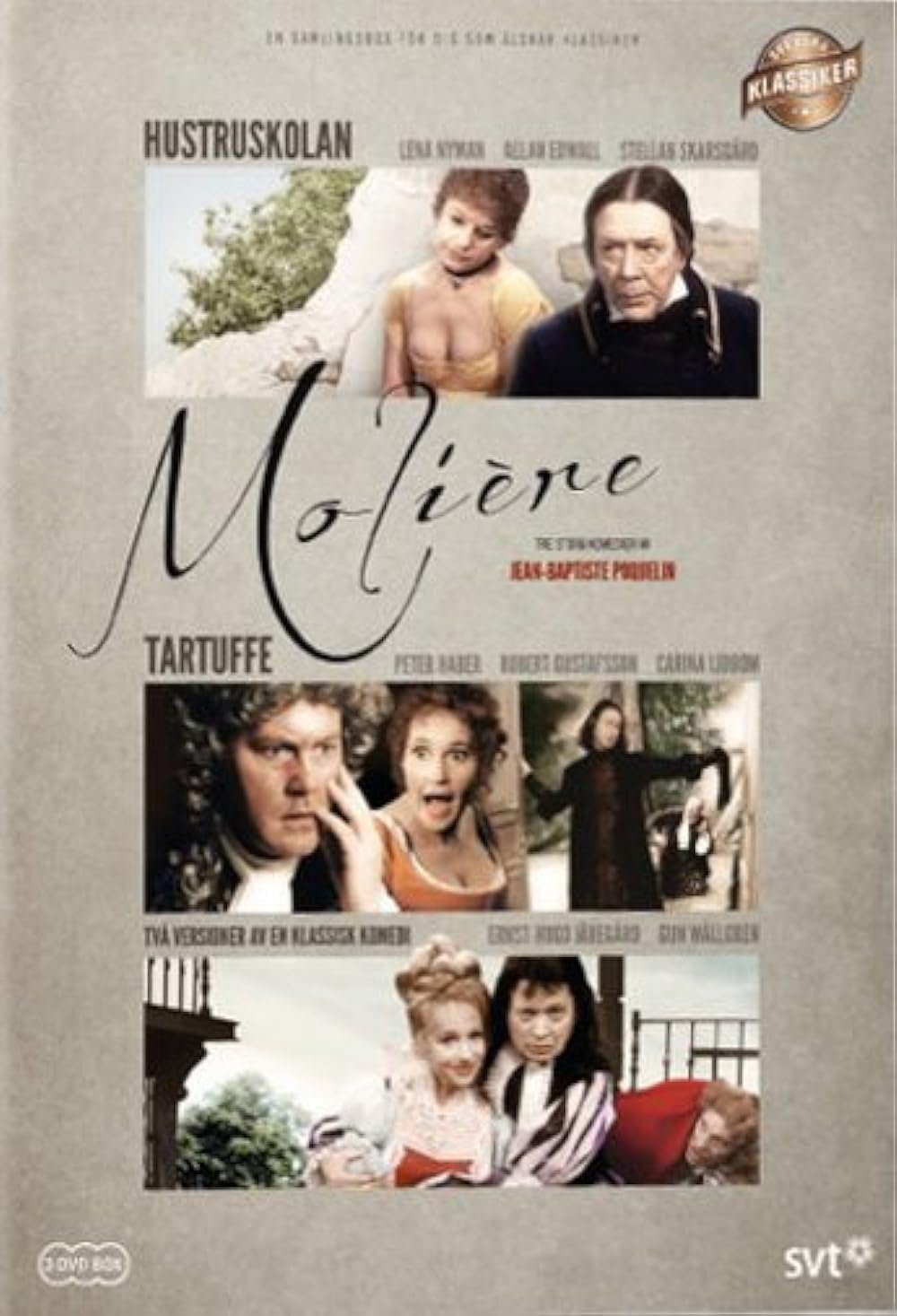
Movie spotlight
Tartuffe
The religious hypocrite Tartuffe parasites on a bourgeois family. He is looking for the daughter's hand and the family's property and is also trying to seduce the young wife.
Insights
Plot Summary
A devout and seemingly pious man named Tartuffe insinuates himself into the household of the wealthy Orgon, manipulating him with his feigned sanctity. Tartuffe gradually gains control of Orgon's affairs, even attempting to marry his daughter and seduce his wife. The play is a sharp satire of religious hypocrisy and the gullibility of those in power.
Critical Reception
Tartuffe (1966) is a Swedish adaptation of Molière's classic play. While specific critical reception details for this particular 1966 Swedish film are scarce in English-language sources, Molière's 'Tartuffe' as a work is universally acclaimed for its wit, social commentary, and enduring relevance. Adaptations generally aim to capture its comedic brilliance and critique of religious charlatanism, with success varying by production.
What Reviewers Say
Praised for its sharp satirical portrayal of religious hypocrisy.
Often lauded for its comedic timing and witty dialogue.
The play's enduring relevance in critiquing false piety is frequently highlighted.
Google audience: As this is a less widely distributed film adaptation, specific Google user reviews are not readily available. However, Molière's 'Tartuffe' itself is consistently appreciated by audiences for its humor and incisive social critique.
Awards & Accolades
None notable for this specific 1966 film adaptation.
Fun Fact
The original play 'Tartuffe' by Molière faced significant controversy and was banned for five years after its initial performance in 1664 due to its perceived attack on religious institutions and morality.
AI-generated overview · Verify ratings on official sources