
Movie spotlight
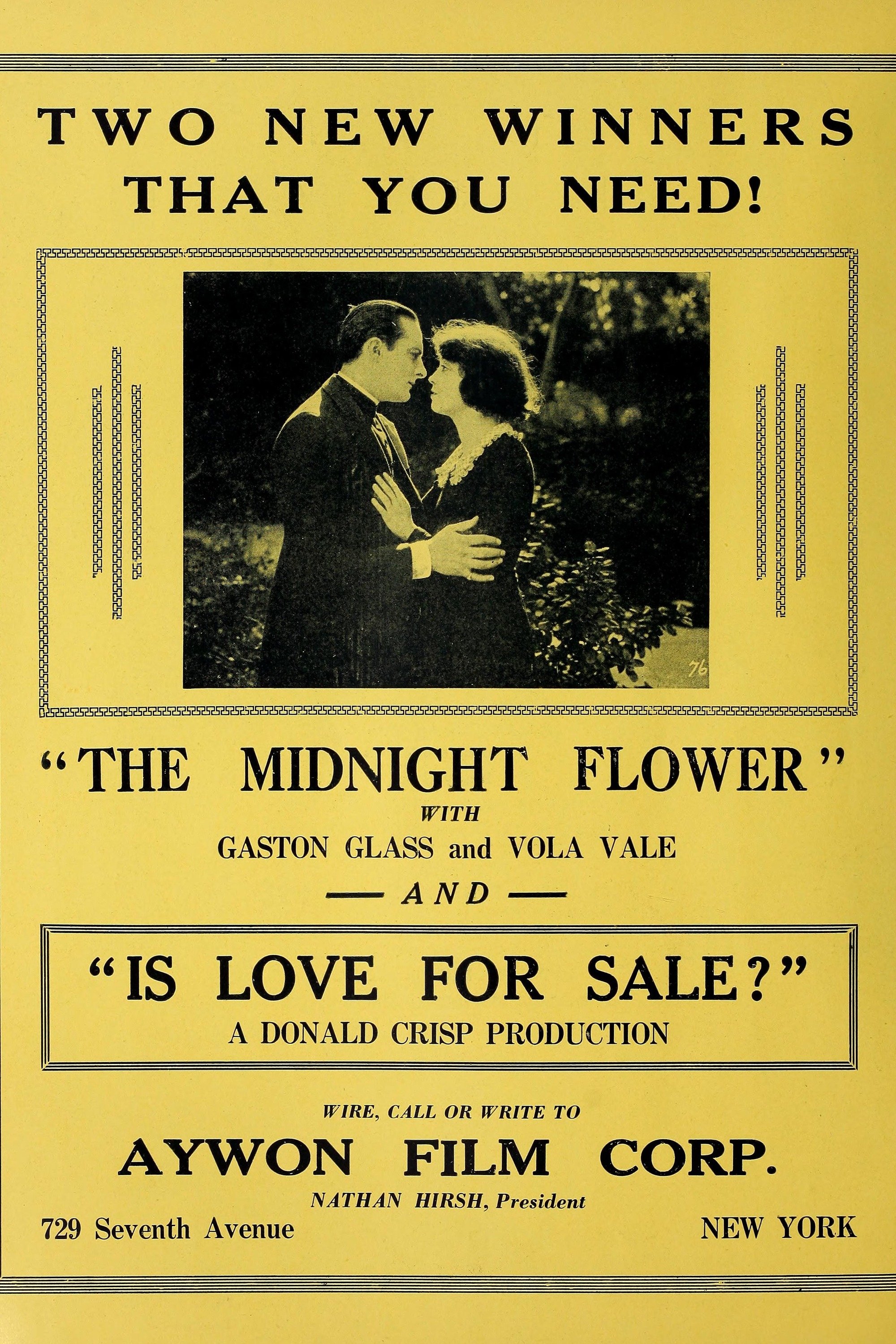
The Midnight Flower
Mary is called the "Midnight Flower" because each evening at midnight she does a wild dance atop a gaming table in a local gambling den. A young Spaniard in love with Mary, who would rescue her, stages a holdup at the most profitable table and passes the money on to her. In attempting to escape, she is caught, arrested, and jailed. While she is in prison, she meets a young evangelist who runs a mission in the slums. They fall in love, and on her release Mary joins him in the missionary work. This sets the local tongues wagging and complicates the affair until it is revealed that Mary is the daughter of a wealthy family--lost to a kidnapper when she was an infant.
Insights
Plot Summary
A silent drama that delves into the complexities of human emotion and societal pressures. The film likely explores themes of love, sacrifice, and the challenges faced by individuals within their communities. As a silent film, the narrative unfolds through visual storytelling and intertitles, relying on the actors' performances to convey the emotional weight of the story.
Critical Reception
As a silent film from 1923, specific critical reception data in modern formats is largely unavailable. However, films of this era were often reviewed in contemporary newspapers and journals. 'The Midnight Flower' is remembered as a notable Italian production of its time, showcasing the dramatic capabilities of its lead actors and the artistic direction of Domenico Gambino.
What Reviewers Say
Praised for its dramatic performances in the silent film era.
Recognized as a significant Italian film of the early 20th century.
Appreciated for its visual storytelling and emotional depth.
Google audience: Audience reviews for films of this age are not available in a quantifiable format. However, 'The Midnight Flower' is part of the historical record of Italian cinema.
Fun Fact
The film's director, Domenico Gambino, was also a prominent actor in Italian cinema during the silent era.
AI-generated overview · Verify ratings on official sources