
Movie spotlight
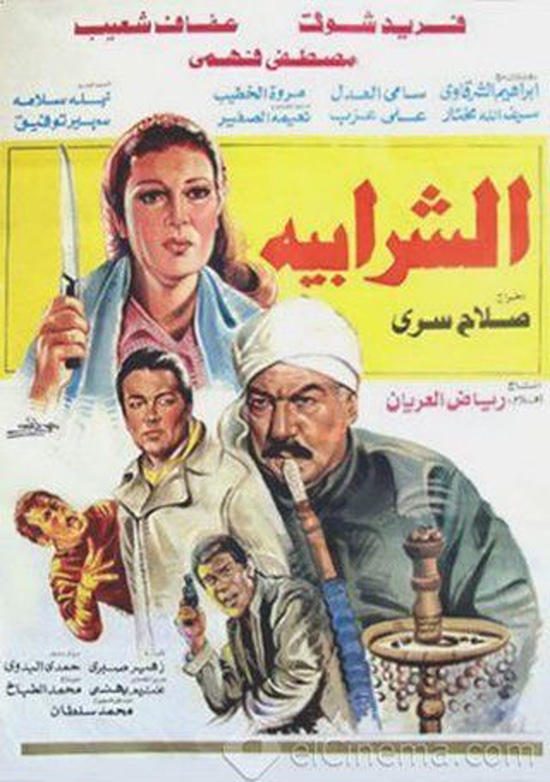
Al Sharabiya
Toha and her mother work to transport the cargos in carriages on behalf of the teacher Shehata, who exploits them and they cannot stand in front of him, until Toha gets to know Shawqi, the head of the station and responsible for the supply loads that are transported on trains, to help her get rid of the teacher Shehata, and fall in love with her and marry her, so that Shehata decides to take revenge.
Insights
Plot Summary
In a rural Egyptian village, a powerful landlord (Gamil Rateb) exploits the local farmers, leading to simmering resentment. His son (Ahmed Bedeir), who has studied abroad, returns with modern ideas and clashes with his father's traditional, oppressive ways. The conflict escalates as the farmers, led by a respected elder (Farid Shawqi), begin to fight for their rights against the landlord's tyranny.
Critical Reception
Al Sharabiya was a critically acclaimed Egyptian film that garnered attention for its powerful social commentary on land ownership and class struggle in rural Egypt. It was praised for its strong performances and realistic portrayal of village life, becoming a significant work in the director's filmography.
What Reviewers Say
Praised for its unflinching look at social inequality.
Lauded for strong performances, particularly from Gamil Rateb.
Appreciated for its authentic depiction of Egyptian village life and struggles.
Google audience: Information on specific Google user reviews for this film is not readily available.
Awards & Accolades
Screened at the 15th Cairo International Film Festival.
Fun Fact
The film's title, 'Al Sharabiya,' refers to a type of traditional Egyptian pastry, but in the context of the film, it can also be interpreted metaphorically, suggesting something valuable or desirable that is being hoarded or fought over.
AI-generated overview · Verify ratings on official sources