
Movie spotlight
Jack and the Beanstalk
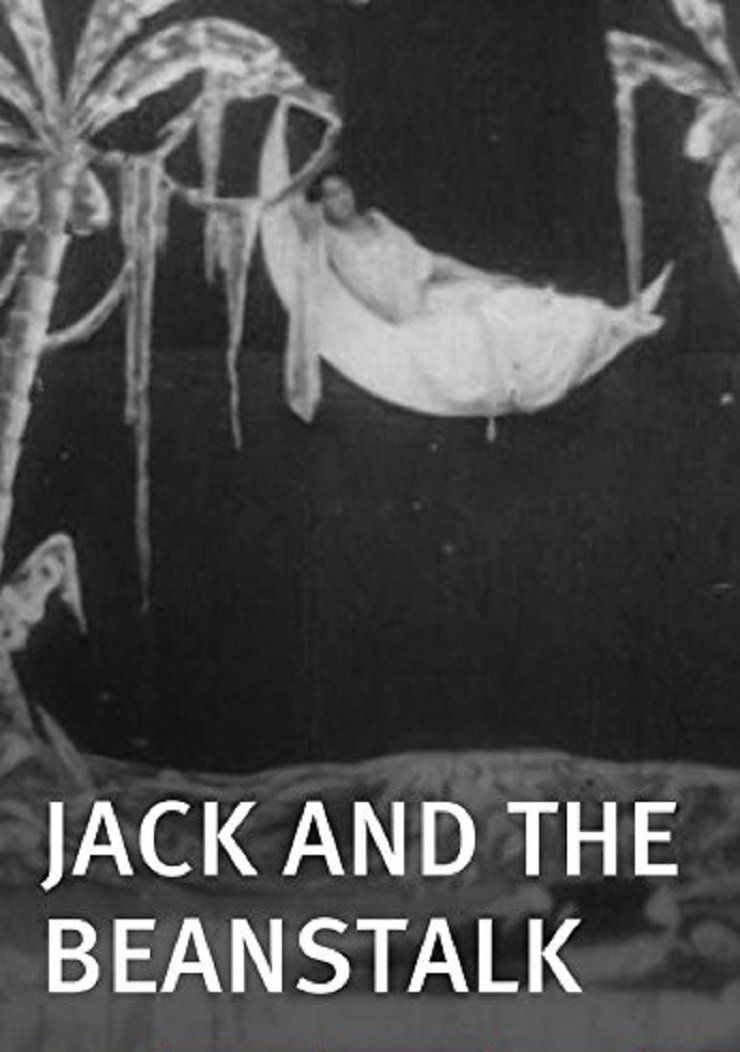
Porter's sequential continuity editing links several shots to form a narrative of the famous fairy tale story of Jack and his magic beanstalk. Borrowing on cinematographic methods reminiscent of 'Georges Melies' , Porter uses animation, double exposure, and trick photography to illustrate the fairy's apparitions, Jack's dream, and the fast growing beanstalk.
Insights
Plot Summary
This silent film adaptation retells the classic fairy tale of a young boy named Jack who trades his family's cow for magic beans. These beans grow into a colossal stalk reaching into the clouds, where Jack discovers a land inhabited by a fearsome giant and his treasures. Jack embarks on a perilous adventure, seeking to outwit the giant and bring riches back to his impoverished mother.
Critical Reception
As one of the earliest known film adaptations of a fairy tale and an early example of trick photography, 'Jack and the Beanstalk' (1902) is historically significant for its pioneering special effects and narrative storytelling in the nascent film industry. While specific critical reviews from its time are scarce, its existence and survival are testaments to its novelty and early success in captivating audiences with its fantastical elements.
What Reviewers Say
A remarkable early example of cinematic fantasy.
Pioneering use of special effects for its time.
A foundational piece in the history of film adaptation.
Google audience: Due to the film's age, specific audience reviews on platforms like Google are not available. However, its historical importance as an early silent film is recognized.
Fun Fact
This film is notable for its early use of stop-motion animation and matte paintings to create the illusion of the giant's castle in the sky.
AI-generated overview · Verify ratings on official sources