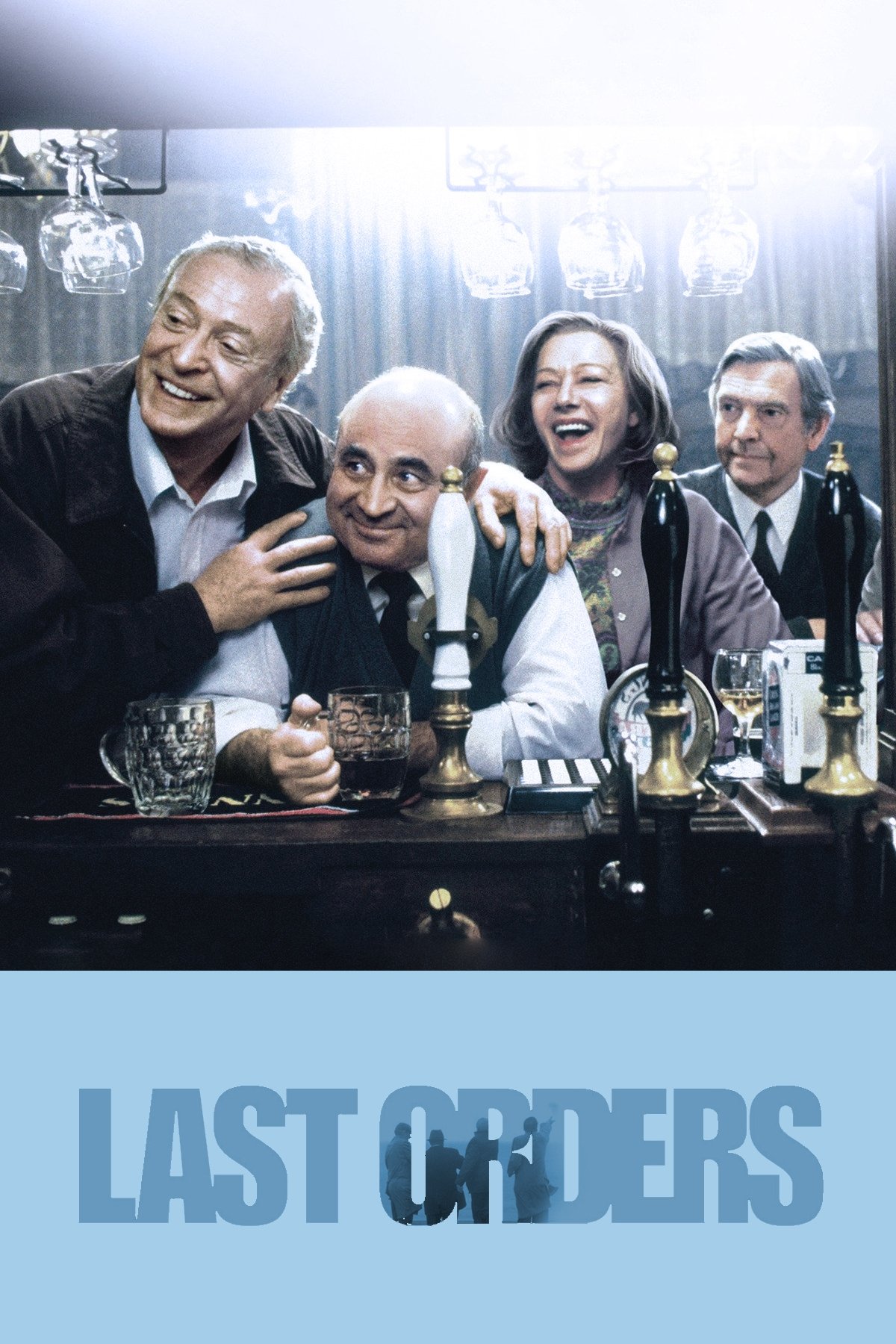

Last Orders
Jack Dodd was a London butcher who enjoyed a pint with his mates for over 50 years. When he died, he died as he lived, with a smile on his face watching a horse race on which he had bet, with borrowed money. But before he died he had a final request, 'Last Orders', that his ashes be scattered in the sea at Margate. The movie follows his mates, Ray, Lenny and Vic and his foster son Vince as they journey to the sea with the ashes. Along the way, the threads of their lives, their loves and their disappointments are woven together in their memories of Jack and his wife Amy
Insights
Plot Summary
Four lifelong friends meet in London for a final celebratory pub crawl to scatter the ashes of their deceased fifth friend. As they reminisce about their shared past, the evening unravels a complex tapestry of loyalty, betrayal, and unspoken truths that have shaped their lives and friendships over decades.
Critical Reception
Last Orders received a mixed to positive reception from critics, who often praised the strong performances of its ensemble cast, particularly Michael Caine, and the film's poignant exploration of male friendship and aging. However, some critics found the non-linear narrative structure occasionally confusing and felt the film, while emotionally resonant, lacked a strong dramatic arc.
What Reviewers Say
- Praised for its exceptional ensemble cast and heartfelt performances.
- Appreciated for its moving depiction of enduring male friendships.
- Some found the flashback structure occasionally disjointed.
Google audience: Audience reviews generally highlight the strong acting and the emotional depth of the film's exploration of friendship and life's final chapters. Many viewers found it to be a touching and reflective movie, though a few felt it was slow-paced.
Awards & Accolades
Nominated for the Palme d'Or at the 2001 Cannes Film Festival.
Fun Fact
The film is based on the 1996 novel of the same name by Graham Swift, which won the Booker Prize.
AI-generated overview · Verify ratings on official sources