
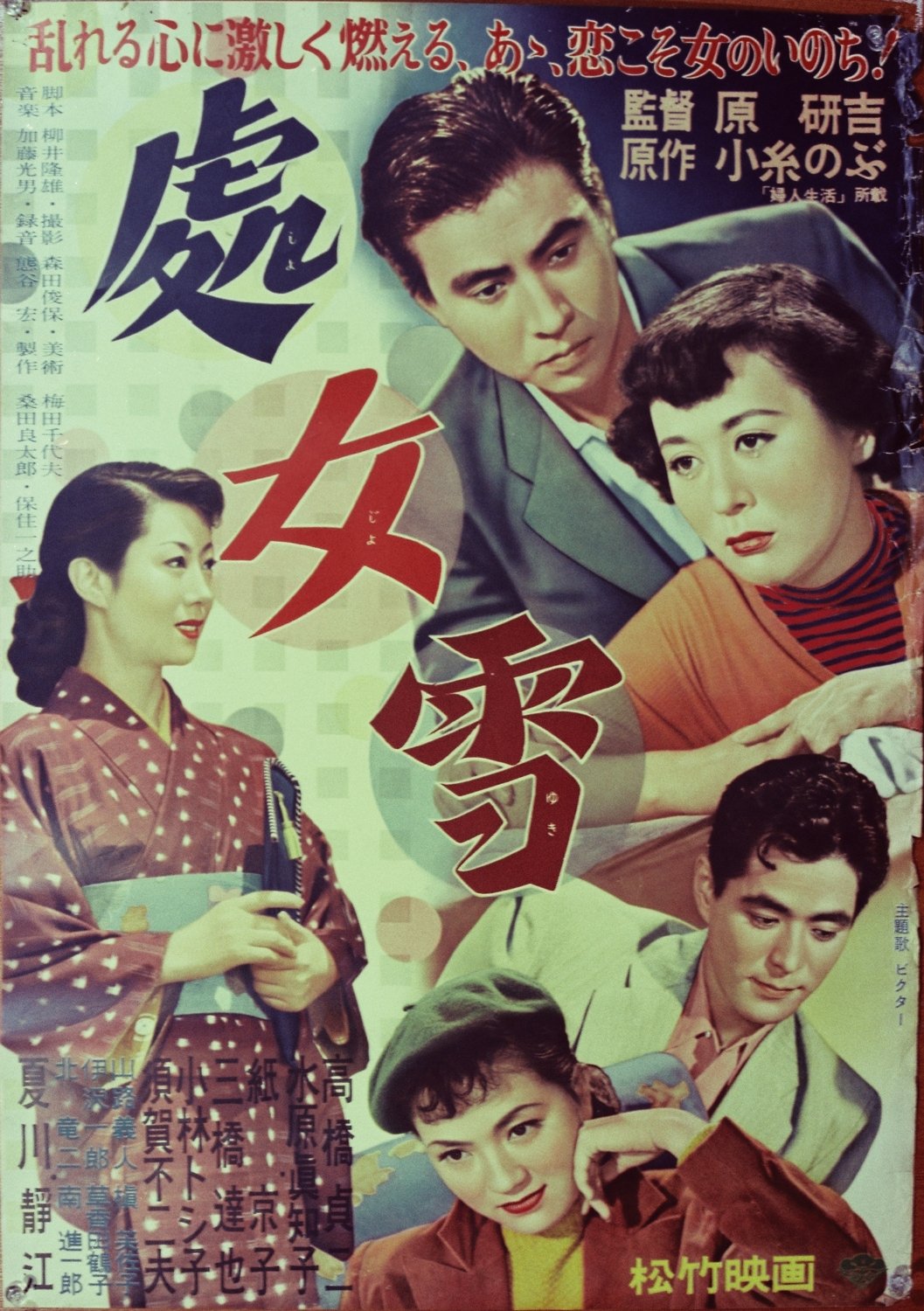
Movie spotlight
処女雪
Minako, Sadae, and Momoyo were all in love with their filial art teacher, Sasaki Shinya, but when Momoyo realized that Shinya loved Minako, she gave up and devoted herself to painting, and Sadae was so frustrated that she even staged a fake suicide. As a result, Minako's parents misunderstood Shinya, and in anger, he went to Tokyo, where he worked as an illustrator for his friend Sunaga's publishing company, and was introduced to the artist Hotta, and coincidentally, it was at one of these meetings that he met Sadae, who had become a waitress at a bar.
Insights
Plot Summary
The film centers on a young woman who grapples with her burgeoning desires and societal expectations in post-war Japan. As she navigates complex relationships, she confronts her own identity and the constraints placed upon her by tradition and circumstance. The narrative explores themes of love, loss, and the difficult choices faced by women in a rapidly changing society.
Critical Reception
While specific contemporary critical reviews for 'Shojo Yuki' are scarce in international archives, its release in 1953 positioned it within a significant period of Japanese cinema, exploring sensitive themes that resonated with audiences. It is generally recognized as a notable work by director Yoshitaro Nomura, contributing to the landscape of Japanese melodramas.
What Reviewers Say
Explores the emotional turmoil of a young woman.
Delves into societal pressures and personal desires.
A poignant portrayal of Japanese womanhood in the 1950s.
Google audience: Audience reception data for 'Shojo Yuki' is not readily available through standard public platforms like Google Reviews, making it difficult to summarize specific user sentiments.
Fun Fact
Machiko Kyō, who plays the lead, was a prominent actress of the era, known for her roles in films like Akira Kurosawa's 'Rashomon' (1950).
AI-generated overview · Verify ratings on official sources