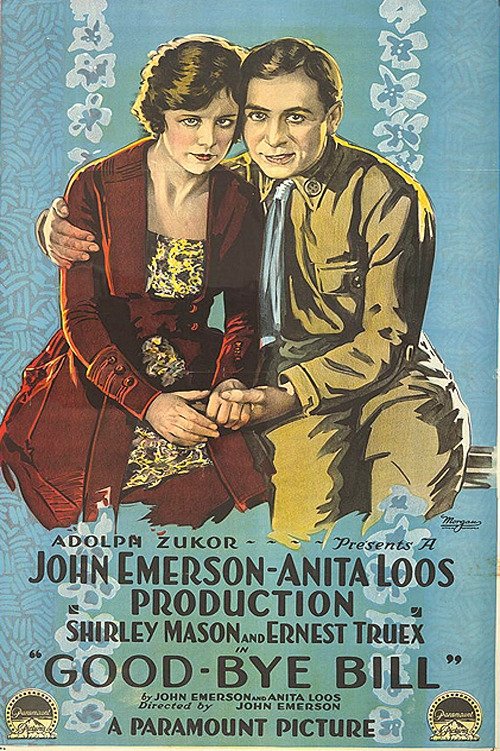
Movie spotlight
Good-Bye, Bill
During World War I, Herr Dresser, a German-American professor from West Hoboken, New Jersey, invents a "mustache fixer," which stiffens the whiskers, making the wearer look very fierce. Much to the consternation of Dresser's daughter Elsie, a patriotic American, Kaiser Wilhelm calls them to Berlin to begin mass production of the tonic for the German army. Elsie's boyfriend, Teddy Swift, is particularly disturbed by this turn of events and decides to earn enough money to follow her to Germany. When the United States joins the war, Teddy is among the first to enlist, and soon he finds himself in Berlin trying to help Elsie escape from prison. After several narrow escapes, the two make their way to the mustache factory and blow it up. Brought before the Kaiser, they are rescued when American troops storm the palace, and the Kaiser loses his mustache and the war.
Insights
Plot Summary
This short film depicts a group of women on a farm who are trying to manage their agricultural duties with the men away at war. They humorously struggle with tasks typically done by men, showcasing their resilience and resourcefulness.
Critical Reception
As a silent short film from 1918, formal critical reception data is scarce. However, it is recognized as an early example of women taking on roles in filmmaking and portraying female independence and capability during wartime.
What Reviewers Say
An early example of female agency in film.
Humorous portrayal of women adapting to wartime responsibilities.
A brief but charming glimpse into the domestic front during WWI.
Google audience: Information regarding Google user reviews for this film is not available due to its age and limited distribution.
Fun Fact
Alice Guy-Blaché, the director, was a pioneer in filmmaking and established her own studio, Solax Company, making her one of the first female film producers.
AI-generated overview · Verify ratings on official sources