Movie spotlight
The Marriage of Figaro
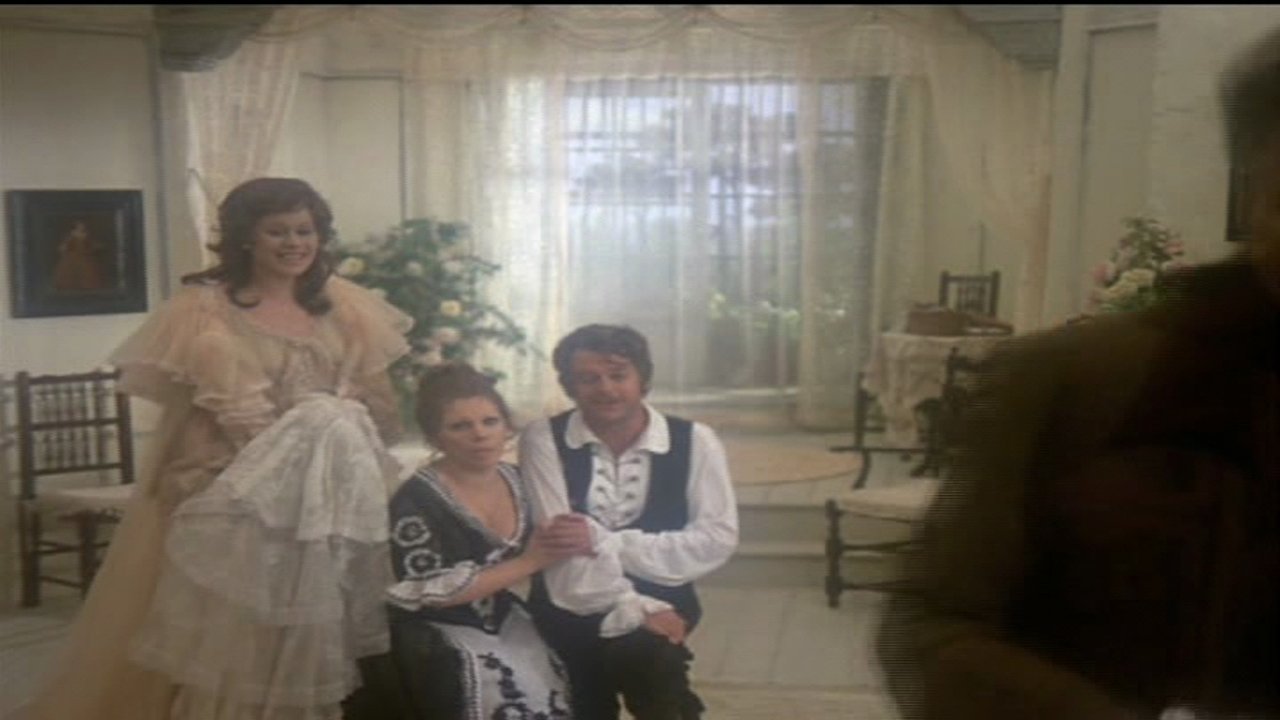
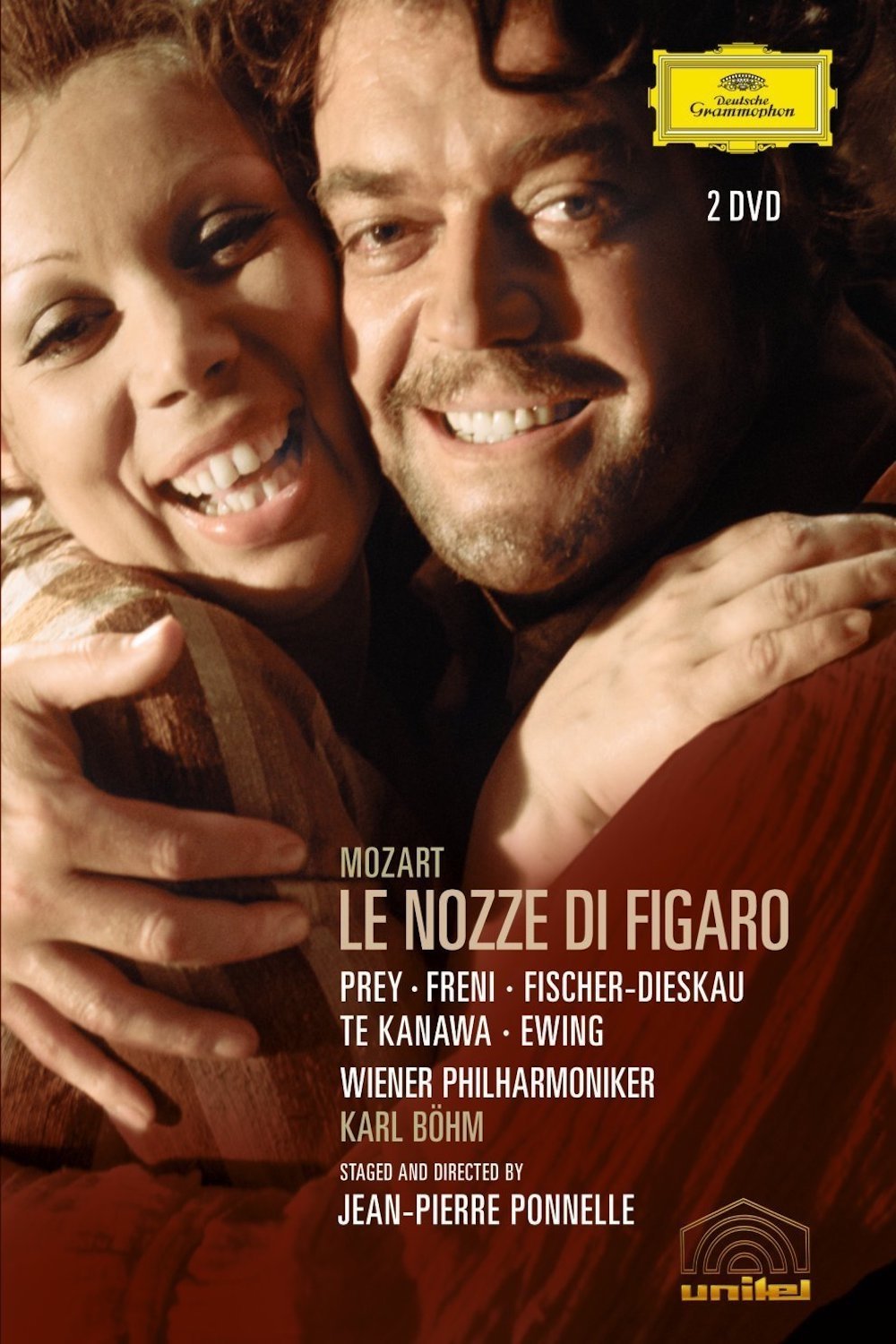
Mozart's Marriage of Figaro is a comedy whose dark undertones explore the blurred boundaries between dying feudalism and emerging Enlightenment. Herman Prey's Figaro is admirably sung in a firm baritone and aptly characterized. So too, is his antagonist, Dietrich Fischer-Dieskau as the Count perpetually frustrated by the scheming wiles of Figaro and Susanna, here the perky Mirella Freni, who sings and acts like a dream. The Countess is creamy-voiced Kiri Te Kanawa, and the Cherubino, Maria Ewing, looks just like the horny, teenaged page she's supposed to be. The all-star leads are complemented by worthy supporting singers, the Vienna Philharmonic at the top of its form, and the experienced Mozartian, Karl Böhm conducting a stylishly fleet performance.
Insights
Plot Summary
Set in Seville, Spain, the opera follows a single day of mayhem as the clever Figaro attempts to marry his beloved Susanna, despite the lecherous intentions of their employer, Count Almaviva. A series of intricate plots, disguises, and mistaken identities unfolds, involving the Countess, Cherubino, Marcellina, and Doctor Bartolo. Ultimately, love and wit prevail as the Count's schemes are exposed, leading to reconciliation and a joyous conclusion.
Critical Reception
Jean-Pierre Ponnelle's 1975 film adaptation of Mozart's "The Marriage of Figaro" is widely celebrated for its vibrant energy, faithful yet cinematic approach, and exceptional cast. The production is lauded for bringing the complexity and humor of the opera to life with visual flair and outstanding musical performances, making it a benchmark for operatic film adaptations.
What Reviewers Say
Praised for its spirited direction and comedic timing.
Celebrated for the superb vocal performances and rich characterizations.
Applauded for its beautiful cinematography and faithful adaptation of Mozart's score.
Google audience: Information regarding specific Google user reviews for this 1975 film adaptation is not readily available.
Awards & Accolades
Nominated for the Golden Globe Award for Best Foreign Film.
Fun Fact
The opera's libretto was written by Lorenzo Da Ponte, who would later collaborate with Mozart on "Don Giovanni" and "Così fan tutte."
AI-generated overview · Verify ratings on official sources