
Movie spotlight
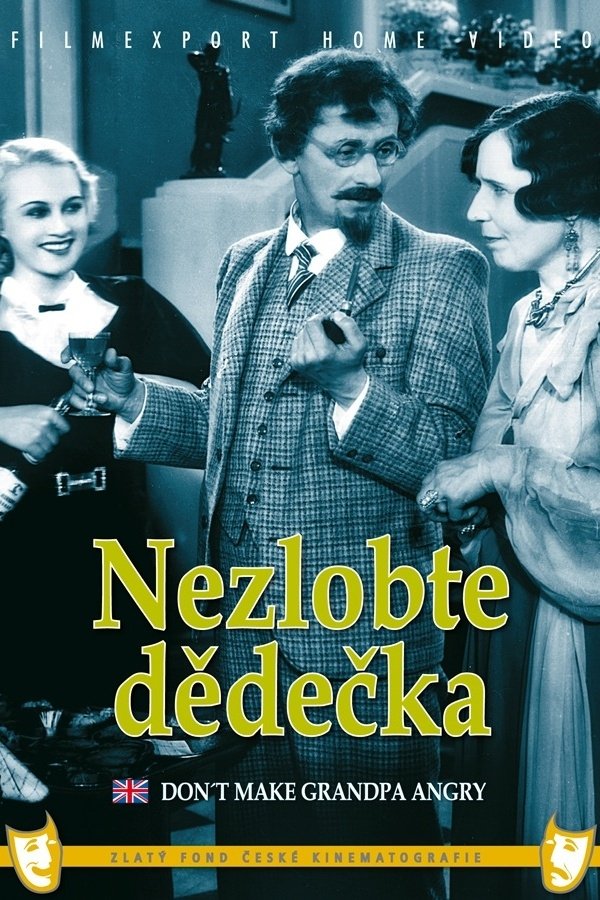
Don't Make Grandpa Angry
Eman Vovísek drinks away his unrequited love for Liduška, who married his cousin, the factory owner Danek. Because Eman is aggressive when drunk, he is taken to a mental health facility, where he meets his uncle Hanibal. Hanibal has a breakdown after his wife Matylda broke up with him. Matylda wanted to be free so she could marry her first love, Uncle Jonathan, who is due to arrive from America. Jonathan sends a telegram saying he will stay in Paris. Such a situation does not suit Danek. He assumed that Liduška would be visiting from America and that he himself would go to his mistress in the meantime. He therefore visits Vovísek and persuades him to play the role of Jonathan.
Insights
Plot Summary
In this short comedy, a young man's visit to his cantankerous grandfather takes a turn when he brings along his attractive girlfriend. The grandfather, set in his ways and prone to outbursts, finds himself increasingly annoyed by the couple's presence and their modern ways. Hijinks ensue as the grandson tries to appease his elder while navigating the delicate balance of romance and family.
Critical Reception
As a short comedy from 1934, 'Don't Make Grandpa Angry' was likely intended as light entertainment. Contemporary reviews are scarce, but its runtime and genre suggest a focus on simple gags and character-based humor rather than deep thematic exploration. It is remembered as a minor piece within the era's output of short films.
What Reviewers Say
A lighthearted comedic short with simple jokes.
Features typical familial exasperation humor of the era.
Relies on character interactions for its comedic effect.
Google audience: Information on Google user reviews for this specific short film from 1934 is not readily available. Audience reception would have been limited to theatrical showings and word-of-mouth at the time of its release.
Fun Fact
Charles Lamont, the director of this short, would go on to direct over 100 films, many of them Westerns and comedies for Universal Pictures in the 1940s and 1950s.
AI-generated overview · Verify ratings on official sources