
Movie spotlight
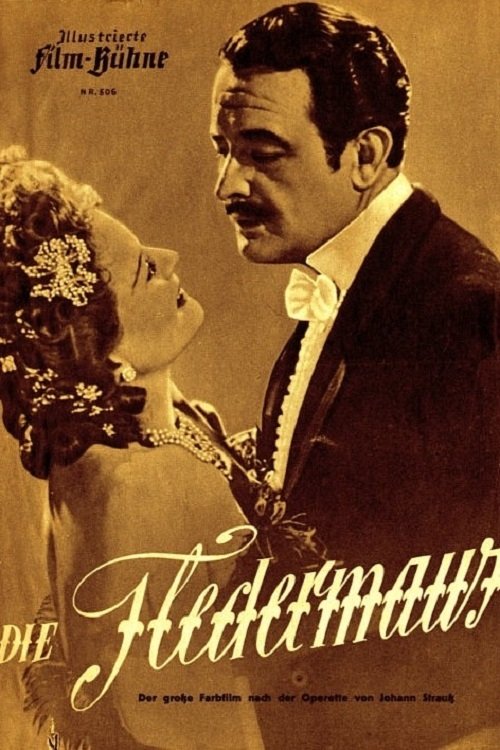
Die Fledermaus
Theater director Falke, dressed as a bat, ends up in prison after a merry carnival night. Director Frank only releases him after some time. Falke decides to take revenge on his friend Gabriel von Eisenstein, to whom he owes the whole affair. The annual masked ball at Prince Orlofsky's provides the opportunity. Falke stages a game of mistaken identity in which Eisenstein does not recognize his own wife and courts her, while maid Adele appears as the countess. Eisenstein is duped, Falke has taken his revenge.
Insights
Plot Summary
In this musical adaptation of Johann Strauss II's operetta, Prince Orlofsky hosts a lavish ball. Gabriel von Eisenstein, a wealthy gentleman, is due to go to prison but is persuaded by his friend Falke to attend the ball instead. Eisenstein, disguised, flirts with his own wife, Rosalinde, who is also disguised and attending as a mysterious Hungarian countess. Comedic misunderstandings and mistaken identities ensue throughout the night.
Critical Reception
The 1946 film adaptation of 'Die Fledermaus' was a popular musical operetta that brought Strauss's beloved work to a wider audience. While not a groundbreaking cinematic achievement, it was generally well-received for its faithful adaptation of the operetta's music and comedic plot, praised for its cheerful escapism during a post-war era.
What Reviewers Say
Praised for its charming musical numbers and lighthearted comedy.
Recognized as a pleasant and entertaining adaptation of a classic operetta.
Some critics noted the film's reliance on theatrical conventions rather than cinematic innovation.
Google audience: Audience reception information for this specific 1946 film adaptation is not readily available.
Fun Fact
Although the film was released in 1946, it was produced in Germany during World War II and its release was delayed in some territories due to wartime conditions.
AI-generated overview · Verify ratings on official sources