
Movie spotlight
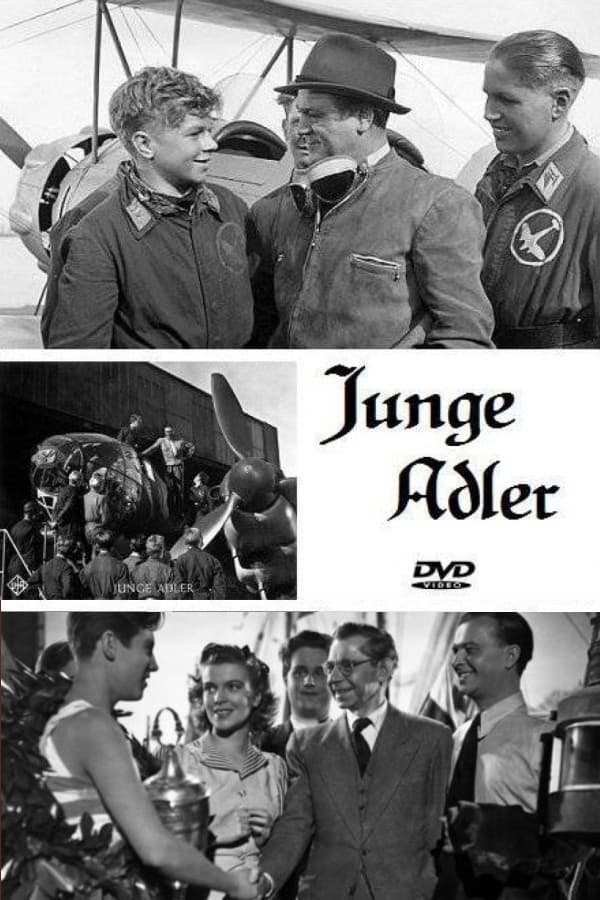
Junge Adler
Director Brakke has good reason to be happy: he has just received the news that his son, Theo, won first place in the local boat race. To be sure, he had forbidden his son to take part in the competition, because the son's grades in school are substandard. In the end, Brakke sees no other way than to pull Theo from school and install him as an apprentice in his airplane manufacturing plant. Although Theo is received by the other 150 apprentices in a friendly fashion, he behaves in an arrogant and disrespectful tone towards them. He feels himself to be better than them, because his father is the director of the factory.
Insights
Plot Summary
In the midst of World War II, a group of young boys, orphaned and displaced, struggle to survive and find a sense of purpose. They form a bond and try to create a new life for themselves amidst the chaos and destruction of war-torn Germany. The film follows their journey as they navigate the harsh realities of their circumstances and grapple with the loss of innocence.
Critical Reception
As a propaganda film produced during the Nazi era, 'Junge Adler' was intended to promote loyalty to the regime and demonstrate the resilience of German youth. Its reception was therefore heavily influenced by the political climate of the time. Critically, it has been viewed through the lens of its historical context, often analyzed for its ideological messaging rather than its artistic merit.
What Reviewers Say
A historical artifact reflecting wartime propaganda.
Illustrates the difficult circumstances faced by children during the war.
Focuses on themes of survival and camaraderie in adversity.
Google audience: Information regarding Google user reviews for this film is not readily available due to its historical context and limited modern distribution.
Fun Fact
The film was produced by the propaganda arm of the Nazi regime, intended to instill patriotism and resilience in young audiences during wartime.
AI-generated overview · Verify ratings on official sources