Movie spotlight
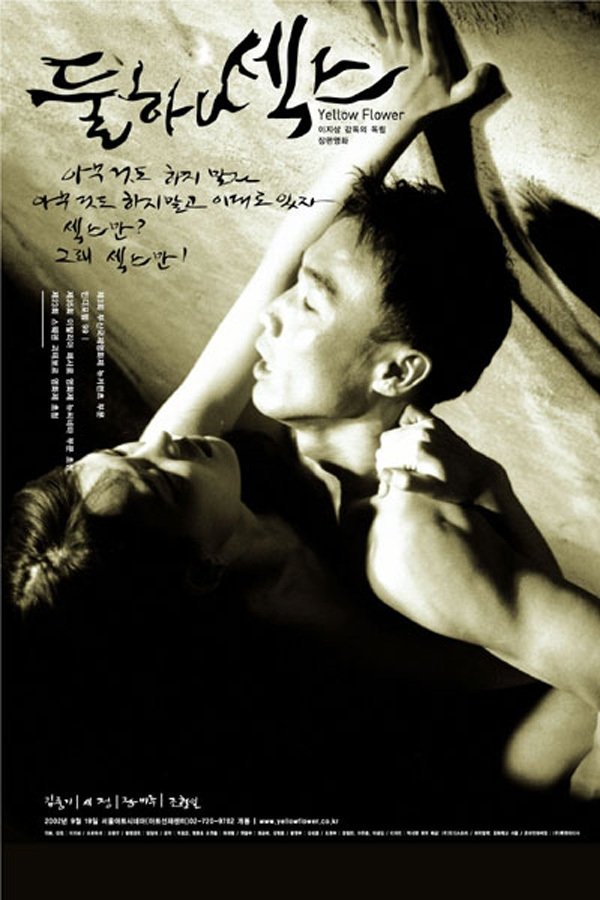
Yellow Flower
Lee Ji-sang's Yellow Flower dramatizes the erogenous encounters of a group of Asian men and women, who explore the limits of their own sexuality by participating in deviant, perverse, and bizarre coital acts with one another. Like Nagisa Oshima's In the Realm of the Senses and Ryu Murakami's Tokyo Decadence, Yellow Flower helped to obliterate the censorship of sexual content in motion pictures, throughout Asia.
Insights
Plot Summary
A young woman named Yu So-ra begins a relationship with Sung-woo, a visually impaired musician. Their love story unfolds against the backdrop of their individual struggles and growth. The film explores themes of love, disability, and the challenges of building a life together.
Critical Reception
Yellow Flower was a modest success in South Korea, appreciated for its sensitive portrayal of a romantic relationship and its exploration of disability. While not a major critical darling, it resonated with audiences for its emotional depth and the performances of its lead actors.
What Reviewers Say
Praised for its tender and heartfelt romance.
The performances, particularly from the lead actors, were often highlighted.
Some viewers found the narrative to be a bit too melodramatic at times.
Google audience: Audience reception on Google is not readily available for this film.
Fun Fact
The film was noted for its atmospheric cinematography, which aimed to enhance the emotional resonance of the story.
AI-generated overview · Verify ratings on official sources