
Movie spotlight
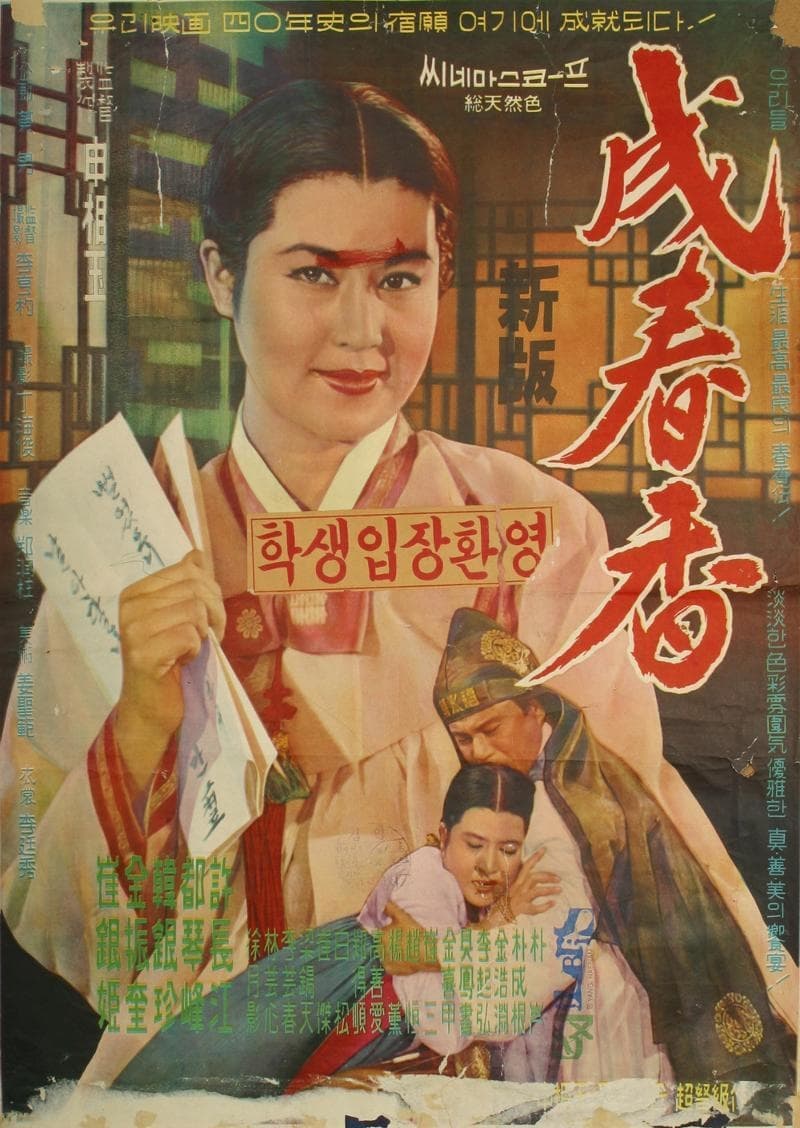
Seong Chun-hyang
Chun-hyang, the only daughter of an old gisaeng named Wolmae, falls in love with Lee Mong-nyong and promises to marry him. But Lee leaves for Seoul with his father who's an aristocrat, and the new governor, Byeon Hakdo, covets Chun-hyang because she is the most beautiful girl in town. When Chun-hyang rejects his order to serve him at night, Governor Byeon sends her to jail. In the mean time, Lee passes the state exam and becomes a special undercover agent of the king. He comes back to where Chun-hyang lives to save her and punishes Governor Byeon.
Insights
Plot Summary
This film adaptation tells the classic Korean folk tale of Seong Chun-hyang, a beautiful and intelligent young woman from a yangban (aristocratic) family. She falls in love with Yi Mong-ryong, the son of a local magistrate. Their love is tested when Yi Mong-ryong must leave for the capital to study for the state examination. While he is away, a corrupt new magistrate, Byun Hak-do, attempts to force Chun-hyang into becoming his concubine, leading to her imprisonment and defiance. Her loyalty and virtue are ultimately rewarded upon Yi Mong-ryong's triumphant return.
Critical Reception
As an early work by a director who would become a giant of Korean cinema, 'Seong Chun-hyang' (1961) is recognized for its contribution to adapting traditional Korean narratives for the screen. While specific critical reviews from its initial release are scarce in English-language sources, its status as a beloved folk tale and its place in Im Kwon-taek's early filmography suggest it resonated with audiences for its romantic themes and faithful storytelling.
What Reviewers Say
Praised for bringing a classic Korean folk tale to life with sensitivity.
Often cited as an important early film in director Im Kwon-taek's career.
Appreciated for its portrayal of enduring love and female virtue against adversity.
Google audience: Information regarding specific Google user reviews for this 1961 film is not readily available in English-language platforms.
Fun Fact
This film is one of many adaptations of the classic Korean novel 'The Ballad of Chunhyang,' which has been retold in various forms including Pansori (traditional Korean opera), novels, films, and television dramas since the Joseon Dynasty.
AI-generated overview · Verify ratings on official sources