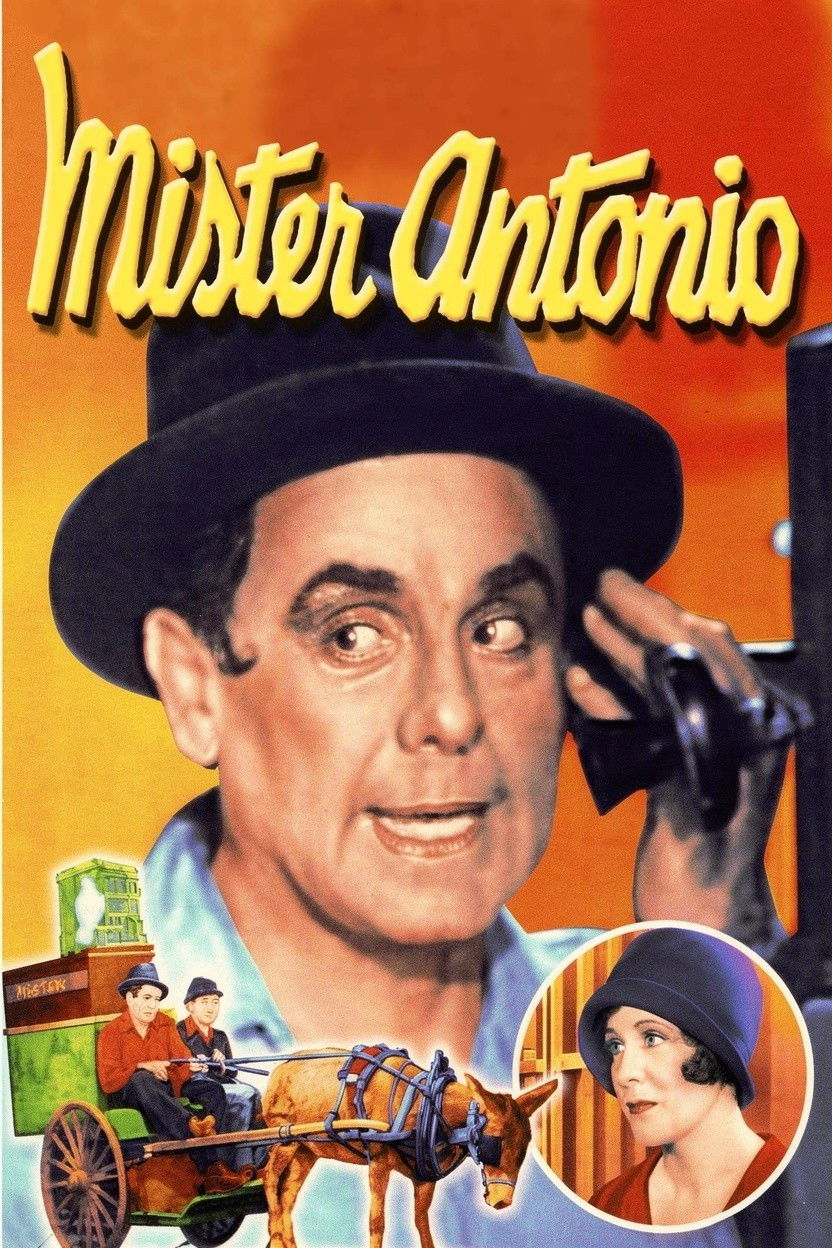
Mister Antonio
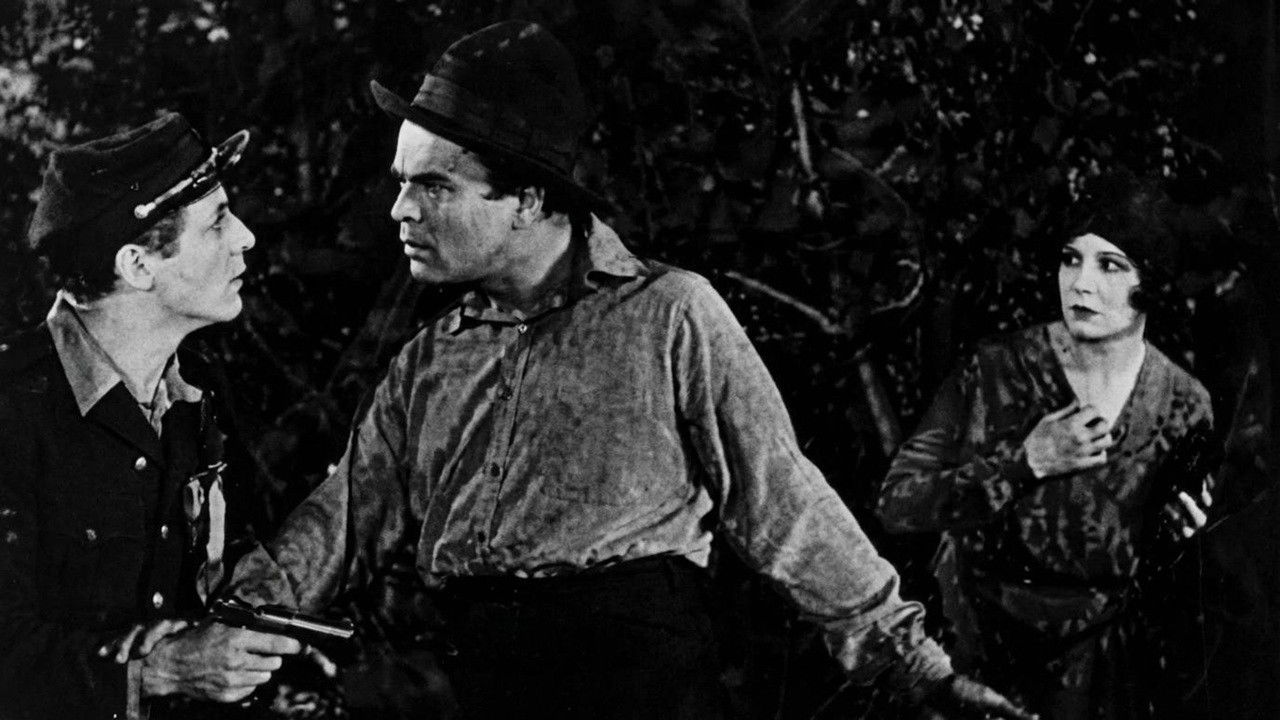
Antonio Camaradino, florist and street musician, befriends a man robbed of his overcoat and money in a disreputable bar. Tony recognizes the man as Jorny, mayor of Avalonia, a straitlaced town where Tony was once arrested for playing his hurdy-gurdy. After this meeting, Tony's travels take him again to Avalonia. Camped on the outskirts of town, he meets June Ramsey, a cousin of the mayor's wife, ejected from town by the mayor because his reelection campaign is jeopardized by her having been seen in a roadhouse. Under considerable pressure because he wishes to conceal his previous encounter with Tony from the opposition, Jorny returns Tony's favor by asking June's forgiveness and inviting her to return to Avalonia. June accepts his apologies; she then follows Tony, with whom she has fallen in love.
Insights
Plot Summary
Antonio, an Italian immigrant working in a soup factory, falls in love with a beautiful woman named Gina. He faces numerous challenges due to his immigration status and the disapproving father of Gina, who is also a rival suitor. Antonio must overcome these obstacles to win Gina's heart and prove his worth.
Critical Reception
Mister Antonio is a notable early sound film from Buster Keaton, showcasing his signature physical comedy within a more dramatic narrative. While not as universally acclaimed as his silent masterpieces, it is appreciated for Keaton's performance and the blend of humor and pathos, though some found its pacing and plot less engaging than his previous works.
What Reviewers Say
- Buster Keaton's transition to sound is evident, blending his physical comedy with a more narrative-driven story.
- The film is appreciated for its emotional depth and Keaton's enduring comedic presence.
- Some critics found the plot less innovative compared to his silent era films.
Google audience: Audience reviews for Mister Antonio are scarce, but general sentiment acknowledges Buster Keaton's enduring talent in transitioning to sound, even if the film itself is considered a minor entry in his filmography.
Fun Fact
This film marked Buster Keaton's first major talking role after his transition from silent films, though it features significant portions of synchronized dialogue and music rather than being a fully talkie.
AI-generated overview · Verify ratings on official sources