
Movie spotlight
Poslední plavky
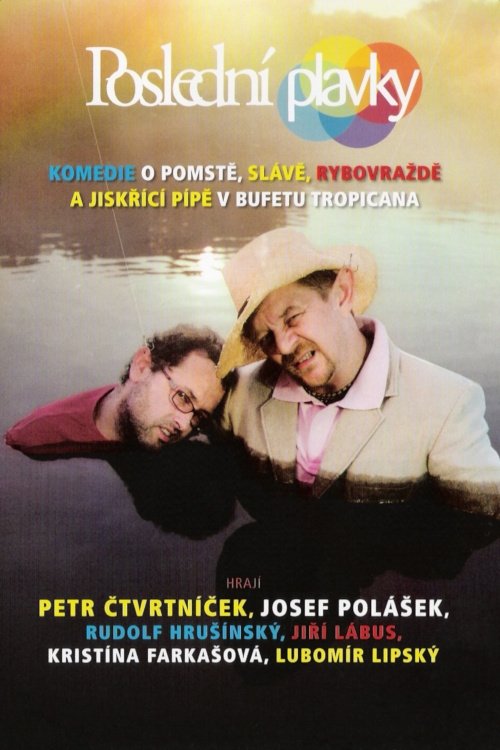
The story of Jarda Kuchař, a hero of the bygone era of Tuzex vouchers. His income comes from renting out his own apartment. Every summer, he is forced to spend his time at an abandoned pond, where he runs an even more abandoned snack bar. His right-hand man (and he is left-handed) is the local simpleton Kamil Hošpes. Among the handful of customers are two tractor drivers, Jirka and Péťa, and Jarda's sworn enemy, the fanatical fisherman Pepa Vrtílek with his dog Pepík. The capricious summer days are disrupted by an apparition of monstrous proportions. Lojza, a monster catfish, emerges from the depths of the third irrigation category and eats Vrtílek's dog. Jarda Kuchař sees Lojza as an opportunity to revive local tourism. He calls on fishermen from all over the country. And two actually arrive...
Insights
Plot Summary
A successful, but aging, swimming coach named Rostislav Hlausíček faces a personal crisis as his career falters and his family life unravels. He finds solace and unexpected connection through a past love, leading him to re-evaluate his life choices and search for meaning in his twilight years. The film explores themes of regret, reconciliation, and the pursuit of happiness.
Critical Reception
Poslední plavky was met with a mixed to positive reception in the Czech Republic. Critics often praised its thoughtful exploration of aging and regret, as well as the strong performances, particularly from Miroslav Donutil. However, some found the narrative a bit predictable or slow-paced.
What Reviewers Say
Praised for its sensitive portrayal of middle-aged disillusionment.
Miroslav Donutil's performance was frequently highlighted as a significant strength.
Some viewers found the pacing to be a bit too deliberate.
Google audience: Audience reception on Google is not readily available for this specific film in English-language summaries. However, general sentiment in Czech reviews often points to appreciation for the mature themes and acting.
Awards & Accolades
None notable.
Fun Fact
The film was based on the novel of the same name by Czech writer Michal Viewegh, known for his popular and often humorous observations on contemporary Czech society.
AI-generated overview · Verify ratings on official sources