
Movie spotlight
La Dolce Vita
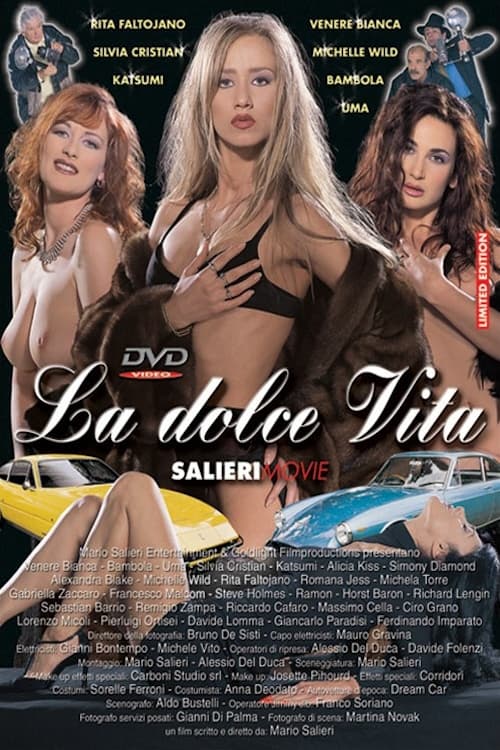
The people of a little village somewhere near Naples are true country bumpkins, no interest in anything but their own village lives. One day the government calls on farmer Esposito. He's told to sell his farm to make space for a new motorway linking northern and southern Italy. He has no intention of complying. His son Francisco is in love with village-beauty Maria but it all ends in tears. Frustrated and fed up with country-life he moves to Milan and fucks a few beautiful women. His doomed love to Maria and the death of his father push him into marriage with a woman he doesn't really love. In his twilight years Francesco starts an investigation as to what might have become of Maria and he finds out that she ended up in a convent. There she spends her days as a frustrated nun, grieving for her lost love.
Insights
Plot Summary
Marcello Rubini, a gossip journalist in Rome, navigates the decadent and superficial high society of the late 1950s. Through a series of episodic encounters, he searches for meaning and purpose amidst parties, romantic entanglements, and existential ennui. His pursuit of a meaningful life is constantly thwarted by the shallow allure of his surroundings and his own indecisiveness.
Critical Reception
Federico Fellini's 'La Dolce Vita' is a monumental and iconic work of cinema, widely acclaimed for its visual splendor, profound themes, and groundbreaking narrative style. It captured the zeitgeist of its era, reflecting a post-war Italy grappling with modernity, secularism, and the temptations of fame and pleasure. The film was both a critical and commercial success, solidifying Fellini's international reputation and influencing countless filmmakers.
What Reviewers Say
A sprawling, visually stunning exploration of modern ennui and the emptiness of hedonism.
Fellini's masterpiece captures the decadence and spiritual malaise of post-war Rome with unforgettable imagery.
Marcello Mastroianni delivers a compelling performance as a man lost in the allure of the superficial.
Google audience: Audience reviews consistently praise the film's artistic brilliance, iconic scenes like the Trevi Fountain sequence, and its thought-provoking commentary on society and the human condition. Many appreciate its enduring relevance and Marcello Mastroianni's captivating performance.
Awards & Accolades
Palme d'Or at the 1960 Cannes Film Festival; Academy Award for Best Costume Design (1962); Nominated for 3 other Academy Awards.
Fun Fact
The iconic Trevi Fountain scene, where Anita Ekberg wades into the water, was filmed very early in the morning and took two days to complete, with the water being refilled multiple times due to it being quite cold.
AI-generated overview · Verify ratings on official sources