
Movie spotlight
The Amazon Head Hunters
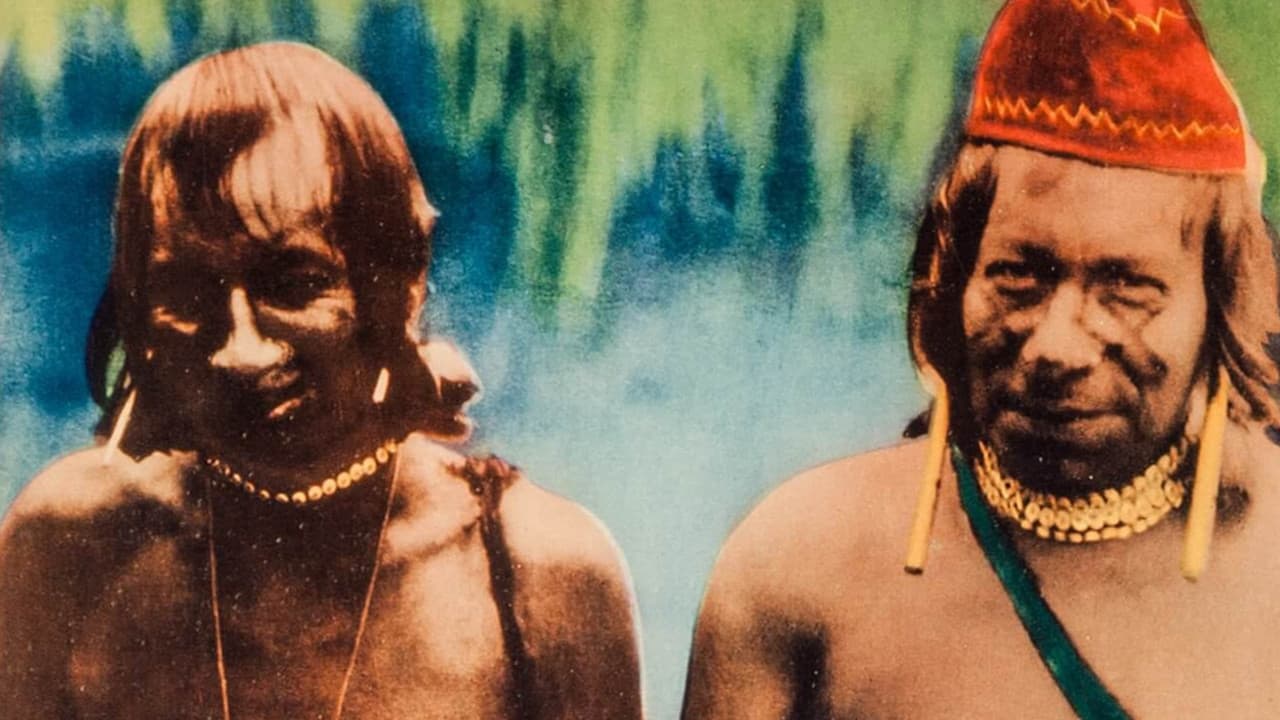
It is thanks to this film that the Marquis gained notoriety with a wider audience. The film is the result of film footage shot between May 1926 and June 1930 in several South American countries. Departing from Guayaquil, he first went to the Galapagos Islands in the Pacific. Upon returning to the capital of Ecuador, chance brought him to the Ocaina Indians, the Boro, the Napo, the Jivaro and the Piro. He explored the Incan mines of Machu Picchu, discovered only a few years prior, and ended his journey on the famed Guano islands. The musical score, inspired by traditional Indian music, was created by Maurice Jaubert.
Insights
Plot Summary
This early documentary follows a team of explorers as they venture deep into the Amazon rainforest. The film documents their perilous journey, highlighting the diverse wildlife, indigenous tribes, and the raw, untamed beauty of the region. It captures moments of both wonder and danger, showcasing the challenges faced by those who dared to explore such remote territories.
Critical Reception
As a historical documentary from 1932, 'The Amazon Head Hunters' is primarily viewed through the lens of its era's ethnographic and filmmaking conventions. While celebrated for its pioneering depiction of the Amazon, its ethnographic accuracy and portrayal of indigenous peoples have been subject to modern re-evaluation. Nevertheless, it remains a significant artifact for its time, offering a glimpse into early exploration documentaries.
What Reviewers Say
Offers a rare, albeit dated, look into early 20th-century Amazonian exploration.
Valuable for its historical context and visual documentation of a bygone era of adventure.
Criticized for ethnographic perspectives that reflect the biases of its time.
Google audience: Audience reception for this film is largely unavailable through modern platforms. Historical context suggests it was viewed as an adventurous documentary, providing a window into exotic locales rarely seen by the public at the time.
Fun Fact
The film was shot on location and featured actual footage from the expedition, which was a rarity for documentaries of its time, adding to its perceived authenticity and thrilling nature.
AI-generated overview · Verify ratings on official sources