
Movie spotlight
The Burmese Harp
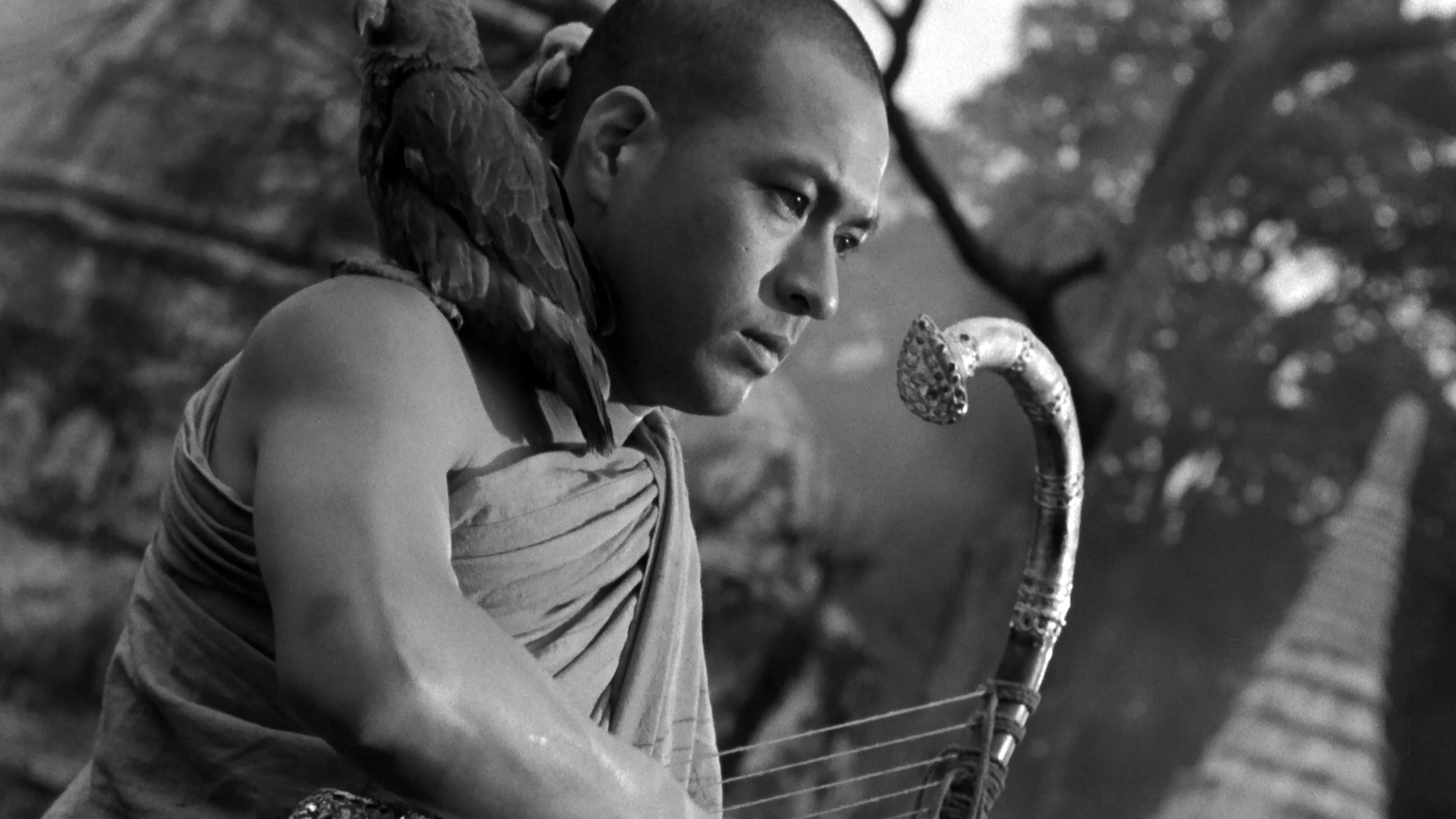
In Burma during the closing days of WWII, a Japanese soldier separated from his unit disguises himself as a Buddhist monk to escape imprisonment as a POW.
Insights
Plot Summary
During the final days of World War II, a Japanese soldier named Mizushima, a gifted singer, is part of a company fighting in Burma. When the war ends, his unit is reluctant to surrender and continues to fight. Mizushima is separated from his comrades and finds himself alone, encountering a group of Buddhist monks. He is deeply moved by their pacifist ways and decides to dedicate himself to helping the souls of the fallen soldiers, eventually donning the robes of a monk himself.
Critical Reception
The Burmese Harp is widely regarded as a masterpiece of Japanese cinema, earning international acclaim for its profound anti-war message and beautiful musical score. It was Japan's official submission for the Academy Award for Best Foreign Language Film in 1956, though it was disqualified because it was screened in advance at festivals. It also won the Pasinetti Award at the Venice Film Festival and received multiple Kinema Junpo Awards in Japan.
What Reviewers Say
A poignant and deeply moving anti-war statement.
Praised for its stunning cinematography and evocative musical numbers.
Its themes of pacifism and the futility of war resonate strongly.
Google audience: Audience reviews highlight the film's emotional impact and its powerful, timeless message against war. Many viewers are deeply affected by the protagonist's transformation and the film's spiritual undertones.
Awards & Accolades
Pasinetti Award at the 17th Venice International Film Festival, multiple Kinema Junpo Awards (including Best Film and Best Director).
Fun Fact
Director Kon Ichikawa initially disliked the idea of a musical film but was convinced by the powerful script and the opportunity to explore anti-war themes through music.
AI-generated overview · Verify ratings on official sources