
Movie spotlight
Emperor Meiji and the Great Russo-Japanese War
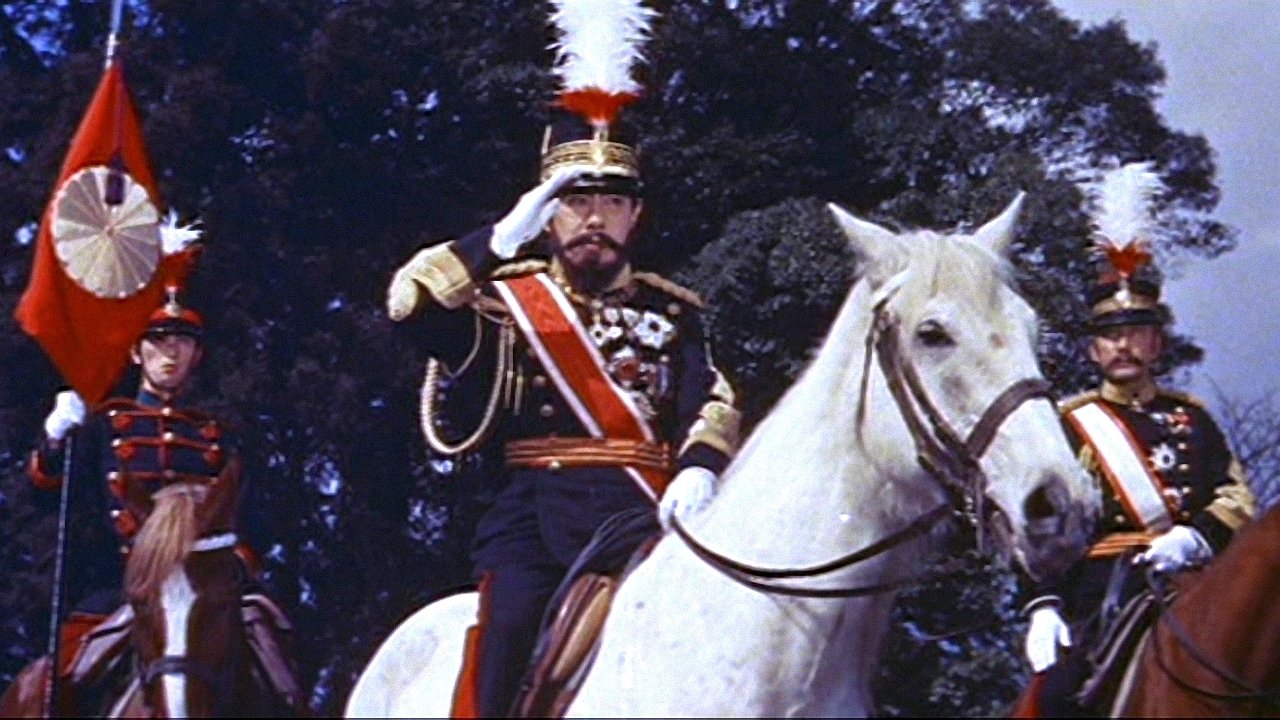
Meiji Tenno portrays the buildup to the Russo-Japan War. In addition to showing the political events that led to war, it also shows the era from the story of a farm family in rural Japan that sends their son off to war. As such, it could be considered an anti-war movie, showing how, while war is devised by governments, the people do not really understand what war is, and its combatants often do not know what they are fighting for.
Insights
Plot Summary
This historical drama chronicles the pivotal Russo-Japanese War through the eyes of Emperor Meiji. It depicts the complex political and military strategies leading up to and during the conflict, showcasing the Emperor's leadership and the nation's determination. The film portrays key battles and the human cost of war, culminating in Japan's surprising victory.
Critical Reception
The film was a significant production in Japan, aiming to commemorate a crucial period in Japanese history. While appreciated for its historical scope and large-scale battle sequences, it received mixed reviews internationally, with some critics finding the narrative too nationalistic and slow-paced, while others lauded its detailed depiction of the era and the Emperor's role.
What Reviewers Say
Praised for its historical detail and epic battle scenes.
Criticized by some for a perceived nationalistic viewpoint.
Noted for its portrayal of Emperor Meiji as a central, decisive figure.
Google audience: Audience reviews are scarce for this historical film, but available commentary suggests appreciation for its cinematic depiction of a significant historical event and its scale.
Fun Fact
The film was part of a wave of historical epics produced in Japan during the 1950s, focusing on pivotal moments in the nation's modernization and military history.
AI-generated overview · Verify ratings on official sources