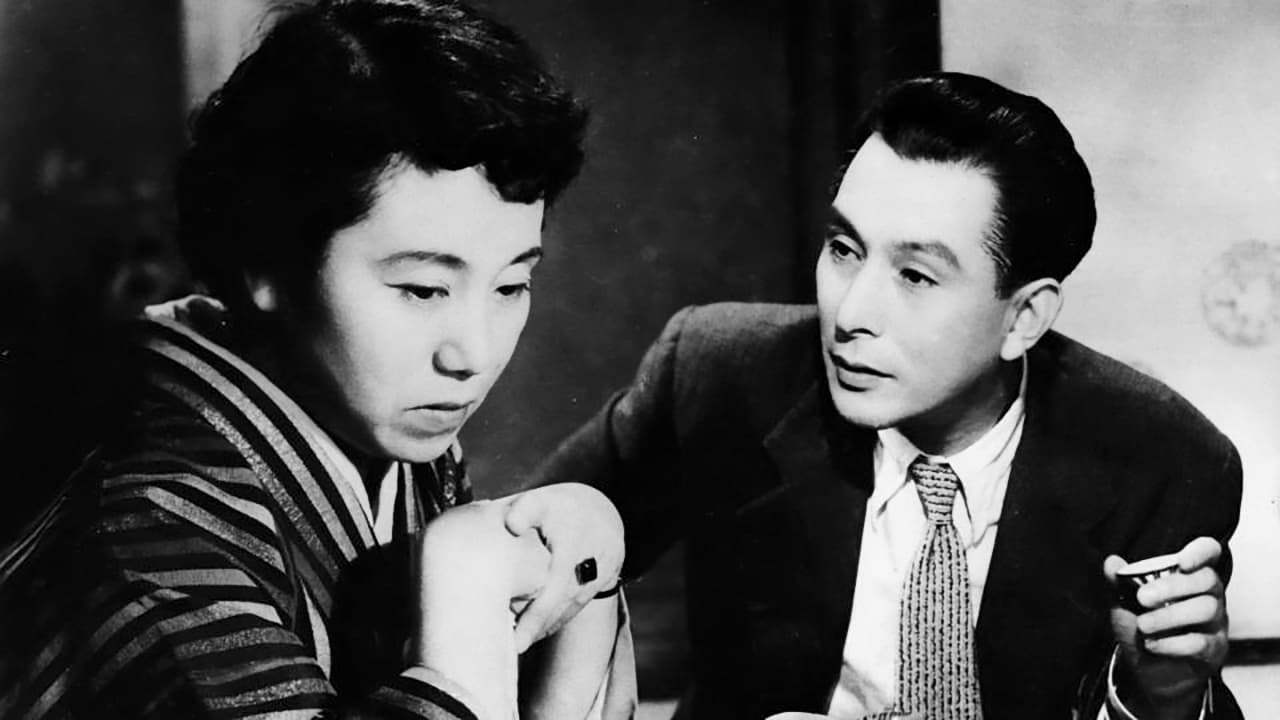

Late Chrysanthemums
What is the life of a Geisha like once her beauty has faded and she has retired? Kin has saved, and become a wealthy money-lender, spending her days coldly collecting debts. Even her best friends, fellow Geisha Tomi, Nobu, and Tamae, are now indebted to her. For all of them, the glamour of their young lives has passed; Tomi and Tamae have disappointing children. Kin has two former lovers who still pursue her; one she wants to see, and the other she doesn't. But even the one she remembers fondly, when he shows up, proves less than satisfactory.
Insights
Plot Summary
In post-war Japan, a woman navigates societal expectations and personal desires as she deals with her strained relationships with her grown children and her own longing for companionship. The film explores themes of loneliness, aging, and the complexities of family bonds through the lens of a woman facing her later years. Her quiet determination and underlying melancholy are palpable as she seeks meaning and connection in a changing world. The narrative delicately portrays the subtle struggles of a woman trying to maintain dignity and find happiness.
Critical Reception
Late Chrysanthemums is widely regarded as a masterpiece of Japanese cinema, praised for its sensitive portrayal of middle-aged women and its nuanced exploration of societal pressures and personal fulfillment. Critics lauded Mikio Naruse's direction for its understated elegance and emotional depth. Audiences have consistently connected with the film's relatable themes and poignant storytelling, establishing it as a beloved classic.
What Reviewers Say
- Praised for its subtle direction and deep emotional resonance.
- Lauded for its poignant and realistic depiction of aging and societal roles for women.
- Celebrated as a masterful example of Japanese melodrama and character study.
Google audience: Information on Google user reviews for this specific older film is not readily available, but general audience reception tends to be highly positive, appreciating its artistic merit and enduring themes.
Fun Fact
The film is part of a loose trilogy of films by Mikio Naruse focusing on the lives of women, alongside 'Repast' (1951) and 'Floating Weeds' (1959).
AI-generated overview · Verify ratings on official sources