
Movie spotlight
Kadosh
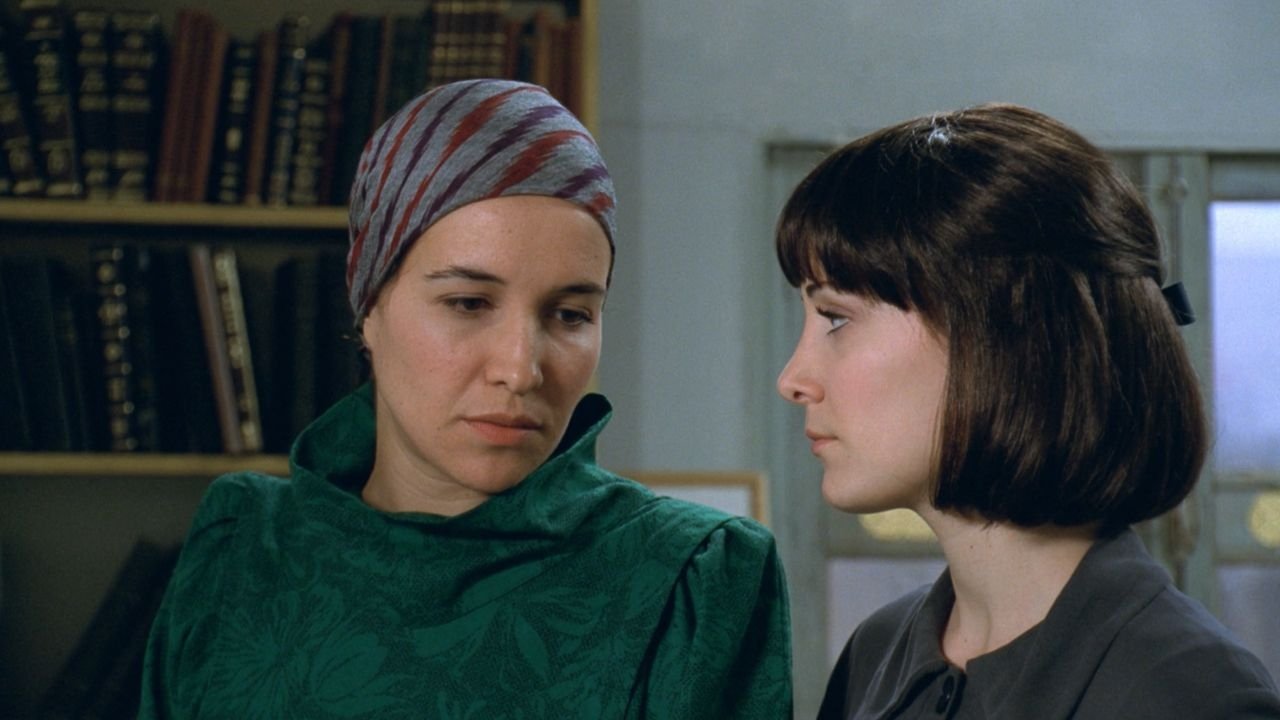
The year 2000 approaches in Jerusalem's Orthodox Mea Shearim quarter, where the women work, keep house, and have children so the men can study the Torah and the Talmud. Rivka is happily and passionately married to Meir, but they remain childless. The yeshiva's rabbi, who is Meir's father, wants Meir to divorce Rivka: "a barren woman is no woman." Rivka's sister, Malka, is in love with Yakov, a Jew shunned by the yeshiva as too secular. The rabbi arranges Malka's marriage to Yossef, whose agitation when fulfilling religious duties approaches the grotesque. Can the sisters sort out their hearts' desires within this patriarchal world? If not, have they any other options?
Insights
Plot Summary
In Jerusalem's ultra-Orthodox Mea Shearim neighborhood, two sisters, Rina and Margalit, find their lives deeply intertwined with tradition and societal expectations. Rina is married to a respected rabbi, but her life is unfulfilled as she longs for a child and a connection beyond her restrictive existence. Margalit, her younger sister, harbors forbidden feelings for a young man who is not of their community, threatening to shatter the rigid social order. The film explores their struggles for identity and love within a patriarchal society.
Critical Reception
Kadosh received critical acclaim for its powerful portrayal of religious life and the struggles of women within it. Critics praised Amos Gitai's direction and the nuanced performances of the cast, particularly Yael Abecassis. The film was noted for its unflinching look at the constraints of religious dogma and the human desire for freedom and connection.
What Reviewers Say
A compelling and sensitive exploration of faith, tradition, and female agency.
Features strong performances that bring depth to the characters' internal conflicts.
Visually striking and thought-provoking examination of a secluded religious community.
Google audience: Audiences generally appreciated the film's authentic depiction of religious life and its sensitive handling of the characters' emotional journeys. Many found the performances moving and the story to be a profound look at societal pressures.
Awards & Accolades
Nominated for the Golden Globe Award for Best Foreign Language Film (Israel).
Fun Fact
The film was shot on location in Jerusalem's Mea Shearim neighborhood, offering an intimate and authentic glimpse into the daily lives of its ultra-Orthodox residents.
AI-generated overview · Verify ratings on official sources