
Movie spotlight
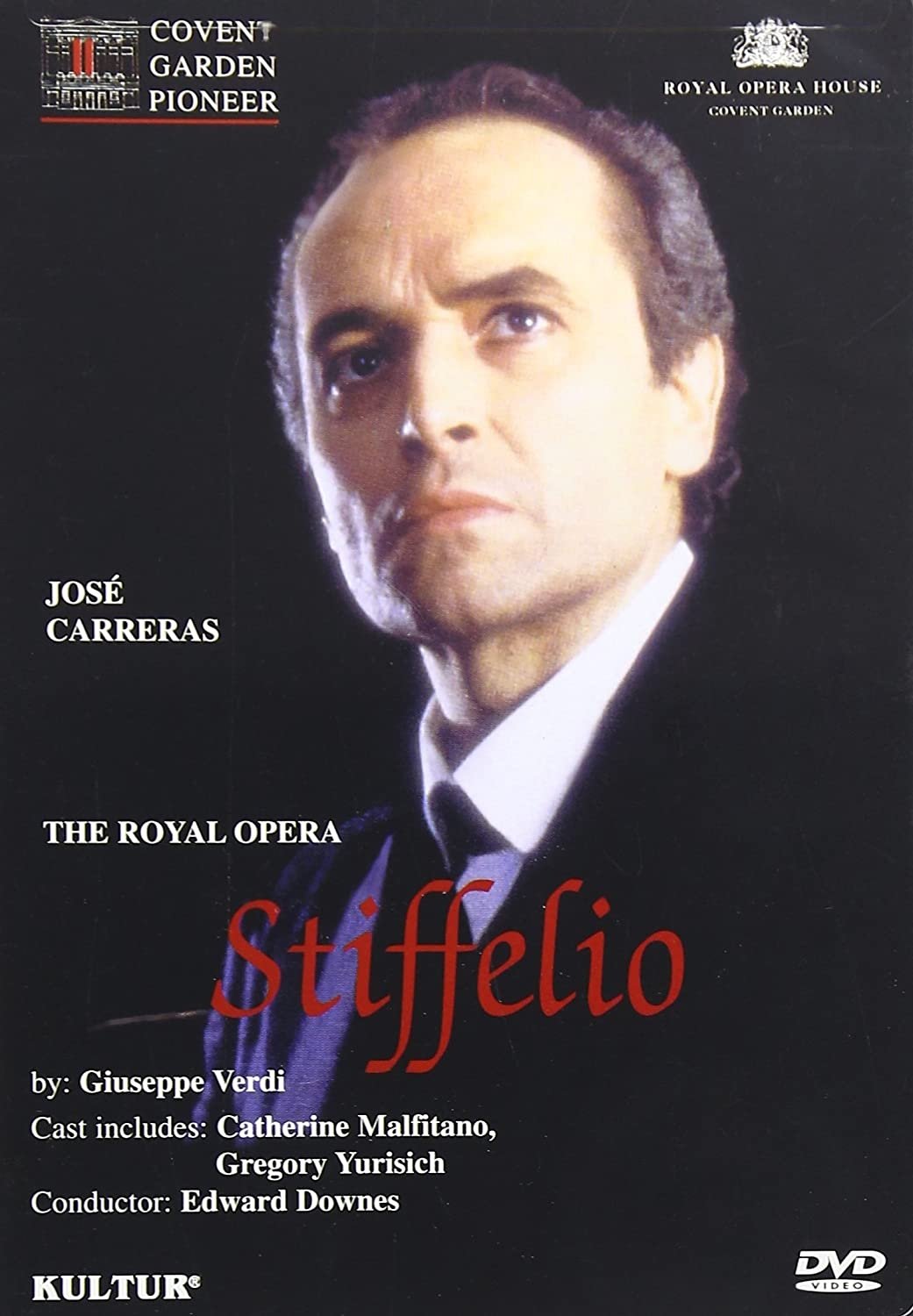
Verdi Stiffelio
Stiffelio is considered "early Verdi" to musiclogists who classify things, but, in reality, it is a final transition between the maestro's earlier (but most enjoyable) works, and the mature craftsmanship of Rigoletto. Preceded by Luisa Miller (q.v.), there is more dramatic intensity and story line than in the earlier works. The plot centers around Stiffelio, a minister, who discovers that his wife, Mina, has been unfaithful.
Insights
Plot Summary
Stiffelio, a Protestant minister, is betrayed by his wife, Lina, who is having an affair with his pupil, Raffaele. Stiffelio's father, Count Stankar, attempts to cover up the scandal. The opera explores themes of faith, betrayal, and forgiveness, culminating in Stiffelio's decision to grant Lina a divorce rather than condemn her.
Critical Reception
As an opera, 'Stiffelio' is critically appreciated for its dramatic intensity and musical innovations. While not as frequently performed as some of Verdi's more popular works, its revival and recording in the late 20th century brought renewed attention to its powerful score and complex psychological portrait of its characters. Critics often highlight Verdi's evolving compositional style evident in this work.
What Reviewers Say
Praised for Verdi's masterful musical construction and dramatic depth.
Recognized as a significant, though less frequently staged, work in Verdi's oeuvre.
Appreciated for its exploration of complex human emotions and moral dilemmas.
Google audience: N/A
Fun Fact
The opera 'Stiffelio' was controversial at the time of its premiere due to its Protestant minister protagonist and the depiction of marital infidelity. It was subsequently revised into 'Aroldo' with a different setting and plot to appease the censors.
AI-generated overview · Verify ratings on official sources