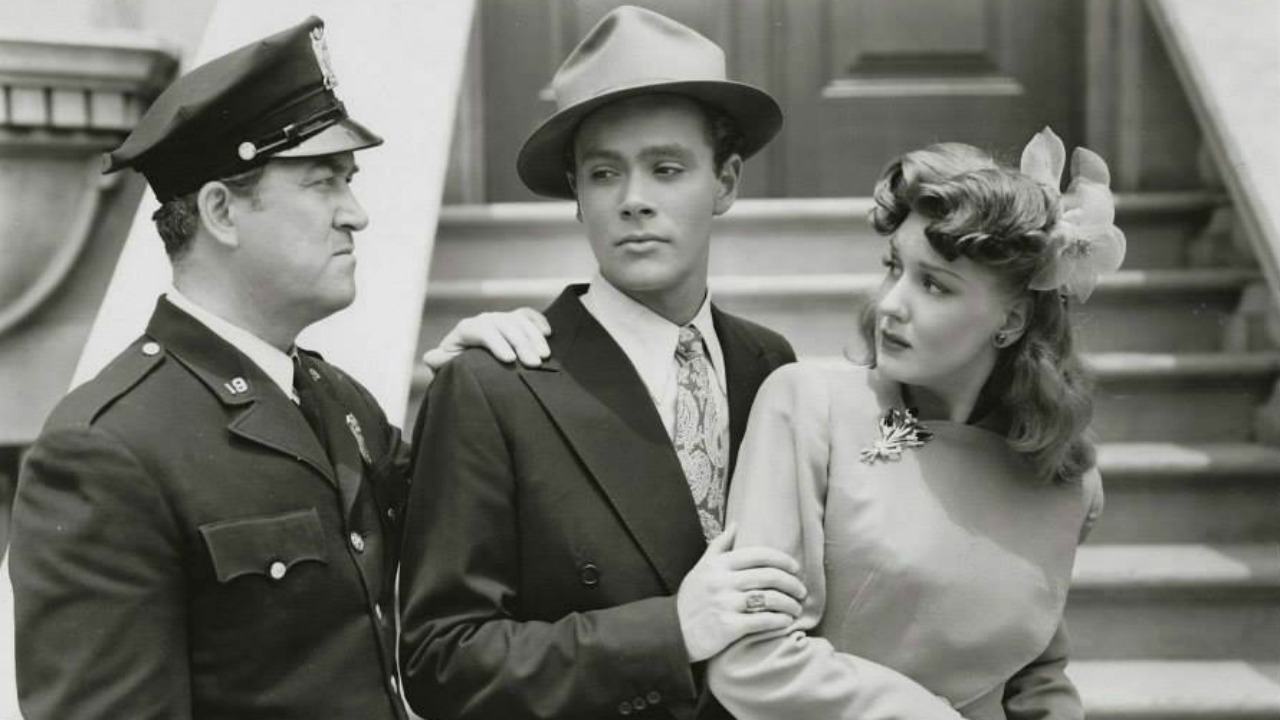
Ever Since Venus
Ever Since Venus

Movie spotlight

Ever Since Venus

1944
Movie
74 min
English

The American Beauty Association is about to hold its annual trade show in New York City and songwriter "Tiny" Lewis (Billy Gilbert) has just sold a song to Ina Ray Hutton ('Ina Ray Hutton'), the leader of an all-girl band headlining the show. Lewis shares an apartment with Bradley Miller ('Ross Hunter') and Michele (Fritz Feld), an artist, and Miller has just invented a non-staining lipstick called "Rosebud." Preparing to get a booth at the show, Miller is told by J. Webster Hackett (Alan Mowbray), a very devious "Cosmetics King,", intent on selling a big lipstick order to buyer Edgar Pomeroy (Thurston Hall), that it will cost him a $1000 to join the association and get a booth, which is about $999 more than Miller and his roomies have between them. But Miller's beauty-parlor girl friend, Janet Wilson ('Ann Savage'), meets factory-owner P. G. Grimble (Hugh Herbert), and money is soon no issue.

Insights

IMDb5.8/10
Director: Wallace FoxGenres: Musical, Comedy, Romance

Plot Summary

A struggling songwriter discovers that his tunes are being plagiarized by a popular band. He sets out to reclaim his work, leading to a series of humorous encounters and romantic complications. The film follows his journey as he tries to prove his authorship and achieve musical success.

Critical Reception

Ever Since Venus was a modest musical comedy of its time, offering light entertainment with its songs and comedic elements. It received a generally mild reception from critics, who often noted its formulaic plot but appreciated its musical numbers and the performances of its lead actors. Audience reception was also lukewarm, typical for many of the B-movies produced during the era.

What Reviewers Say

  • Praised for its upbeat musical numbers.

  • Criticized for a predictable and formulaic storyline.

  • Noted for its lighthearted and escapist qualities during wartime.

Google audience: Audience reviews are scarce for this film, but contemporary general sentiment suggests it was viewed as a pleasant, if unremarkable, musical diversion.

Fun Fact

The film was part of a wave of low-budget musical comedies produced during the 1940s, often designed for double-feature programs.

AI-generated overview · Verify ratings on official sources

My Review