Movie spotlight
The End of Salò
Documentary about the making of the film Salò by Pier Paolo Pasolini
Insights
Plot Summary
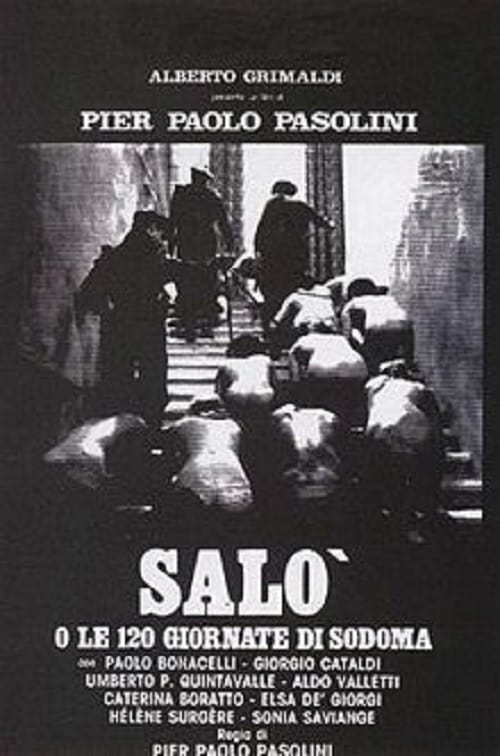
Set in the final days of Mussolini's fascist regime in Italy, the film depicts four wealthy libertines who kidnap 18 adolescents and subject them to horrific sexual and physical torture over 120 days. The tormentors, aided by collaborators including a bishop and a madame, create a nightmarish hellscape that explores themes of power, corruption, and the degradation of humanity. The film culminates in extreme violence and systematic dehumanization.
Critical Reception
Pier Paolo Pasolini's 'Salò, or the 120 Days of Sodom' is a deeply controversial and challenging film, widely regarded as a masterpiece of transgressive cinema despite its graphic content. Critics often praise its unflinching critique of fascism, consumerism, and power structures, while acknowledging its extreme and disturbing nature that pushes the boundaries of cinematic representation. Its legacy is one of profound artistic merit intertwined with notorious notoriety.
What Reviewers Say
A brutal and unflinching examination of power, corruption, and the fascist mentality.
Artistically significant for its allegorical critique, but extremely difficult to watch due to graphic depictions of violence and sexual abuse.
Provokes strong reactions, debated as either profound social commentary or gratuitous exploitation.
Google audience: Audiences find 'Salò' to be a visually striking and intellectually provocative film, though many are deeply disturbed by its graphic and unrelenting depiction of torture and sexual violence. While some appreciate its allegorical depth as a critique of fascism and societal decay, a significant portion of viewers express shock and revulsion at its extreme content.
Fun Fact
Pier Paolo Pasolini was murdered shortly before the film's release, adding a layer of real-world tragedy to the film's already dark themes.
AI-generated overview · Verify ratings on official sources