
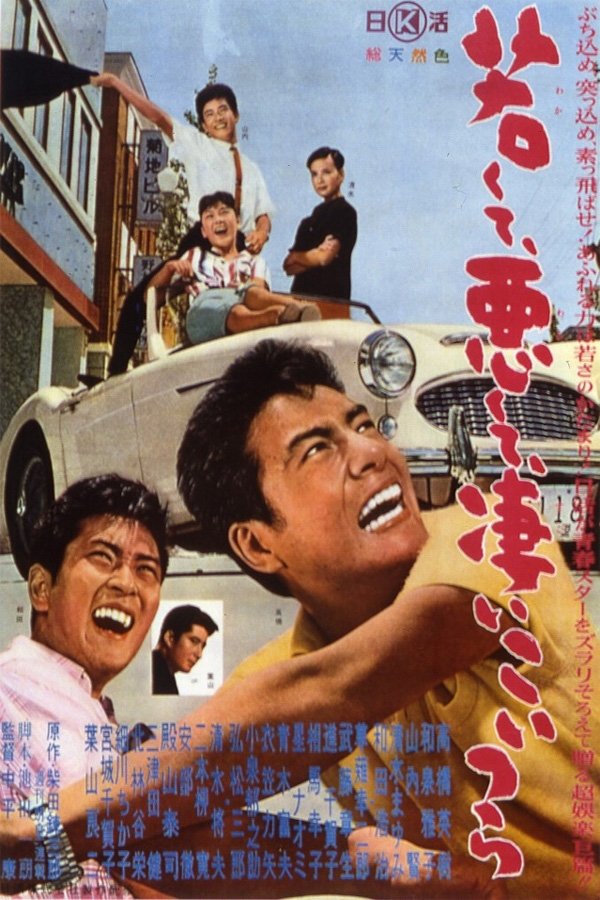
Movie spotlight
The Young and Bad
Not too long ago, Soichiro was considered one of the most powerful men in business. But his business had failed, his granddaughter had committed suicide. There was nothing in his life anymore that he could look forward to. Sochiro was ready to put an to it end to all. As he drives down the Usui Pass, headed toward his summer house in Karuizawa, a girl in red heels, wearing nothing else but a coat jumps in front of the car.
Insights
Plot Summary
In Mexico City, a group of delinquent youths, known as 'cancheros,' navigate a harsh urban environment, resorting to theft, violence, and exploitation to survive. The film follows the leader, Pedro, as he attempts to maintain control and escape their bleak existence. Their lives are a brutal cycle of neglect, poverty, and desperation, highlighting the destructive social forces at play.
Critical Reception
Luis Buñuel's 'The Young and the Damned' (original Spanish title: 'Los Olvidados') is a harrowing and unflinching examination of juvenile delinquency and poverty in post-war Mexico. The film was met with controversy and shock upon its release, praised for its stark realism and Buñuel's masterful direction, while also criticized for its bleak portrayal of society and its disturbing imagery. It is now widely regarded as a masterpiece of surrealist cinema and a powerful social commentary.
What Reviewers Say
Praised for its brutal honesty and stark realism.
Buñuel's surrealist touches enhance the film's disturbing power.
A significant and controversial social critique of poverty and neglect.
Google audience: Audience reviews highlight the film's powerful and disturbing depiction of social issues. Many found it to be a thought-provoking, albeit difficult, watch that effectively conveys the harsh realities faced by marginalized youth. Some viewers noted its lasting impact and artistic merit, while others found its content too bleak.
Awards & Accolades
Won the Best Director award at the 1951 Cannes Film Festival. Nominated for numerous awards throughout its exhibition history.
Fun Fact
Although the film was released in 1951 in Mexico and later gained international recognition, the version sometimes referenced with a 1962 release date might pertain to specific re-releases or international distribution timelines. Buñuel himself reportedly disowned the film after its initial release due to censorship and interference, only to later re-evaluate it as one of his most important works.
AI-generated overview · Verify ratings on official sources