
Movie spotlight
The Romance of Astrea and Celadon
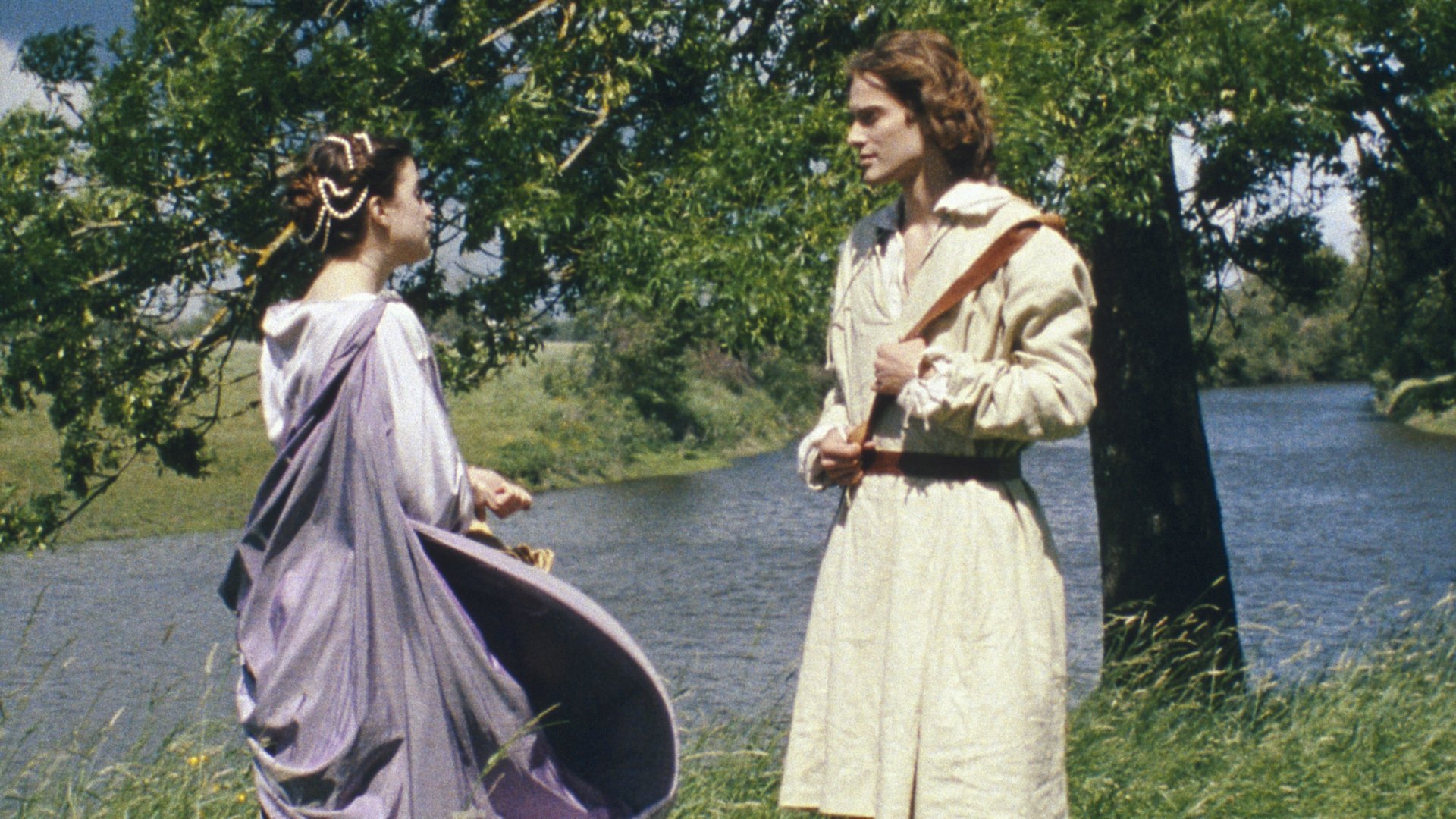
In an enchanted forest, back in the time of the Druids, the shepherd Céladon and the shepherdess Astrée share a pure and chaste love. Fooled by a suitor, Astrée dismisses Céladon, who throws himself into a river out of despair. She thinks he's dead, but he's been secretly rescued by some nymphs. Faithful to the promise he made to Astrée to never appear before her again, Céladon must overcome many obstacles to break the curse. Mad with love and despair, coveted by the nymphs, surrounded by rivals, and obliged to disguise himself as a woman to be near the one he loves, will he manage to make himself known without breaking his oath? A romance filled with doubt, hazards, and delicious temptations.
Insights
Plot Summary
In a pastoral, almost mythical ancient world, the beautiful and virtuous Astrea is courted by many suitors, but her heart belongs to Celadon. However, their love faces numerous trials, including deception, banishment, and the interference of gods and nymphs. Their enduring affection is tested as they navigate misunderstandings and overcome seemingly insurmountable obstacles.
Critical Reception
Éric Rohmer's final film, 'The Romance of Astrea and Celadon,' was met with a generally positive reception from critics, who appreciated its charming and pastoral aesthetic, Rohmer's signature intellectual dialogue, and its faithful adaptation of Honoré d'Urfé's classic novel. While some found its pace slow and its classical setting somewhat detached from modern sensibilities, many lauded it as a fitting and elegant conclusion to the director's prolific career, celebrating its thoughtful exploration of love and fidelity.
What Reviewers Say
Praised for its elegant visuals and Rohmer's distinctive dialogue.
Appreciated as a charming and faithful adaptation of a classic romance.
Noted for its leisurely pace and intellectual, if somewhat archaic, themes.
Google audience: Audiences generally found the film to be a charming and visually pleasing adaptation of a classic pastoral romance. Many appreciated its lighthearted tone and the director's distinctive storytelling style. Some viewers, however, felt the plot was a bit simplistic or that the film moved too slowly.
Fun Fact
The film is based on the 17th-century French novel 'L'Astrée' by Honoré d'Urfé, one of the longest novels in French literature.
AI-generated overview · Verify ratings on official sources