
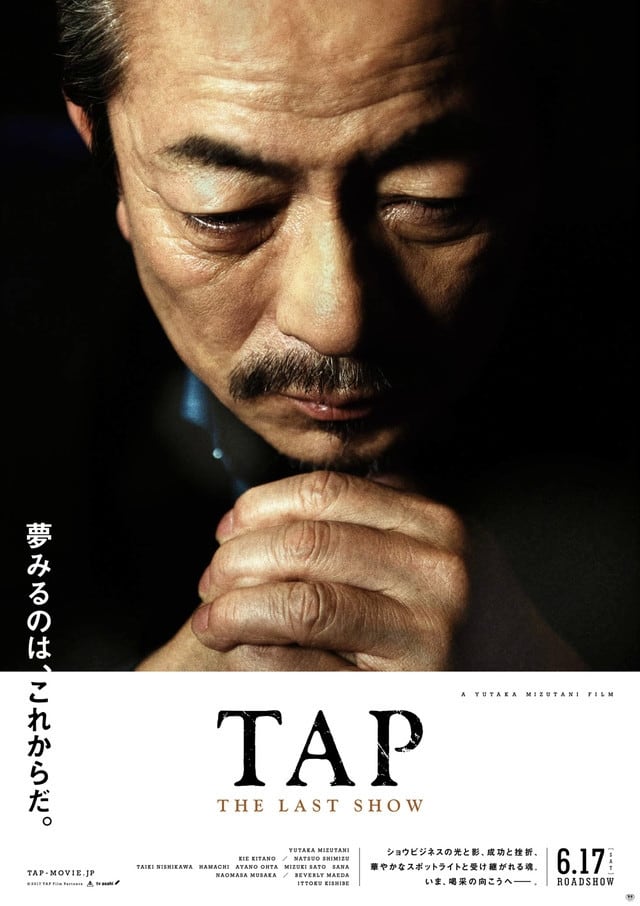
TAP THE LAST SHOW
Shinjiro Watari, a former tap dancer, plays the lead as a dancer who is forced into retirement following an accident while on stage. He tries his hand at Directing, but struggles to make the transition. Shinjiro turns to alcohol to cope with his plight. But when the manager of a theater being closed down turns to Shinjiro to direct its final performance, he works with a group young dancers and in the process learns a few things about himself. The movie is very well done and worth the price of admission. A view into the Japanese dancing world, as well as Japanese society.
Insights
Plot Summary
A former idol singer, now working at a hostess bar, gets a chance to revive her career by participating in a musical audition. As she navigates the challenges of returning to the spotlight, she confronts her past and finds new meaning in her passion for music. The story follows her journey of self-discovery and determination to reclaim her dreams.
Critical Reception
Tap the Last Show received a mixed to positive reception, with praise often directed at the performances, particularly Tomomi Kahara's, and the musical elements. Some critics found the plot predictable, but generally, it was seen as an earnest and inspiring story about second chances.
What Reviewers Say
- Praises the lead performance and musical numbers.
- A touching, if somewhat conventional, story about pursuing dreams.
- Offers a nostalgic look at the entertainment industry.
Google audience: Information not available.
Fun Fact
The film features Tomomi Kahara, a real-life former pop idol in Japan, playing a character with a similar background, drawing from her own experiences in the music industry.
AI-generated overview · Verify ratings on official sources